Jongno → Mapo → DMZ → Itaewon → Seongsu · Euljiro
Seoul – 5 days Itinerary
Seoul is a city of 10 million people that somehow manages not to feel overwhelming. The metro is among the most functional in Asia. The food is everywhere and almost always good. The neighbourhoods are genuinely different from each other: the historic palace district has almost nothing in common with the creative café clusters of Mapo, which have almost nothing in common with the industrial-cool east side. Five days is the right amount of time to stop treating it like a checklist.
Why Seoul
Most visitors stay three days and see the version of Seoul that presents itself immediately: the palaces, the neon, and the K-beauty shops. This guide is designed around five days for a reason. The third and fourth days are where the city reveals itself, from covered alley markets used by locals to restaurants that don't appear on tourist lists.
An honest caveat upfront: Google Maps is unreliable for Seoul transit. It frequently shows incorrect bus numbers, incomplete walking routes and directions that ignore construction. Use Naver Maps or Kakao Maps instead. Both have full English-language support and real-time transit routing. Download them before leaving home and they will not let you down.
When to go
April and May are when Seoul is at its best. Cherry blossoms peak in early April, when Yeouido's riverside path and the streets around Gyeongbokgung are extraordinary for about two weeks. The crowds are heavy around the blossom peak, but the city handles them well. May is warm, clear and noticeably quieter once the blossom window closes.
September and October are equally good, sometimes better. Autumn turns the Bukhansan hillsides above the city amber and red. Temperatures sit at 15–22°C and the summer humidity is completely gone. The quality of light in late October is exceptional.
January and February are viable with the right expectations. Seoul in winter is cold, with temperatures regularly dropping to -5°C, but the city doesn't slow down. Accommodation is significantly cheaper, indoor markets retain their quality, and the empty streets offer a different atmosphere.
Seoul's neighbourhoods at a glance
5 days in Seoul
The five days are structured to move through the city in a way that makes geographic sense, starting in the historic north, working through the creative west, and ending in the east. Each day stands on its own while building a richer picture of the city.
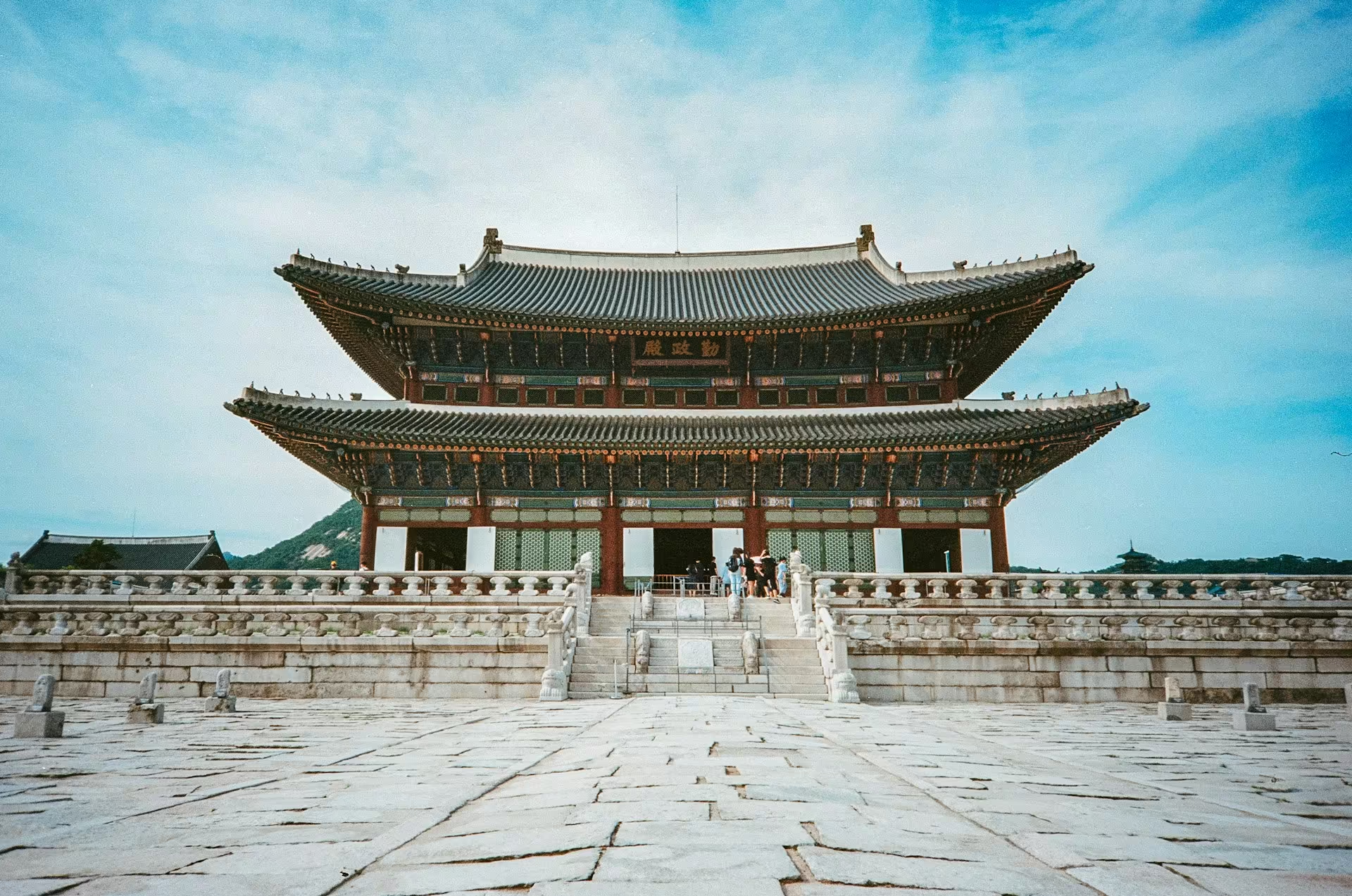
Start at Gyeongbokgung Palace, arriving by 9am before tour groups take over. The changing of the guard ceremony runs at 10am and 2pm and is worth catching once. From there, walk up into Bukchon Hanok Village: the most photographed alley is near Gahoe-dong, but the streets east of the main path are quieter and just as good. Spend 30 minutes in Insadong for teahouses and art galleries in converted hanok buildings.
In the afternoon, walk east to Changdeokgung Palace, the second of Seoul's great palace complexes and arguably better preserved than Gyeongbokgung. The Secret Garden (Huwon) at the back requires a separate guided tour and must be booked in advance (see the Day Trips section for detail). If you haven't booked, the palace grounds alone are worth an hour.
For the evening, head to Gwangjang Market. The bindaetteok (mung bean pancakes) and mayak gimbap (sesame seed rice rolls) stalls in the covered section are the main draw. Arrive by 6pm, as queues at the best stalls get long after 7pm.
Start in Yeonnam-dong, the quiet residential neighbourhood north of Hongdae with the best café density in the city without weekend crowds. Walk the tree-lined alleys, find a café and relax. Fritz Coffee Company on the Mapo side is widely regarded as serving some of the best coffee in Seoul and is worth the slight detour.
From Yeonnam, walk south along the Gyeongui Line Forest Park, a linear park built on a former railway line running 6km through Mapo. The park connects Yeonnam to Hongdae and Gongdeok, and is at its best on a weekday morning when locals use it.
Spend the afternoon in Hongdae exploring independent record shops, street art, and non-touristy restaurants. End the day at Mangwon Market, a neighbourhood market with great street food prices where vendors have been cooking traditional dishes for decades. Have dinner here.
DMZ tours depart central Seoul early and return by early afternoon (advance booking required). The standard half-day covers Imjingak Park, Observation Point Ouellette (views into North Korea) and the 3rd Infiltration Tunnel, a passage dug by North Korea beneath the DMZ that you walk down in a hard hat. It is a surreal 30 minutes. Remember to bring your passport and wear closed shoes.
Return to Seoul in the early afternoon, rest, and spend the evening in Myeongdong. The main pedestrian street comes alive from 5pm when all street food stalls open, serving gyeran-ppang (egg bread), hotteok (sweet pancakes), grilled seafood, and cheese tteokbokki. Finish with a walk up Namsan from the Myeongdong side for great night views of the city.
Spend the morning in Haebangchon (HBC), the steep hillside neighbourhood directly behind Itaewon. The streets here are narrow, steep, and unposted, which is part of the charm. The restaurants and bars are local and haven't been taken over by big café chains. Walk without a specific destination.
Walk up through the Namsan forested path from the HBC side. The path through the trees to the tower is the highlight of Namsan, while the tower itself serves as a backdrop.
Spend the afternoon in Itaewon for its international food scene (Lebanese, Ethiopian, Indian, Mexican). Gyeongnidan-gil, running parallel to the main Itaewon strip, offers better restaurants with fewer crowds and is a great spot for the evening.
Seongsu-dong is an industrial area in transition where converted leather factories host concept stores, photo studios, and independent restaurants. Walk from Seongsu station eastward along factory backstreets in the morning before weekend crowds arrive.
Euljiro is the older counterpart to Seongsu, featuring old printing shops and hardware stores next to modern indie bars and restaurants. Walking through Euljiro gives a feel for classic Seoul. The area around Euljiro 3-ga and 4-ga stations is the most concentrated, and the covered market sections are worth exploring.
For the final evening, walk along Cheonggyecheon Stream, a restored urban waterway running below street level through central Seoul. Enter at Cheong-gye Plaza and walk east toward quieter stretches. The stream is at its best after dark when the bridges are lit.
Where to eat in Seoul
What's worth booking
Most of what makes Seoul worth visiting requires no booking, but a few experiences require advance planning because access is restricted or best done with a guide.
Outside the city
Route: ITX Cheongchun train from Yongsan station to Gapyeong (1h 20min), then a short taxi to the ferry dock. Combine with Petite France and the Garden of Morning Calm for a full day trip.
Activities worth booking in advance
Getting around
The Seoul Metro covers the city comprehensively, making taxis optional. The system runs from roughly 5:30am to midnight. A T-money card bought at the airport works across metro lines, buses, taxis, and the AREX train.
| Incheon Airport → Seoul | AREX Express Train from Terminal 1 or 2 to Seoul Station (43 minutes). Runs every 30 minutes from 5:20am to 11:32pm. The Airport Bus takes 60–90 minutes depending on traffic. |
| Metro (daily use) | Use a T-money card to tap in and tap out at every station. Transfer discounts apply within 30 minutes. Use Naver Maps or Kakao Maps instead of Google Maps. |
| Taxis | Use Kakao T and select 'Regular Taxi'. Taxis are metered and fair. Avoid flagging cabs during the 6–8pm rush hour. |
| Cycling | Kakao T Bike is the main rental system, handy for Han River paths and Seongsu-dong, but less practical in high-density areas like Jongno. |
| Buses | Often faster than the metro for specific cross-city routes. Kakao Maps shows real-time arrivals. Pay with your T-money card on entry. |
| Walking | Many highlights happen between destinations (e.g., Jongno to Bukchon is 15 minutes on foot). Build walking time into each day. |
Where to stay
The neighbourhood matters more than the specific hotel. All five areas below connect via metro, so choose based on the atmosphere you want outside your door.
The most balanced base for first-time visitors with great metro connections and endless café options. Note that main Hongdae streets can be noisy on weekend nights, so pick a hotel a few streets back.
Central and convenient. Directly connected to the AREX train and walking distance to Gyeongbokgung and Namsan. High hotel density keeps prices competitive.
Puts you within walking distance of Gyeongbokgung, Changdeokgung, Bukchon and Insadong. Quieter in the evening, but great for reaching palaces before tour groups arrive.
Great for international dining and Namsan walks. Haebangchon guesthouses offer a quieter, more local vibe about 20 minutes from Itaewon's core.
An industrial area turned creative hub on Line 2, direct to Hongdae and central Seoul. Excellent independent dining and shop scene.
How to eat well in Seoul
Even casual dining in Seoul is high quality. Focus on small spots that specialise in one or two dishes rather than large tourist places with huge menus. Generous, fresh banchan (free side dishes) are a great sign of quality.
To order in small spots, press the table button or call out 저기요! (jeogiyo). Pay at the register on your way out. Some market stalls are cash-only.
Dishes worth knowing
| Bibimbap | Rice with seasoned vegetables, egg, and gochujang. Order dolsot bibimbap (served in a hot stone pot) for crispy rice at the bottom. |
| Samgyeopsal / Galbi | Pork belly or short ribs grilled at table. Wrap in leaves with garlic and ssamjang. Best enjoyed slowly with soju. |
| Tteokbokki | Chewy rice cakes in spicy gochujang sauce. Popular street food often served with fish cakes (odeng). |
| Jjigae (stews) | Comforting stews (kimchi-jjigae, doenjang-jjigae, sundubu-jjigae) served bubbling with rice on the side. |
| Korean fried chicken | Double-fried chicken paired with beer or soju. Soy-garlic glaze is a top entry choice. |
| Sundae (순대) | Korean blood sausage filled with rice and glass noodles. Mild, cheap, and popular at market stalls. |
| Convenience store food | 7-Eleven, CU, and GS25 offer fresh gimbap, hot broth, and quick meals that locals eat daily. |
Travel essentials
What to pack
Packing for Seoul depends mainly on the season: light layers for spring/autumn, rain gear for summer monsoon, and heavy coats for winter. Good walking shoes are essential.
- Comfortable walking shoes for 15,000+ daily steps
- Mid-layer jacket for cool spring/autumn evenings
- Light packable rain jacket
- Smart casual outfit for nicer evening restaurants
- Easy slip-on shoes for places requiring shoe removal
- DMZ attire: long pants and closed-toe shoes
- Passport valid for 6+ months (needed for DMZ)
- Travel insurance policy downloaded
- Wise/Revolut card for ATM withdrawals
- Some cash for small street food stalls
- eSIM activated before flight
- 20–25L Daypack
- Power bank for phone navigation
- Type C/F travel adapter
- Reusable water bottle (tap water is safe)
- Compact umbrella
Before you go
| Visa | Many passport holders (EU, US, UK, Australia) enter visa-free for 90 days. Check your specific rules before booking. |
| Currency | Korean Won (₩). Convenience store ATMs accept foreign cards. Cards work in most shops, but carry cash for street markets. |
| Language | Korean. English is common in tourist hubs, but Papago camera translation is very helpful in local neighbourhood spots. |
| Connectivity | Outstanding 4G/5G mobile coverage everywhere, including metro tunnels. Free Wi-Fi is also widely available. |
| Health | Pharmacies (약국) are plentiful. Tap water is safe. Emergency numbers: 119 (medical/fire) and 112 (police). |
| Electricity | 220V, Type C/F plugs. |
| Tipping | Not customary. Leaving cash on tables can cause confusion. |
| Jimjilbang | 24-hour traditional bathhouses with saunas and pools. Dragon Hill Spa near Yongsan is popular, but local neighborhood ones offer great authentic experiences. |