Seoul → Gyeongju → Jeonju → Seoul
South Korea – The Complete 10 Day Guide
South Korea is built on efficiency. The trains are fast, the cities are safe, and the food is a central part of the culture. This 10-day itinerary focuses on three main stops: Seoul, Gyeongju, and Jeonju. It’s a straightforward route designed to show you the contrast between the massive scale of the capital, the ancient royal burial mounds in Gyeongju, and the traditional hanok villages of Jeonju. Starting and ending in Seoul keeps your logistics simple and cuts down on wasted transit time.
Why South Korea
South Korea is the kind of place that surprises people who think they know what to expect. The food is better than the reputation suggests. The cities are cleaner, more walkable and more interesting than almost anywhere in Asia. The transport is excellent. The version of Korea that most tourists see, Seoul plus maybe a day trip, barely scratches it.
This route covers ten days across four stops: three days in Seoul to get oriented, two days in Gyeongju for one of the densest collections of ancient sites in Asia, two days in Jeonju for the food and the hanok village, then back to Seoul for the final stretch, neighbourhoods, markets and the parts of the city that take a few days to find. It's a first-timer's route designed to not feel like one.
The one honest caveat: Korea has a learning curve. The alphabet is not intuitive, Google Maps is unreliable in ways that catch people off guard, and the food ordering system in many restaurants assumes you know what you're doing. None of this is a problem, it's all navigable, but it's worth knowing before you arrive rather than discovering on day one.
Planning
April and May are the best months. Cherry blossoms peak in early April across Seoul and Gyeongju, crowds are heavy but the country looks exceptional. May is warm, clear and quieter once the blossom frenzy settles down. This is the window most people who've been more than once will tell you to aim for.
September and October are equally good, sometimes better. Autumn foliage turns Gyeongju and the mountains around it extraordinary. Temperatures are ideal, 15–22°C, and the summer humidity is completely gone. October is slightly busier than September but still manageable.
January and February are viable with the right expectations. Seoul in winter is cold (often -5°C to -10°C) but functional, the city doesn't shut down and accommodation is significantly cheaper. Gyeongju and Jeonju are quiet. Pack properly and it's a good time to go.
Map
Seoul, Days 1–3
Three days is enough to understand Seoul but not enough to exhaust it. The city is enormous, 10 million people in the city proper, 25 million in the wider metro, and the temptation is to treat it like a checklist. Don't. Pick three or four areas you genuinely want to spend time in and walk them properly.
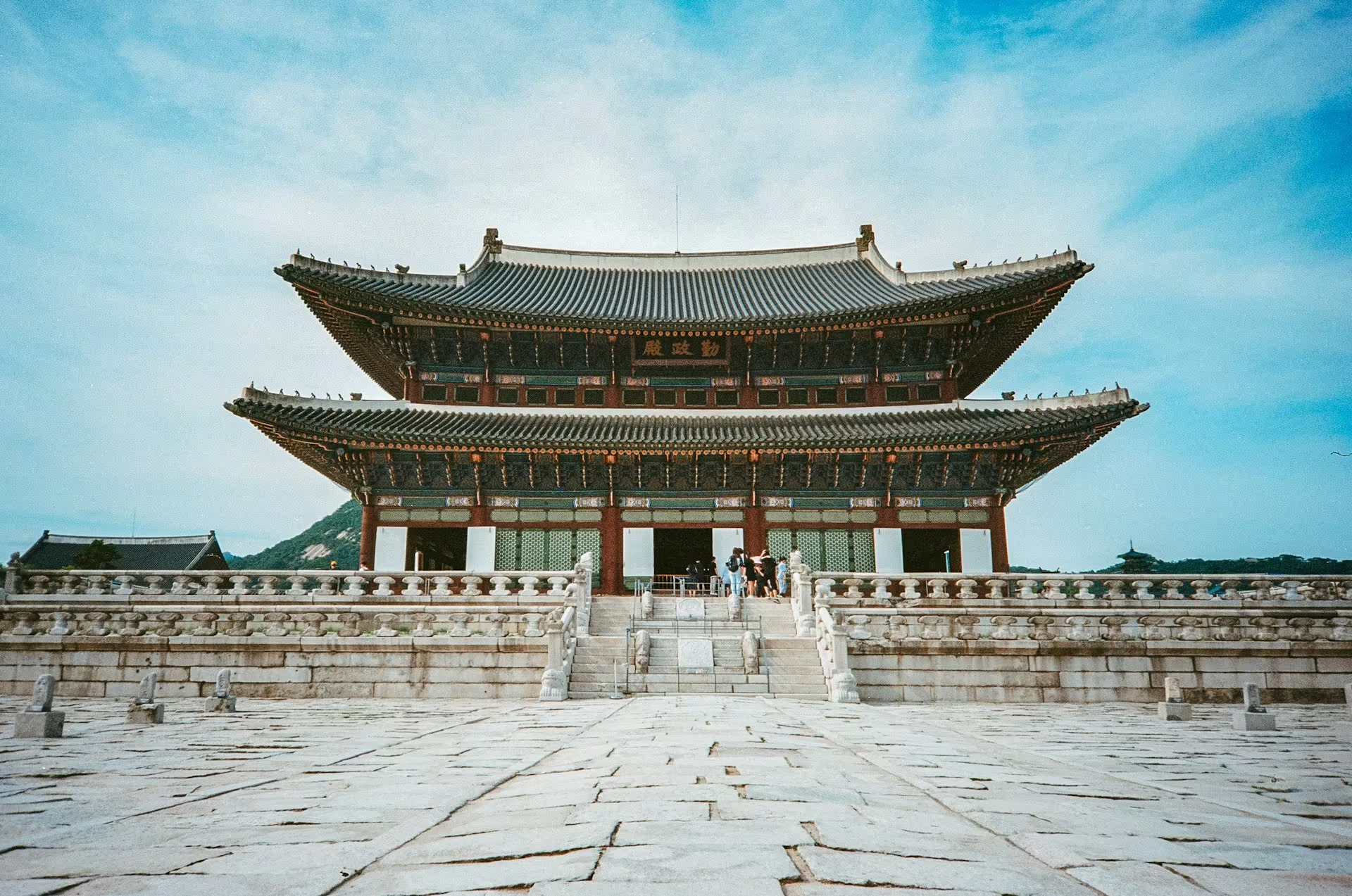
Start at Gyeongbokgung Palace, arrive by 9am before tour groups take over. The changing of the guard ceremony runs at 10am and 2pm and is worth catching once. From there, walk up into Bukchon Hanok Village, the most photographed alley is near Gahoe-dong, but the streets east of the main path are quieter and just as good. Finish the afternoon in Insadong for teahouses, street snacks and art galleries in converted hanok buildings.
For the evening, cross to Gwangjang Market. The bindaetteok (mung bean pancakes) and mayak gimbap (sesame seed rice rolls) stalls are the reason to go. Arrive by 6pm, it gets very crowded after 7pm and the queues at the best stalls become unreasonable.
The area around Hongdae is the part of Seoul where the city feels most like itself, independent cafés, record shops, street art and the kind of restaurants that don't appear on any tourist list. Yeonnam-dong, just north, is quieter and more residential, walkable alleys with the best café density in the city. This is where to spend a morning with no agenda.
In the afternoon, walk along the Gyeongui Line Forest Park, a linear park built on a former railway line connecting Hongdae to Gongdeok. In the evening, the area around Hongdae's main street comes alive properly after 9pm. Avoid the main Hongdae club street if you're not there for that specific scene, it's expensive and the crowds make it unpleasant.
Spend the morning in Haebangchon (HBC), the hillside neighbourhood behind Itaewon that has largely escaped the gentrification that made Itaewon itself expensive and slightly hollow. The streets here are steep and narrow; the restaurants and bars are genuinely local. From HBC, walk up to Namsan Seoul Tower, the tower itself isn't the point, the walk up through the forested hillside is. Good views of the city from the observation deck if visibility is clear.
Afternoon in Itaewon for its concentration of international food, the best non-Korean eating in Seoul by some distance. Evening in Gyeongnidan-gil, the street running parallel to the main Itaewon strip, which has better restaurants and is significantly less crowded.
Where to eat in Seoul
Gyeongju, Days 4–5
Gyeongju was the capital of the Silla Kingdom for nearly a thousand years, and the city never quite forgot it, royal burial mounds sit in the middle of residential streets like green hills that happened to be there. Temples, pagodas and stone carvings are everywhere. It's the most historically dense place in Korea and one of the few cities where you genuinely need a bicycle rather than public transport.
Take the morning KTX from Seoul (see Getting Around). Arrive at Gyeongju station and hire a bicycle immediately, most rental shops are within 200m of the station. Basic bikes and e-bikes are both available and inexpensive. The city's main sites are all within a 3km radius.
Daereungwon (the tumuli park) is the most visually striking site in Gyeongju, you can walk inside Cheonmachong tomb, one of the largest burial mounds, and see the extraordinary golden artefacts in situ. The park is beautiful even if you skip the tomb interior. Cheomseongdae (7th-century astronomical observatory) is five minutes by bike and worth 20 minutes. Finish the day at Anapji Pond, a reconstructed palace garden that is particularly good in the hour before sunset.
Bulguksa is a 8th-century Buddhist temple complex that is genuinely one of the most beautiful places in Korea, not because it's dramatic but because the architecture, the setting in the Toham Mountain foothills and the state of preservation combine in a way that's hard to find elsewhere. Allow two hours minimum. Take bus 10 or 11 from Gyeongju bus terminal, about 40 minutes.
Seokguram Grotto is 3km uphill from Bulguksa, either take the shuttle bus or walk. The granite Buddha inside the grotto dates from 751 AD and is considered one of the finest examples of Buddhist art in East Asia. The cave structure itself is worth understanding before you visit; reading a short description beforehand makes the experience significantly more interesting.
Where to eat in Gyeongju
Jeonju, Days 6–7
Jeonju is the food capital of Korea in the way that Lyon is France's food capital, not the most famous, but the city that Koreans themselves will tell you to go to if you want to eat properly. It is also home to one of the best-preserved hanok (traditional wooden house) villages in the country. Two days is the right amount of time: one day for the hanok village and sites, one day to eat your way through the rest.
The Jeonju Hanok Village (전주한옥마을) contains over 700 traditional hanok buildings and is the most intact of its kind in Korea. The main streets get crowded by midday, walk the outer alleys to the north and east of the main cluster, which are residential and far quieter. Gyeonggijeon Shrine, inside the village, houses a portrait of King Taejo and is one of the few places in Korea where you genuinely feel the weight of history in a way that isn't stage-managed.
In the afternoon, climb Omokdae Hill (15-minute walk from the hanok village) for the best views over the traditional rooflines against the city skyline. The path up is not marked, ask at your accommodation or look for the stone steps behind the Jeondong Catholic Cathedral.
Reserve the morning entirely for eating. Jeonju bibimbap for breakfast (the city claims, with some justification, to have invented it); kongnamul gukbap (soybean sprout soup with rice) at one of the 24-hour soup restaurants near the bus terminal; chungmu gimbap from a street stall. The Nambu Traditional Market is the best place to find all of this in one walk.
Take the KTX from Jeonju station back to Seoul in the early afternoon, the journey is 1 hour 40 minutes, leaving you the evening in Seoul to recover. Book this train in advance; afternoon departures on Sundays fill up quickly.
Where to eat in Jeonju
Seoul, Days 8–10
The return to Seoul is for the parts of the city that take longer to find, the neighbourhoods that have been interesting for a while without becoming famous, the markets that don't appear in travel articles, the version of Seoul that doesn't need to perform for visitors.
Seongsu-dong is what Koreans mean when they say a neighbourhood has become the next Hongdae, but without the backpacker infrastructure. It's an industrial area in transition: converted leather factories now house concept stores and photo studios; the streets between them have the best independent restaurant scene in current Seoul. Walk from Seongsu station eastward toward Ttukseom and take your time.
In the afternoon, walk along the Han River at Ttukseom, rent a bicycle from one of the hire stations, cheap by the hour and ride south along the river path. The Han River parks are where Seoul comes to exist without performing, and the contrast with the density of the city around them is striking.
Euljiro is the neighbourhood most interesting to walk without a specific destination, old printing shops and hardware stores sitting next to bars and restaurants that opened because the rents were cheap. The area around Euljiro 3-ga and 4-ga stations is the most concentrated. Dongdaemun Market (not the design plaza, the actual market) opens progressively through the afternoon and runs 24 hours; it sells fabric, clothing, accessories and food at prices that make no sense until you understand the scale of the wholesale operation.
Evening at Cheonggyecheon Stream, a restored urban waterway that cuts through central Seoul below street level. Walk east from Cheong-gye Plaza toward the quieter stretches away from the tourist concentration. The stream is at its best after dark.
Mangwon Market (망원시장) is the best local market in Seoul for a final morning, genuinely neighbourhood-level, with no tourist presence and some of the best street food prices in the city. The tteokbokki (spicy rice cakes), pajeon (spring onion pancakes) and sundae (blood sausage) stalls in the covered section are the reason to come.
Allow 70 minutes from central Seoul to Incheon Airport Terminal 1 or 2 via the AREX express train (every 30 minutes from Seoul Station). The airport is large, build in 2.5–3 hours before departure. The duty-free shopping area is genuinely good if you left any buying for last.
Where to eat in Seoul, second visit
Getting around
South Korea's intercity transport is excellent, fast, punctual and reasonably priced. The KTX high-speed train connects Seoul to Gyeongju and Jeonju in under two hours and is the obvious way to do this route. Book through the Korail website or app at least a few days in advance for the best seat availability.
| Seoul → Gyeongju | KTX to Singyeongju station · 2h 10min · affordable. Singyeongju station is 20km from the city centre, take bus 700 (40 min) or a taxi. Book in advance on busy weekends. |
| Gyeongju → Jeonju | Train + transfer · 2h 30min total. Take ITX-Saemaeul to Dongdaegu (40 min), then KTX to Jeonju (1h 10min). Book both legs as a through-ticket on the Korail app. There is no direct service. |
| Jeonju → Seoul | KTX direct · 1h 40min · affordable. Frequent departures from Jeonju station. Book the afternoon return at the same time as the outbound Seoul–Gyeongju leg, Sunday afternoon trains sell out. |
| Within Seoul | Metro is the main way to move, 9 main lines, very cheap per journey with T-money card. Kakao T for taxis, tap 'regular' not 'premium'. Kakao T Bike for cycling. Avoid taxis during the 6–8pm rush, traffic in central Seoul is severe. |
| Within Gyeongju | Bicycle is the best option for the main sites, hire from shops near the station, inexpensive for the day. Bus 10/11 for Bulguksa. Taxis are metered and inexpensive for longer distances. |
| Airport → Seoul | AREX Express Train from Incheon Terminal 1 or 2 to Seoul Station · 43 minutes · cheap. Runs every 30 minutes from 5:20am to 11:32pm. Get a T-money card at the airport, it works immediately on the AREX and on all metro lines thereafter. |
Where to stay
Accommodation in South Korea offers genuinely good value at mid-range, well-designed guesthouses and business hotels are the norm rather than the exception, and the quality-to-price ratio is genuinely good. The challenge in Seoul is choosing the right neighbourhood, which matters more than the hotel itself.
Myeongdong is the most practical base for a first visit, central, extremely well-connected by metro, walking distance from Gyeongbokgung, Namsan and the main shopping streets, and packed with restaurants and convenience stores. The tradeoff is that it's the most tourist-facing neighbourhood in Seoul, which means higher accommodation prices and little sense of how the city actually lives day to day.
Mapo-gu, the area covering Hongdae, Hapjeong and Mangwon, suits travellers who want to be inside a neighbourhood rather than adjacent to the sights. It's well-connected by metro, the streets are genuinely worth walking, and the restaurant and café scene is better. Slightly further from the historic north of the city but an easy metro ride.
Both are solid choices. Myeongdong wins on convenience and proximity to first-timer sights; Mapo-gu wins on neighbourhood feel and value.
Stay near the tumuli park, the area around Daereungwon puts you within cycling distance of every major site without needing transport. The guesthouses here are small, family-run and inexpensive. Avoid the area around Gyeongju train station, it's a 20-minute cycle from the main sites and lacks atmosphere.
Stay inside the hanok village, a night in a traditional hanok guesthouse is one of the better experiences on this route. The rooms use ondol (heated floors) and most include a simple breakfast. Book in advance for weekend stays, the village fills up on Friday and Saturday nights with Korean domestic tourists.
Consider a different neighbourhood from your first stay, Seongsu-dong or Euljiro put you close to the areas you'll be exploring in the final three days and give a different feel to the city. Both are quieter than Mapo-gu and well-connected by metro.
How to eat well
Korean food is better than its international reputation suggests, and the gap between eating well and eating badly is mostly about where you choose to sit rather than what you order. A busy local restaurant serving one or two dishes is almost always better than a large tourist-facing menu. The concept of banchan, the small side dishes that come automatically with every meal, means you're eating significantly more than the main dish implies.
The ordering system in many Korean restaurants involves a call button on the table or shouting "저기요!" (jeogiyo, "excuse me") to get attention. It can feel abrupt if you're not expecting it, but it's the norm, there's no passive waiting for a server to notice you. Payment is always at a counter after the meal, not at the table.
Street food in Korea is safe and excellent. The markets in all three cities on this route are worth taking seriously, some of the best eating happens in covered market halls where vendors have been cooking the same dish for 30+ years.
Dishes worth knowing
| Bibimbap | Rice topped with seasoned vegetables, egg and gochujang paste, mixed at the table. The dolsot version (stone pot) has crispy rice at the bottom, order this. Jeonju's version is considered the definitive one. |
| Galbi / Samgyeopsal | Short rib (galbi) or pork belly (samgyeopsal) grilled at the table over charcoal. The etiquette: scissors and tongs to cut the meat, wrap in perilla or sesame leaves with garlic and ssamjang paste. Order soju to drink alongside. |
| Tteokbokki | Chewy rice cakes in spicy gochujang sauce, the definitive Korean street food. Heat level varies enormously between stalls. Usually comes with fish cake (odeng) and a hard-boiled egg. Available at any pojangmacha or market food stall, very cheap. |
| Jjigae (stews) | The category of Korean stew that includes kimchi-jjigae (fermented cabbage), doenjang-jjigae (fermented soybean paste) and sundubu-jjigae (soft tofu). Always served bubbling in a claypot, always accompanied by rice. The universal comfort food, order it for lunch. |
| Korean fried chicken | The double-fried version sold at speciality chicken restaurants (not convenience stores) is genuinely one of the best things to eat in Korea. The soy-garlic glaze is better than the spicy version for first-timers. Order a whole chicken (한마리) for two people and eat with beer (맥주) or soju. |
| Sundae (순대) | Korean blood sausage, glutinous rice and glass noodles inside a pork intestine casing, served sliced with a salt-and-pepper dipping mix. A market food that looks confronting and tastes mild and good. Very cheap. |
Travel essentials
What to pack
South Korea requires less packing thought than many other destinations, no temple dress codes, no extreme heat to manage, no insect protection needed for a city-focused trip. The main variable is season: spring and autumn demand layers; winter demands serious cold-weather gear.
- Comfortable walking shoes, you will cover 15,000+ steps daily in Seoul
- Mid-layer fleece or jacket for spring and autumn evenings (drops to 8–12°C)
- Rain jacket, brief showers in spring are common; monsoon in July–August is sustained
- Smart casual options, Seoul's better restaurants have an implicit dress standard
- Slip-on shoes, you will remove footwear entering some traditional restaurants and guesthouses
- Passport, valid for at least 6 months beyond travel dates
- Travel insurance, policy downloaded, emergency number saved offline
- Wise or Revolut card, Korean ATMs (especially 7-Eleven) are reliable; expect a small fee per withdrawal
- Cash, some market stalls and pojangmacha are cash only; a modest amount is enough to carry
- Airalo eSIM, activate before landing; Korea eSIM data is inexpensive and coverage is excellent
- Day pack, a 20–25L bag for city days; checked luggage can stay at your hotel
- Portable charger, long days of navigation on Kakao Maps and Naver Maps drain phones quickly
- Universal adapter, Korea uses Type C/F plugs (same as most of Europe)
- Reusable water bottle, tap water in Korea is safe to drink; buying bottled water is unnecessary
- Small umbrella, for spring showers; convenience stores sell them cheaply if you forget
Before you go
| Visa | EU passport holders receive 90 days visa-free entry. No advance registration required. Fill in the arrival card on the plane, available in Korean and English. |
| Currency | Korean Won (₩). 7-Eleven and Woori Bank ATMs are the most reliable for foreign cards. Small withdrawal fee per transaction, withdraw larger amounts less frequently. Most restaurants in Seoul accept cards; markets and street food are often cash only. |
| Language | Korean is the primary language. English is widely spoken in Seoul tourist areas and hotels; less so in Gyeongju and Jeonju outside guesthouses. Papago translation app handles menu translation and basic communication reliably. Learning 안녕하세요 (annyeonghaseyo, hello) and 감사합니다 (gamsahamnida, thank you) is genuinely appreciated. |
| Connectivity | Airalo eSIM recommended, Korea data plans are inexpensive. Wi-Fi is available almost everywhere including most metro stations and convenience stores. Korea runs on 4G/5G universally. |
| Health | No vaccinations required for EU travellers. Tap water is safe to drink throughout Korea. Korean pharmacies (약국, yakguk) are well-stocked and pharmacists typically speak some English in cities. Emergency number: 119 (ambulance/fire), 112 (police). |
| Electricity | 220V, Type C/F plugs, same as most of Europe. Adaptors not needed for EU travellers. Universal adaptors available cheaply at Daiso stores. |
| Tipping | Tipping is not customary in Korea and can cause awkwardness if attempted in local restaurants. Service charges are included in hotel bills. Rounding up a taxi fare is acceptable but not expected. |
What it costs
South Korea is a developed country that does not feel expensive to travel. Eating and getting around are affordable even in Seoul; accommodation is good value at mid-range. Seoul is the priciest part of this route, Gyeongju and Jeonju are noticeably cheaper for both food and accommodation.
What pushes costs up: Korean BBQ dinners with drinks, weekend accommodation surcharges in Seoul, April cherry blossom season (hotels spike significantly), guided tours. What keeps costs down: Convenience store meals in Korea are genuinely good, 7-Eleven and CU sell freshly made gimbap, onigiri and hot food at very low prices. Bicycle hire in Gyeongju replaces taxis entirely.