Lisbon → Sintra → Porto → Douro Valley
Portugal: The Perfect 8-Day Itinerary — Lisbon, Sintra & Porto
Portugal is the easy one: compact, affordable by Western European standards, walkable, and joined end to end by trains that mostly run on time. This is the classic first-timer's route — three days in Lisbon with a day trip to the palaces of Sintra, then north by fast train to Porto, and finally up the Douro Valley, the oldest demarcated wine region in the world. You can do the whole thing without ever renting a car.
Why Portugal
Portugal gives back more than it asks. It's small enough to cross in an afternoon, cheap enough that eating and drinking well never feels like a decision, and connected end to end by an intercity train network that makes renting a car pointless for a trip like this. For a first visit, the temptation is to try to see the whole country; resist it. Lisbon, Porto and the Douro are enough to fall for the place, and doing them properly beats rushing through six regions.
This route runs south to north over eight days: three in Lisbon, with the fairytale palaces of Sintra folded in as a day trip, then a fast train to Porto for two days of granite, port and riverside, and finally two days up the Douro Valley for the wine country and a boat along the river. You fly into Lisbon and out of Porto, so you never double back. It's a first-timer's line that doesn't feel like a checklist.
The honest caveat: Lisbon and Porto have become popular, and it shows. In July and August the central neighbourhoods, the famous tram 28 and Sintra's palaces get genuinely crowded, and prices climb. The fix is simple and this guide leans on it throughout: travel in spring or autumn if you can, book the big-ticket sights ahead, and start your days early.
Planning
April, May and June are the sweet spot. The weather is warm without the summer heat, the countryside and the Douro are green, wildflowers are out, and the crowds haven't yet peaked. Days are long and the light is superb, especially in the Douro.
September and October are just as good, and arguably better for this particular route, because September is harvest season (vindima) in the Douro — the quintas are working, the terraces are heavy with fruit, and the valley is at its most alive. The summer heat has eased and the coast has quietened down.
July and August are hot and busy rather than bad. The cities are packed, Sintra's palaces are overwhelmed, and the Douro can top 35°C inland. It's perfectly doable with early starts and advance bookings, but it's the least relaxed time to come. Winter is mild, quiet and often wet, especially in the green north.
Map
Lisbon & Sintra, Days 1–3
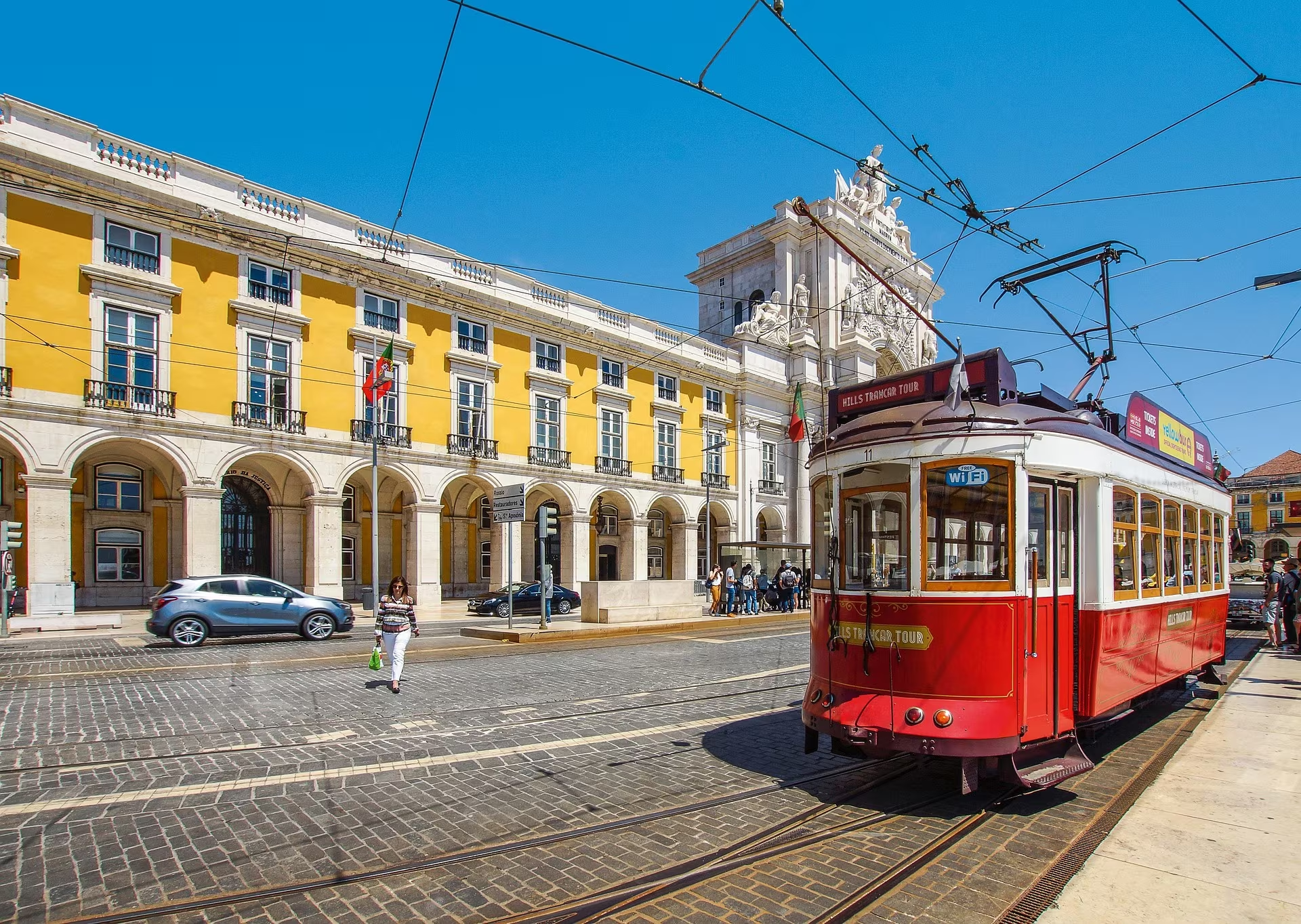
Lisbon is a city of hills, river light and tiled façades, and three days is enough to get under its skin if you don't try to see all of it. Base yourself centrally, walk more than you think you should, and build in one full day out at Sintra, half an hour away by train, where a run of romantic palaces sits in a misty, forested hill. The mistake is treating Sintra as a quick half-day; give it the whole of Day 2.
Start in Alfama, the oldest quarter, a tangle of stepped lanes below São Jorge Castle. Walk up to the castle for the view over the terracotta rooftops and the river, then wind down through the alleys past the Sé (cathedral). Stop at the miradouros (viewpoints) as you go, Portas do Sol and Santa Luzia are the classics. If you want to ride the famous tram 28, do it early and keep a hand on your bag; it's iconic and notorious for pickpockets in equal measure.
Spend the afternoon in the Baixa and Chiado, the elegant downtown grid rebuilt after the 1755 earthquake, then climb into the Bairro Alto for the evening. End the night with Fado, the melancholic Portuguese song, in a small Alfama house, book a spot with dinner rather than chasing the tourist-menu places on the main drag.
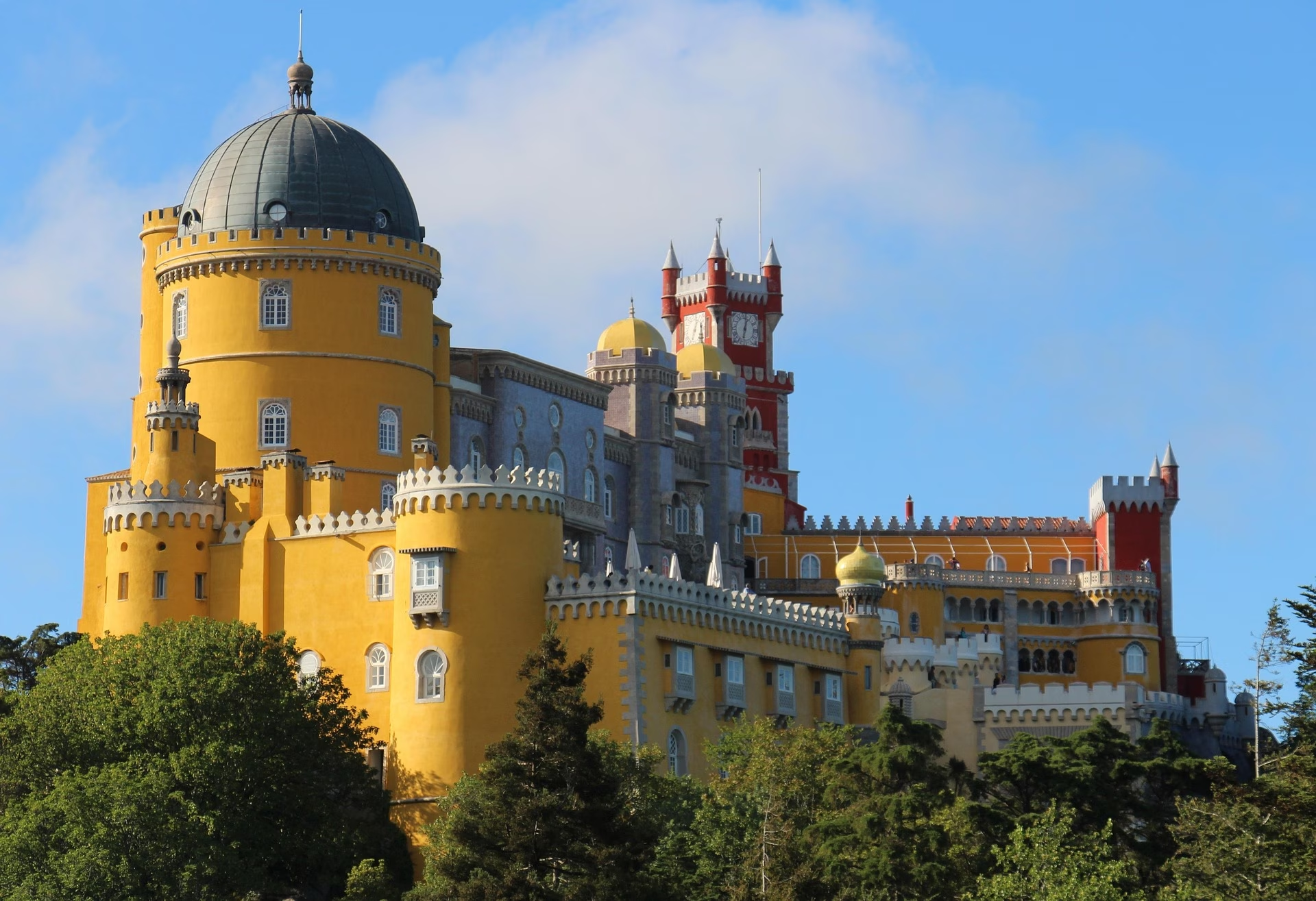
Take an early train from Lisbon's Rossio station (about 40 minutes) and go straight to Pena Palace before the crowds, a wild, candy-coloured royal palace on a forested peak, and the image of Sintra everyone knows. Buy a timed-entry ticket online in advance; in high season the palace sells out and the queues are brutal. Below it, the Moorish Castle ruins run along the ridge with huge views.
In the afternoon, visit Quinta da Regaleira, a Gothic-Romantic estate with tunnels and the spiralling Initiation Well, then the town centre for the National Palace and a travesseiro pastry. Sintra's hills are steep and the sights are spread out: while the 434 bus runs the loop, queues get long in summer — if travelling in a pair or group, taking a Bolt or Uber between palaces often costs the same and saves significant time. Back to Lisbon in the evening.
Head to Belém, the riverside district that launched the Age of Discoveries. See the Jerónimos Monastery (book a skip-the-line ticket, the Manueline cloister is the highlight), the Belém Tower on the water, and the Padrão dos Descobrimentos monument. Then join the queue that's always worth it at Pastéis de Belém, the original custard-tart bakery since 1837, and eat them warm with cinnamon.
Keep the afternoon loose: the MAAT museum and its riverside curve, or the LX Factory, a converted industrial complex of shops, cafés and street art under the bridge. Do your last shopping and pick up tinned fish or a bottle of ginjinha to take home. An easy evening sets you up for the train north tomorrow.
Where to eat in Lisbon
Porto, Days 4–5
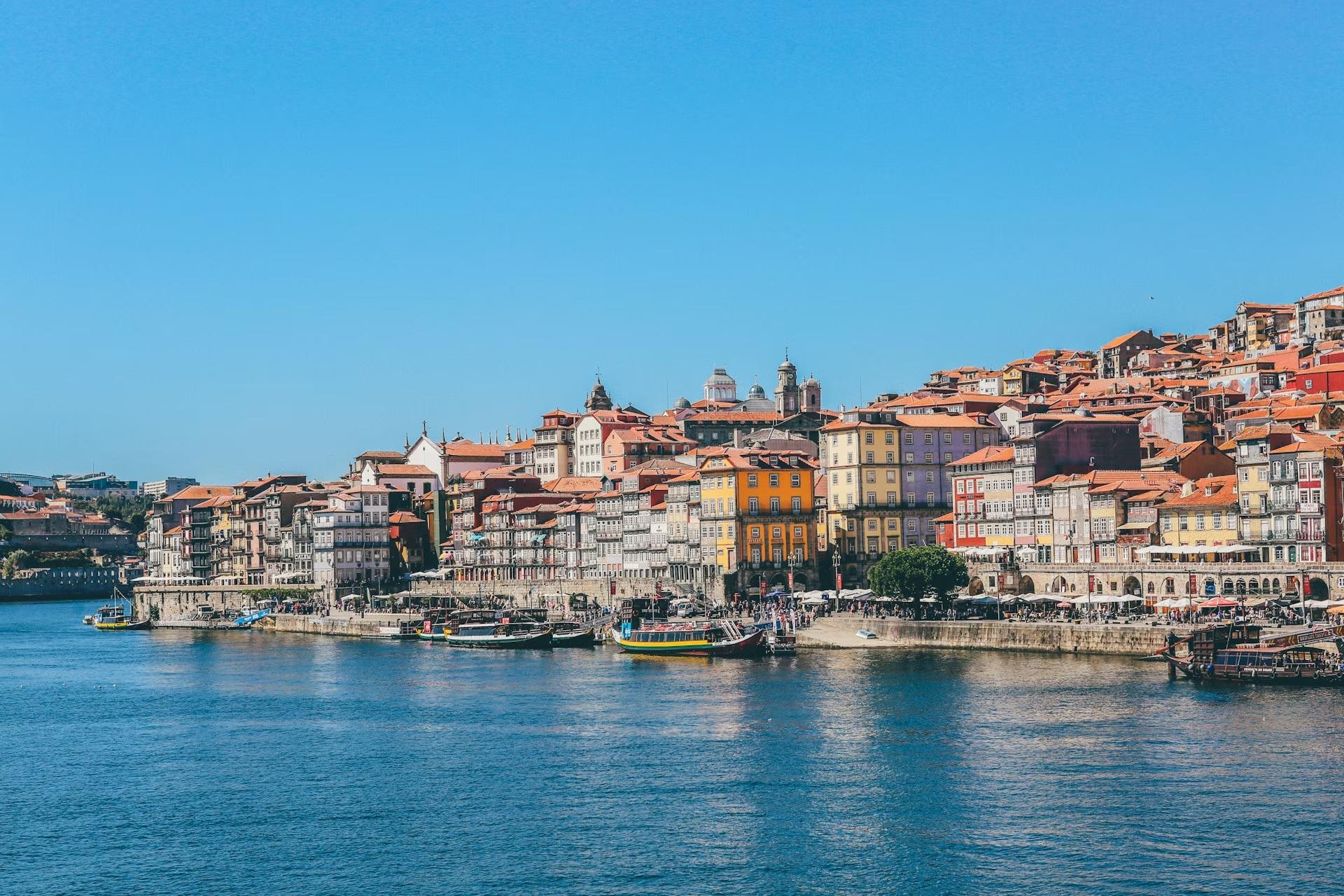
Take a morning train north and you're in Porto in under three hours (see Getting Around). Porto is smaller, steeper and grittier than Lisbon in the best way, a granite city stacked above the Douro, with port-wine lodges lined up across the river in Vila Nova de Gaia. Two days is enough to walk the old town properly and give the port cellars an afternoon.
Arrive and drop your bags, then walk down through the old town to the Ribeira, the UNESCO-listed riverfront of tumbling houses and cafés. Cross the top deck of the Dom Luís I bridge on foot for the postcard view back over the city. On the way, take in the extraordinary blue azulejo tile panels inside São Bento station, the Clérigos Tower, and the Sé cathedral terrace.
Book a slot at Livraria Lello, one of the most beautiful bookshops in the world with its scarlet staircase. Ticket vouchers cost around €8 and are redeemable against a book purchase inside. In the evening, cross to the Gaia side for the riverside walk and the low sun on the bridge, and a first glass of port.
Spend the morning on the Vila Nova de Gaia waterfront, where the port houses have their cellars, Graham's, Taylor's, Sandeman and many more. Book one cellar tour with a tasting to understand how port is made and aged; it's the definitive Porto experience and a natural warm-up for the Douro to come. The uphill lodges (Graham's, Taylor's) add a view.
Back across the river, browse the restored Mercado do Bolhão and the shopping streets, then, if the weather's good, take the vintage tram or metro out to Foz do Douro where the river meets the Atlantic for a seafront stroll. Alternatively, the Serralves museum and its gardens make a calm half-day.
Where to eat in Porto
Douro Valley, Days 6–8
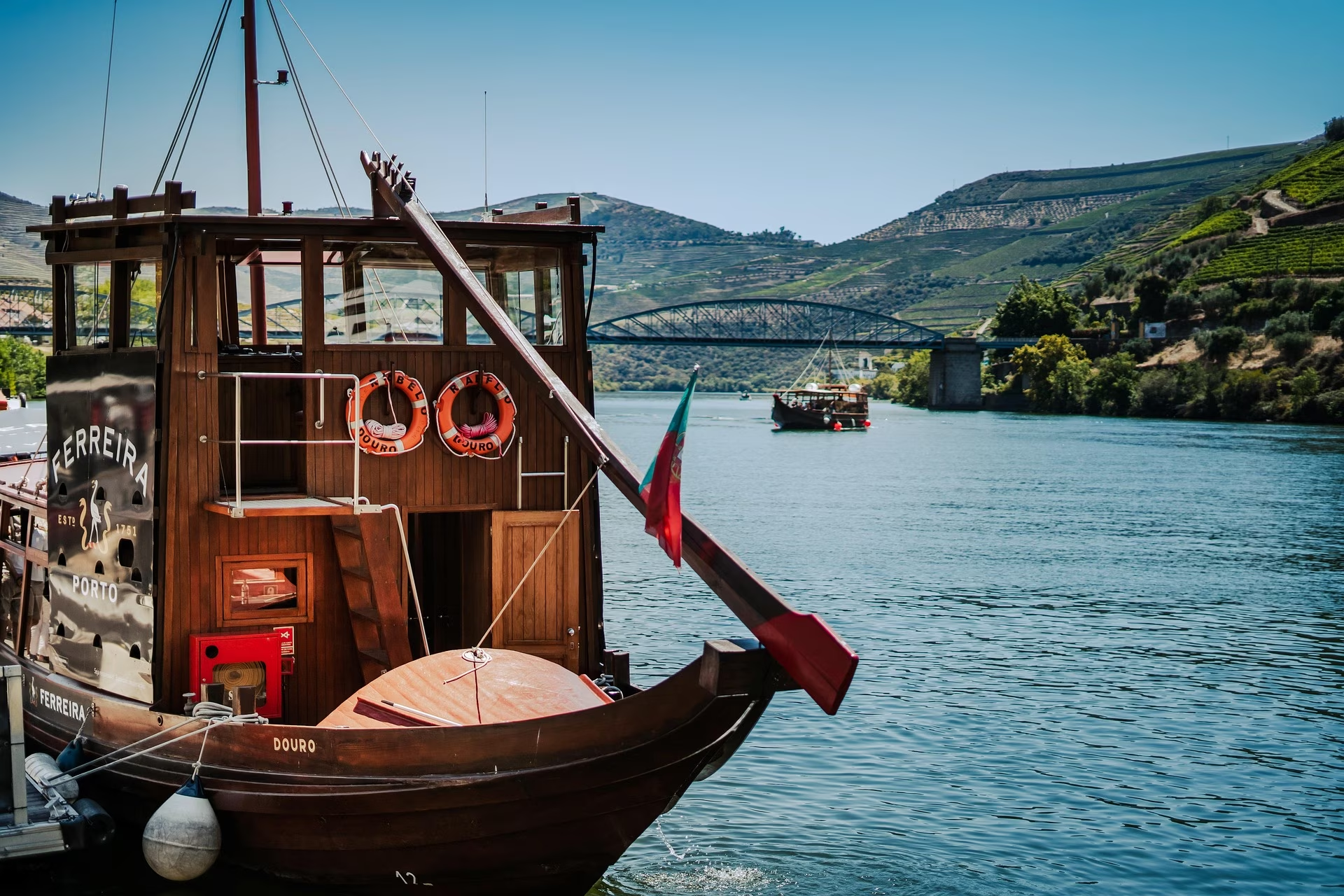
The Douro is the reward at the end of the route, and it deserves two nights rather than a rushed day trip. The world's oldest demarcated wine region is a landscape of terraced vineyards falling to a green river, dotted with quintas (wine estates) that have made port for centuries. Getting there is half the pleasure: the Douro railway line from Porto is one of the most scenic train journeys in Europe, tracing the river for the final stretch into Pinhão.
Take the train from Porto Campanhã up the Linha do Douro to Pinhão (around two hours). From Régua onward the line hugs the river through the terraced valley, sit on the right-hand side heading upriver for the best of it. Pinhão's little station is famous for its azulejo panels depicting the harvest.
Check into a quinta and spend the afternoon on your first tasting, either at your estate or at one of the nearby houses like Quinta do Bomfim, walkable from Pinhão. Watch the light change over the terraces from a terrace of your own, glass in hand. This is the pace the Douro asks for.
Spend the morning on the water. A boat trip from Pinhão, in a traditional flat-bottomed rabelo or a small cruiser, is the best way to see the valley the way the wine once travelled, gliding beneath the terraces with the vines rising on both banks. An hour or two is plenty; longer cruises run up towards Tua if you want them.
In the afternoon, visit a second quinta, Quinta do Seixo has a dramatic setting reached by cable car, and climb to a viewpoint for the wide shot: the Miradouro de São Leonardo de Galafura or Casal de Loivos give the sweeping, terrace-and-river panorama the region is famous for. Dinner is best taken slowly at your quinta or at a river restaurant.
Take a slow final morning, one more tasting, a walk among the vines, or the Douro Museum in Peso da Régua if you want the history of the region before you go. Then take the train back down the valley to Porto Campanhã, where the Douro line delivers its scenery a second time in reverse.
From Campanhã it's a quick metro ride to Porto Airport (OPO) for your flight home, or into the city if you have a late departure and want a final francesinha. You've crossed Portugal end to end, city to coast to wine country, without once needing a car.
What's worth booking
Top-rated experiences in Portugal get fully booked weeks in advance during high season. Reserve these key tickets online before you travel to skip line delays and secure peak time slots.
Getting around
This is a train route from start to finish, and Portugal's railways make it easy. The national operator is CP (Comboios de Portugal); book intercity trains in advance on the CP website or app, where fares are cheaper the earlier you buy. Within the cities, tap-and-go transport cards cover metro, tram and bus.
| Lisbon → Sintra | CP suburban train from Rossio station · about 40 minutes · very cheap and frequent. Covered by a Viva Viagem card with zapping credit. No need to book; just turn up and go early to beat the crowds. |
| Lisbon → Porto | Alfa Pendular (fastest, around 2h50) or Intercidades (around 3h10) from Lisbon Santa Apolónia or Oriente to Porto Campanhã. Book ahead on CP for the cheapest fares and a reserved seat; these sell out on summer weekends. |
| Porto → Pinhão (Douro) | Linha do Douro train from Porto Campanhã · around 2 hours, sometimes with a change at Régua. One of Europe's great scenic rides; sit on the right heading upriver. Regional trains, inexpensive. |
| Within Lisbon | Metro, trams and funiculars with a Viva Viagem card. Tram 28 is the scenic classic but pickpocket-prone and often packed. The centre is very walkable, if hilly, so wear good shoes. |
| Within Porto | Metro and buses with an Andante card. The historic core is compact and best on foot; use the metro mainly for Foz, Serralves and the airport run. |
| Airports | Lisbon (LIS): Metro red line into the centre, cheap and quick. Porto (OPO): Metro line E to Campanhã and the centre. Both are easy and don't need a taxi. |
Where to stay
Stay central in both cities so you can walk, and treat the Douro as the one place to splurge on a room with a view. Portugal's accommodation is good value across the board, from stylish guesthouses to design hotels, and location matters more than luxury in the cities.
How to eat well
Portuguese food is generous, seafood-heavy and superb value, and eating well here is mostly about choosing the busy, unfashionable-looking places over the ones with photo menus and a tout at the door. Lunch is where the value is, look for the prato do dia (dish of the day) or a set menu do dia. A couple of things to know: the couvert (bread, olives, cheese brought unasked) is charged for, so wave it away if you don't want it, and the coffee to ask for is a bica (espresso) in Lisbon or simply "um café".
Drink local and cheap: crisp, slightly fizzy Vinho Verde from the north, robust Douro reds, and of course port as an aperitif or after dinner. Portugal's tap water is safe to drink, so skip the bottled water. And save room for the pastries, this is the country that gave the world the custard tart.
Dishes worth knowing
| Bacalhau | Salt cod, the national obsession, said to have a recipe for every day of the year. Try bacalhau à brás (shredded with egg and potato), à Gomes de Sá, or com natas. Rich, salty and comforting. |
| Pastel de nata | The custard tart, flaky pastry and burnt-topped custard, best warm with cinnamon. The Belém version is the original, but a good one is everywhere. The perfect mid-walk snack with an espresso. |
| Francesinha | Porto's monster sandwich: meats and steak under melted cheese in a spiced beer-tomato sauce, usually topped with a fried egg and served with chips. Huge, indulgent and a Porto rite of passage. |
| Grilled fish & seafood | Simply grilled sardines, sea bass or bream, or a seafood rice (arroz de marisco) and clams à Bulhão Pato. Portugal's Atlantic seafood is some of Europe's best and often the cheapest thing on the menu. |
| Bifana | A thin marinated pork steak in a soft roll, the great Portuguese street sandwich. Cheap, fast and everywhere. Add mustard or piri-piri and eat it standing at the counter. |
| Vinho Verde & Port | Vinho Verde is the light, fresh, faintly sparkling white of the north, ideal with seafood. Port, the fortified wine of the Douro, comes as tawny, ruby or vintage, drink it before or after dinner, or taste a flight in a Gaia cellar. |
Travel essentials
What to pack
Portugal is forgiving to pack for, no dress codes to worry about and mild weather most of the year, but two things catch people out: the hills and cobbles demand proper shoes, and the Atlantic makes the weather changeable even in summer, so layers beat a single warm coat.
- Comfortable, broken-in walking shoes, Lisbon and Porto are steep and cobbled, and cobbles are unkind to smooth soles
- Layers, an Atlantic climate means warm days and cool evenings; a light jumper or jacket earns its place
- A light rain jacket, especially spring and autumn, and in the green north around Porto
- Sun protection for the Douro, the valley bakes in summer and there's little shade among the vines
- One smart-casual outfit for a nicer dinner or a quinta
- Passport or, for EU citizens, national ID card
- Travel insurance, plus an EHIC/GHIC card if you're eligible
- A contactless bank card, cards are accepted almost everywhere, including on transport
- A little cash for markets, small tascas and tips
- eSIM, activated before you land
- Universal adapter if you're outside the EU, Portugal uses 230V Type F plugs (standard continental Europe)
- A day pack for city days, Sintra and the Douro
- Reusable water bottle, tap water is safe to drink throughout Portugal
- Portable charger for long days of navigation and photos
- A foldable tote for the tinned fish, wine and pastries you'll inevitably carry home
Before you go
| Visa | Portugal is in the EU and the Schengen Area. EU/EEA citizens travel freely; UK, US, Canada, Australia and many others get 90 days visa-free (the EU's ETIAS travel authorisation is being phased in, so check the current requirement before you fly). |
| Currency | Euro (€). Cards, including contactless and mobile wallets, are accepted almost everywhere, even for small amounts and on transport. Carry a little cash for markets, small tascas and tips. ATMs (Multibanco) are everywhere. |
| Language | Portuguese. English is widely spoken in cities, hotels and anywhere touristy, and a little goes a long way, "olá" (hello), "obrigado/obrigada" (thank you, depending on your gender), "faz favor" (please). Portuguese appreciate the effort. |
| Connectivity | Excellent. Fast 4G/5G nationwide, including on the Douro line, and free wifi in most cafés and hotels. An eSIM or EU roaming keeps you online cheaply. |
| Health | No vaccinations needed. Tap water is safe to drink throughout the country. Pharmacies (farmácias) are widespread and helpful for minor issues. The EU-wide emergency number is 112. |
| Electricity | 230V, Type F plugs, the standard for continental Europe. EU travellers need nothing extra; UK and US visitors need an adapter. |
- Trains: Book Lisbon–Porto (Alfa Pendular) and Douro valley trains in advance on CP.pt.
- Tickets: Reserve timed-entry tickets online for Pena Palace, Quinta da Regaleira, and Jerónimos Monastery.
- Experiences: Book your Livraria Lello voucher, Gaia port-cellar tour, and Douro river cruise early.
- Connectivity & Apps: Activate an eSIM, download the CP train app, and save offline Google Maps.
- Flights: Confirm your outbound flight leaves from Porto (OPO), not Lisbon (LIS).
What it costs
Portugal is the best-value destination in Western Europe, and this route keeps costs sensible because the trains are cheap and the cities reward walking. The one place to spend is the Douro, where a good quinta and a couple of tastings are the trip's highlight and its biggest line item.
What pushes costs up: peak-summer city hotels, a luxury Douro quinta in harvest, lots of guided tastings and cruises, and last-minute train fares. What keeps costs down: booking trains early, eating the prato do dia at lunch, drinking Vinho Verde and house wine, using transport cards over taxis, and travelling in the spring or autumn shoulder seasons.