Muscat → Nizwa → Jebel Akhdar → Wahiba Sands → Muscat
Oman Itinerary: 7 Days in Muscat, Nizwa & the Wahiba Sands
While demand for the wider Middle East has cooled amid regional instability, Oman keeps quietly doing its own thing: whitewashed rather than glass-towered, deliberately low-key about mass tourism, and consistently ranked among the safest, most stable countries in the region. This loop runs out of Muscat and back, through mountain fort towns, terraced highland villages and a night camped under genuinely dark desert skies.
Why Oman
Oman sits on the eastern edge of the Arabian Peninsula, bordered by the UAE, Saudi Arabia and Yemen, and has spent decades deliberately choosing a slower, quieter path than its glitzier Gulf neighbours. There's no Dubai-style skyline here: Muscat's building code keeps everything low-rise and whitewashed, and the country has favoured steady, controlled tourism growth over rapid mass development. The result is a country that has genuinely dramatic scenery, mountain forts, terraced highland villages, some of the best desert camping in Arabia, without the crowds or the construction-site feel of some of the region's newer tourism darlings.
This route is a loop out of Muscat and back, because Muscat is realistically the only international airport this itinerary needs: two days in the capital, two days in the mountain fort town of Nizwa and the terraced heights of Jebel Akhdar (the "Green Mountain"), and three days finishing in the Wahiba Sands, a sea of orange dunes where you sleep in a desert camp under some of the clearest night skies in the region. It's compact, it's varied, and almost none of it requires a specialist operator, a rental car covers the whole thing.
The honest caveat: this is a mid-range destination, not a backpacker one, car rental, fuel and desert camps cost more than Southeast Asia or the Balkans, though still less than most of Western Europe. Oman is also a conservative Muslim country, modest dress and cultural respect matter here more than in, say, Thailand or Portugal, and alcohol is restricted to licensed hotels and restaurants. None of it is difficult, it just asks you to travel a little differently.
Planning
October to April is the season this whole route is built around. Daytime temperatures sit comfortably in the low-to-mid 20s to low 30s°C, the desert nights in Wahiba Sands are cool rather than freezing, and Jebel Akhdar's altitude keeps it noticeably fresher than the coast year-round. February and March, when it doesn't rain often but occasionally does, bring the added bonus of Jebel Akhdar's terraces at their greenest.
May to September is genuinely dangerous heat in the interior and desert, Muscat and Nizwa regularly exceed 40°C, and the Wahiba Sands can be brutal even at night. This isn't a "less comfortable but doable" window like a European shoulder season, it's a season to actively avoid for this specific route.
Map
Muscat, Days 1–2
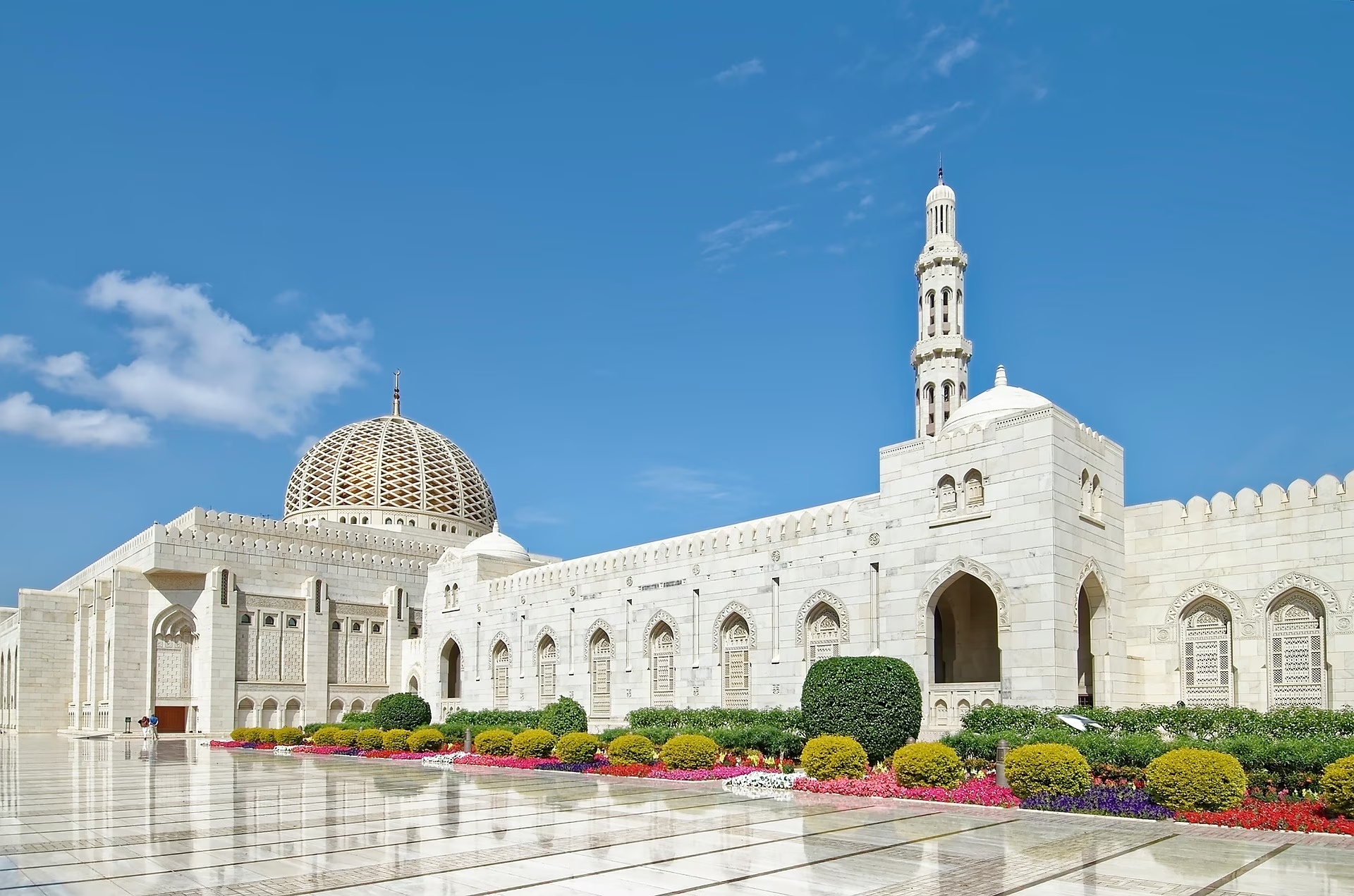
Muscat is unlike most Gulf capitals: low-rise, whitewashed by building code, and strung out along a dramatic coastline of volcanic hills rather than stacked into a skyline. Two days is enough to see the landmarks and get a feel for the city's unhurried pace before heading inland.
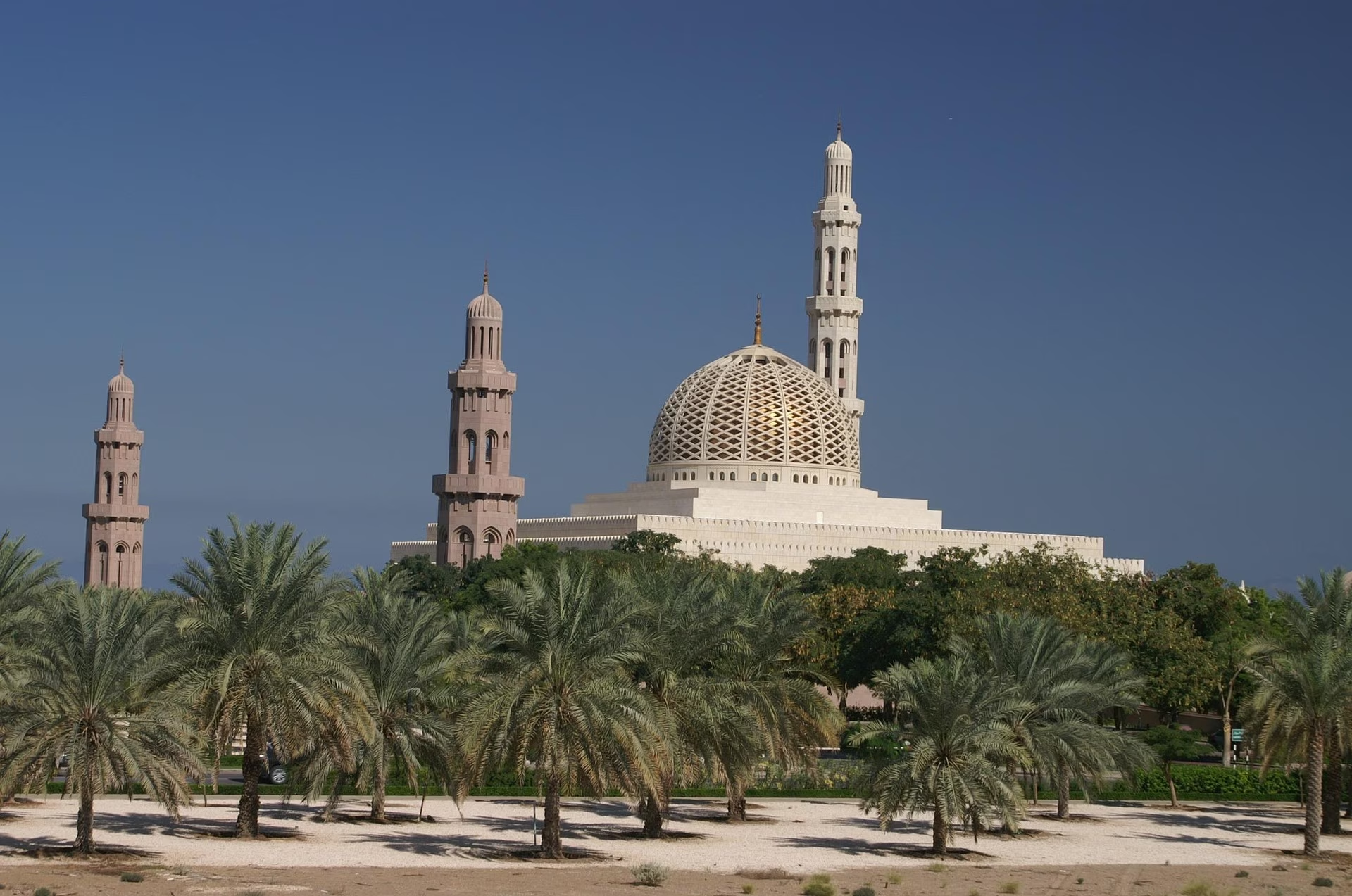
Visit the Sultan Qaboos Grand Mosque in the morning (open to non-Muslim visitors until around 11am, closed Fridays), a genuinely spectacular complex with one of the world's largest hand-woven carpets and a vast Swarovski chandelier. Modest dress is required, headscarves for women, and it's worth the early start before tour groups arrive.
Spend the afternoon in Mutrah, the old harbour district, walking the corniche past dhows and fishing boats, then get lost in the covered Mutrah Souq, one of the oldest markets in the Arab world, for frankincense, silver and spices. Climb to the small hilltop watchtower above the souq for a sunset view over the harbour.
Explore Old Muscat, the walled quarter beyond Mutrah, home to the Sultan's Al Alam Palace (not open inside, but striking from outside) flanked by the twin Portuguese-built forts of Al Jalali and Al Mirani on the harbour cliffs. Visit the Royal Opera House Muscat, an architectural landmark even if you're not catching a performance, and the small but excellent National Museum nearby.
In the afternoon, head to Qurum Beach or the Riyam area for a slower pace, and if time allows, a short excursion out to the Bimmah Sinkhole (worth saving for the drive back on Day 7 if you'd rather not backtrack). End the day with dinner in the modern Al Qurum or Shatti Al Qurum district, where most of Muscat's licensed restaurants sit.
Where to eat in Muscat
Nizwa & Jebel Akhdar, Days 3–4
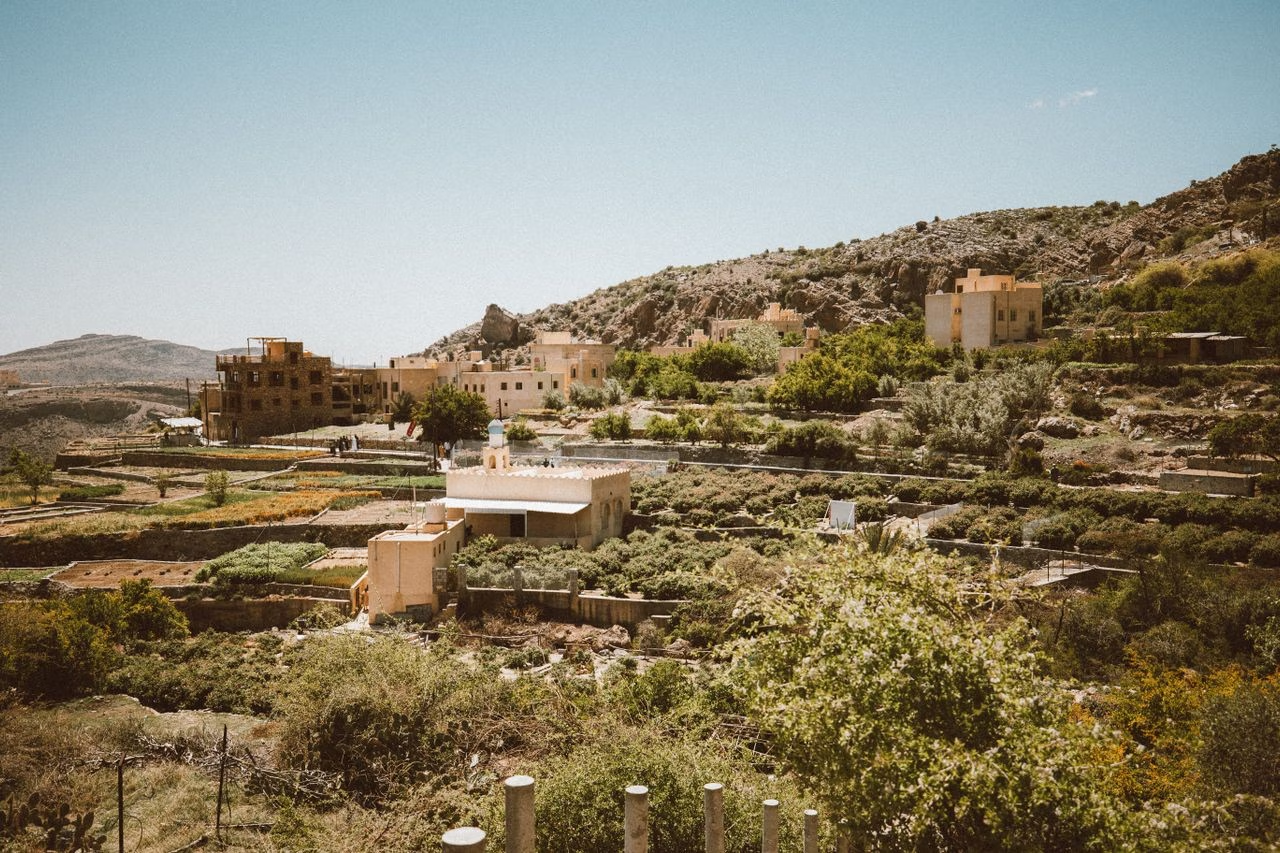
The drive inland from Muscat, about ninety minutes to Nizwa, climbs through the Hajar Mountains and delivers a completely different Oman: fort towns, date palm oases and, up on Jebel Akhdar, terraced villages perched on canyon edges over a thousand metres above the coast.
Drive to Nizwa, once the capital of Oman and still its spiritual and historical heart. Visit Nizwa Fort, a 17th-century circular fort with a commanding tower and views over the date palm oasis below, one of the most complete and impressive forts in the country. The adjoining souq is excellent for silver Khanjar daggers, pottery and frankincense.
If your visit falls on a Friday morning, don't miss the livestock souq, a genuinely local, unstaged affair where farmers trade goats and cattle in a lively circular auction, one of the most authentic scenes in the whole trip. Stop at Birkat Al Mouz on the way, an abandoned mudbrick village beneath the escarpment, a preview of what's ahead on Jebel Akhdar.
Drive (a 4x4 is mandatory, checkpoint enforced) up to Jebel Akhdar, the "Green Mountain," part of the wider Hajar range and famous for terraced orchards of pomegranate, apricot and, in spring, Damask roses grown for rosewater. Stop at Diana's Point (named for Princess Diana's 1986 visit), a viewpoint over a dramatic canyon that rivals the Grand Canyon in scale if not in fame.
Walk through the terraced villages of Al Ayn and Ash Sharayjah, connected by a marked trail along centuries-old stone terraces still farmed today. The altitude (around 2,000 metres) keeps it noticeably cooler than the coast, a welcome break even outside summer. Overnight up here if your budget allows, the sunset and sunrise over the canyon are worth it.
Where to eat in Nizwa & Jebel Akhdar
Wahiba Sands, Days 5–7
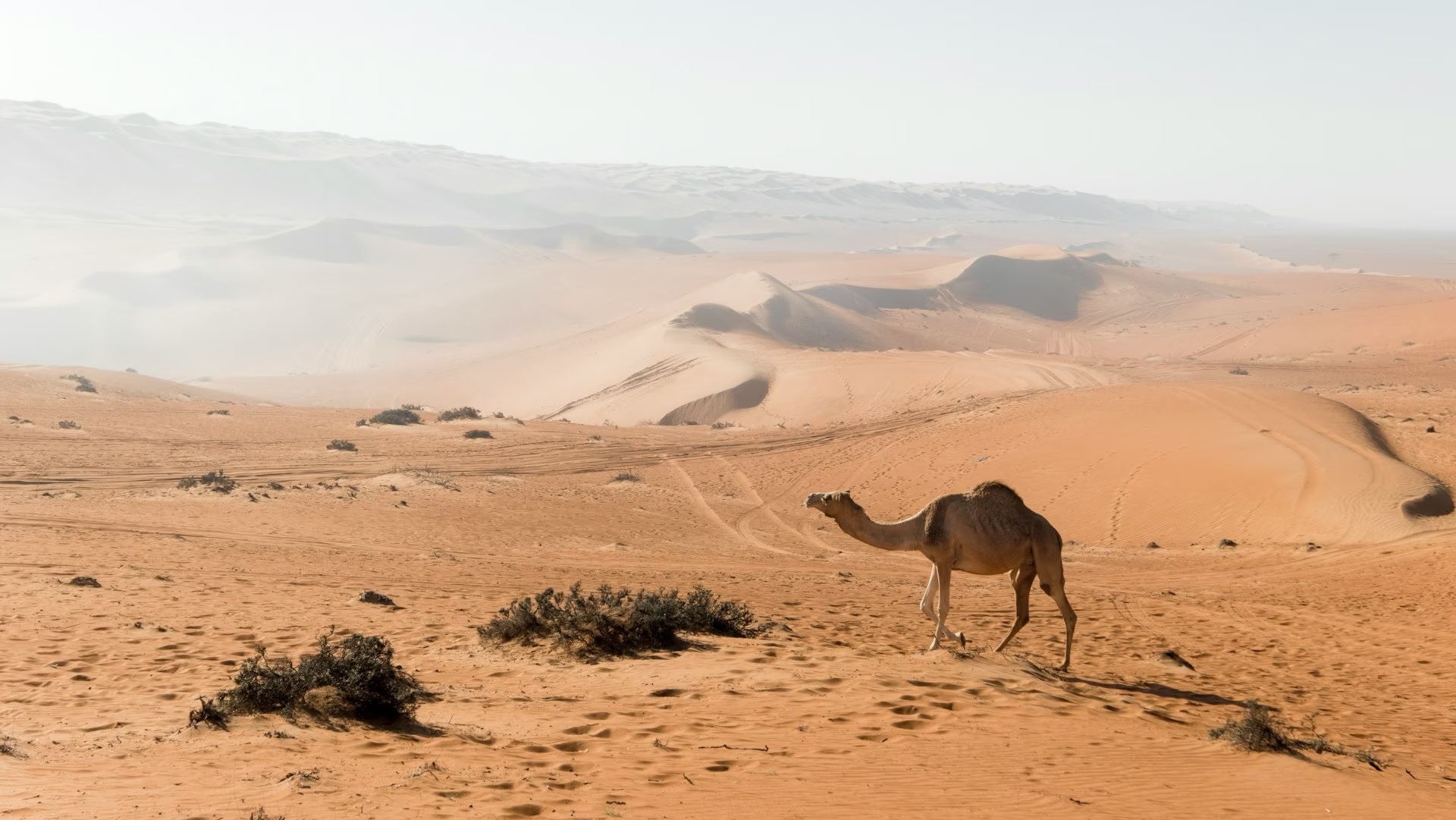
The drive from Jebel Akhdar down to the Wahiba Sands takes you from mountain terraces to a sea of orange dunes in a few hours, one of the more dramatic landscape shifts of the whole trip. This is the classic Arabian desert experience: dune bashing, a night in a Bedouin-style camp, and skies with a genuinely startling number of stars.
Descend from Jebel Akhdar and drive south to the Wahiba Sands (also called Sharqiya Sands), stopping if you can at Wadi Bani Khalid along the way, a spring-fed oasis with turquoise pools set in a rocky canyon, a good place to swim before the desert heat sets in.
Deflate your tyres (or let your camp's driver do it) and drive into the dunes for a late-afternoon dune bashing session, before settling into your desert camp as the light turns gold and then fades to a sky thick with stars. Dinner is usually a shared, traditional spread eaten under the open sky.
Wake for sunrise over the dunes, one of the best moments of the whole trip, then spend the morning on a camel trek or a slower walk into the dunes on foot. Many camps can arrange a visit to a local Bedouin family, an increasingly rare and genuinely interesting way to understand how desert life here has changed and, in some ways, hasn't.
Spend the rest of the day at a relaxed pace, sandboarding if you're up for it, or simply sitting with a coffee watching the light change over the dunes through the afternoon. A second night in the desert is worth it if your schedule allows.
Drive back toward Muscat, stopping at the Bimmah Sinkhole (Hawaiyat Najm Park) if you didn't on Day 2, a striking turquoise limestone sinkhole a short walk from the coastal road, good for a swim if you have time before your flight. The drive back is around two to three hours depending on your exact desert camp location.
Return your rental car and allow time for Muscat International Airport (MCT), closing the loop. If your flight isn't until the next day, a final relaxed evening back in Muscat's Shatti Al Qurum district is a good way to end the trip.
Where to eat near Wahiba Sands
Getting around
This route is built around a rental car, and Oman makes that easy: roads are excellent, well signed in English and Arabic, and fuel is cheap. A standard sedan covers Muscat, Nizwa and the Wahiba Sands' main tracks (many camps will send a 4x4 to meet you at a fixed point); only the drive up Jebel Akhdar strictly requires 4-wheel drive, checked at a police checkpoint.
| Muscat → Nizwa | Rental car · around 1.5 hours on a good highway. A standard 2WD sedan is fine for this leg. |
| Nizwa → Jebel Akhdar | 4x4 required, checked at a checkpoint partway up · around 45 minutes to an hour from Nizwa. Book a 4x4 rental for the whole trip, or arrange a taxi/tour transfer for just this leg. |
| Jebel Akhdar / Nizwa → Wahiba Sands | Rental car to a fixed meeting point, around 2.5–3 hours, then most desert camps send their own 4x4 to drive you the final stretch into the dunes. Confirm this arrangement with your camp when booking. |
| Wahiba Sands → Muscat | Rental car · around 2.5–3 hours via the coastal road, with the option to stop at Bimmah Sinkhole and Wadi Bani Khalid en route. |
| Airport → Muscat centre | Taxi or rental car pickup directly from Muscat International Airport (MCT); most rental desks are inside or adjacent to the terminal. |
What's worth booking
Most of this trip runs on a rental car and turning up, but a few things genuinely need reserving ahead, especially the desert camp and the Jebel Akhdar 4x4 arrangement.
Where to stay
Accommodation ranges from international hotel chains in Muscat to characterful heritage guesthouses in Nizwa and, in the desert, tented camps ranging from simple to genuinely luxurious. Book the desert camp and any Jebel Akhdar stay ahead, both have limited capacity.
How to eat well
Omani food draws on Arabian, East African, Indian and Persian influences, a legacy of centuries of maritime trade, and leans on rice, grilled and slow-cooked meats, dates and fragrant spices like cardamom and saffron. It's generally milder than Indian food and less heavy than some other Gulf cuisines. As a Muslim country, pork isn't served and alcohol is restricted to licensed hotels and restaurants, don't expect it at local eateries.
Hospitality here is genuine and understated: being offered Omani coffee (kahwa) and dates is a welcome ritual worth accepting, whether in a shop, a Bedouin tent or someone's home. Tipping isn't obligatory but is increasingly appreciated in tourist-facing restaurants, round up or leave 5-10%.
Dishes worth knowing
| Shuwa | Meat (usually lamb or goat) marinated in spices, wrapped in banana leaves and slow-cooked, traditionally underground, for up to two days. Classically a special-occasion dish, though some restaurants serve a version daily. Rich, tender and deeply spiced. |
| Majboos | Spiced rice cooked with chicken, lamb or fish, similar to the wider Gulf's machboos or biryani traditions. The everyday comfort dish found on nearly every local menu. |
| Omani halwa | A dense, sticky sweet made from sugar, ghee, rosewater and spices like saffron and cardamom, often studded with nuts. Traditionally served with kahwa as a welcome gesture. Sweet, chewy and worth trying at least once. |
| Kahwa & dates | Lightly spiced Omani coffee (cardamom, sometimes saffron), served in small cups with fresh or dried dates. The near-universal hospitality ritual across the country, offered everywhere from shops to Bedouin tents. |
| Fresh seafood | Kingfish, hammour (grouper) and shrimp, grilled simply or in curries, reflect Oman's long coastline and seafaring history. Mutrah's fish market and nearby restaurants are the best place to try it fresh. |
Travel essentials
What to pack
Oman is a conservative Muslim country, and modest dress matters more here than almost anywhere else in this guide series, particularly for the Grand Mosque and rural areas. Pack for a genuine range of temperatures too: warm coastal days, a noticeably cooler Jebel Akhdar, and cold desert nights even outside the depths of winter.
- Modest, loose-fitting clothing covering shoulders and knees; a headscarf for women is required at the Grand Mosque
- A warm layer for Jebel Akhdar's altitude and cool desert nights, genuinely cold after dark even in the warmer months
- Comfortable walking shoes for forts, souqs and the Jebel Akhdar terrace trails
- A swimsuit for Wadi Bani Khalid and the Bimmah Sinkhole, worn with a modest cover-up nearby
- Sun protection: hat, sunglasses and high-SPF sunscreen for the desert and open sites
- Passport valid 6+ months; most nationalities can get a visa on arrival or e-visa, check current requirements
- International driving permit alongside your home licence, required for car rental
- Travel insurance, ideally covering 4x4 driving and desert activities
- A card with low foreign transaction fees; cards are widely accepted in cities, cash matters more in Nizwa and the desert
- eSIM, activated before landing
- Universal adapter, Oman uses 240V Type G plugs (UK-style, three square pins)
- Power bank for long driving days between stops
- Offline maps downloaded in advance, connectivity thins out deep in the desert and mountains
- A reusable water bottle and more water than you think you need, dehydration sets in fast in the desert
- A headlamp for the desert camp and evening walks
Before you go
| Visa | Most nationalities, including EU, UK, US, Canada and Australia, can get a visa on arrival or e-visa for stays up to 30 days, extendable. Apply for the e-visa online in advance to save time at the airport; check the current fee and requirement for your passport. |
| Currency | Omani Rial (OMR), one of the highest-valued currencies in the world (roughly on par with or above the British pound), so prices can look deceptively low in the local number. Cards are widely accepted in Muscat and Nizwa; carry cash for the desert camp and rural stops. |
| Language | Arabic is the official language; English is widely spoken in tourism, hotels and by most younger Omanis. Road signs are in both Arabic and English throughout the route. |
| Connectivity | Good 4G on main roads and in towns; patchy on the Jebel Akhdar mountain road and deep in the Wahiba Sands. A local SIM or eSIM is cheap and worth activating on arrival. |
| Health | No vaccinations required for most visitors. Tap water is generally treated but bottled water is the norm and recommended, especially in the desert. Pharmacies are widespread in Muscat and Nizwa. Heat exhaustion is the main practical risk, drink far more water than feels necessary. Emergency number: 9999. |
| Electricity | 240V, Type G plugs (UK-style, three square pins). UK travellers need nothing extra; EU, US and most other visitors need an adapter. |
What it costs
Oman sits solidly in mid-range territory, noticeably pricier than the Balkans or Southeast Asia in this guide series, but still more affordable than Western Europe or the flashier Gulf destinations. The rental car and desert camp are the two main line items.
What pushes costs up: a luxury desert camp, a 4x4 rental for the full week instead of just the Jebel Akhdar leg, and licensed hotel dining with alcohol. What keeps costs down: a standard 2WD rental plus a single dedicated 4x4 transfer for Jebel Akhdar, a mid-tier desert camp, and eating at local Omani restaurants rather than international hotel menus.