Skopje → Lake Ohrid → Bitola → Skopje
North Macedonia Itinerary: 7 Days in Skopje, Ohrid & Bitola
North Macedonia is one of the last corners of Europe that still feels genuinely unclaimed. It's cheap, it's small enough to loop in a week, and it holds one of the oldest lakes on the planet without the crowds that come with that anywhere else. This route runs a simple loop out of Skopje, the odd, statue-stuffed capital, down to the UNESCO shores of Lake Ohrid, across to the faded Ottoman streets of Bitola, and back. No car needed, buses cover the whole thing.
Why North Macedonia
North Macedonia sits landlocked in the middle of the Balkans, bordered by Kosovo, Serbia, Bulgaria, Greece and Albania, and somehow still gets skipped by most people doing the region. That's the whole appeal. Skopje is one of the strangest capitals in Europe, rebuilt after a 1963 earthquake and then filled, decades later, with an outsized wave of statues and neoclassical facades that make it feel like nowhere else. Ohrid, a few hours south, is one of Europe's oldest lakes, ringed by Byzantine churches and monasteries, and it draws a fraction of the visitors that a lake this beautiful gets anywhere in Italy or Switzerland.
This route is a simple week-long loop: two days in Skopje to get past the strangeness and into the old bazaar, three days at Lake Ohrid for the UNESCO old town, the churches and the water itself, then two days in Bitola, a former Ottoman consular town with a long pedestrian street and Roman ruins on its doorstep, before the bus back to Skopje. It's compact, cheap and genuinely different from the rest of the Balkans itinerary everyone else is doing.
The honest caveat: infrastructure here is real but not polished. Buses run on their own schedule logic more than a published timetable in places, English drops off outside the main towns, and card payment isn't a given once you're off the main street. None of it is difficult, it just asks a bit more patience than Western Europe, and that's part of what keeps the crowds away.
Planning
May, June and September are the best months. The lake at Ohrid is warm enough to swim, Skopje and Bitola are pleasant for walking, and the domestic tourist season (mostly Macedonian and regional visitors around the lake) hasn't peaked or has already thinned out. September carries the added bonus of the grape harvest in the country's wine regions near Skopje.
July and August bring real heat, often past 35°C inland, and Ohrid gets genuinely busy with regional holidaymakers, though still nowhere near the level of an Italian or Croatian lake town. Rooms in Ohrid's old town book up and prices climb. It's still worth it if it's your only window, just book ahead.
Spring (March–April) and autumn (October) are mild and quiet, good for the cities, though the lake water turns cold. Winter is properly cold, especially in Skopje's continental climate, and this route works less well then; save it for the warmer months.
Map
Skopje, Days 1–2
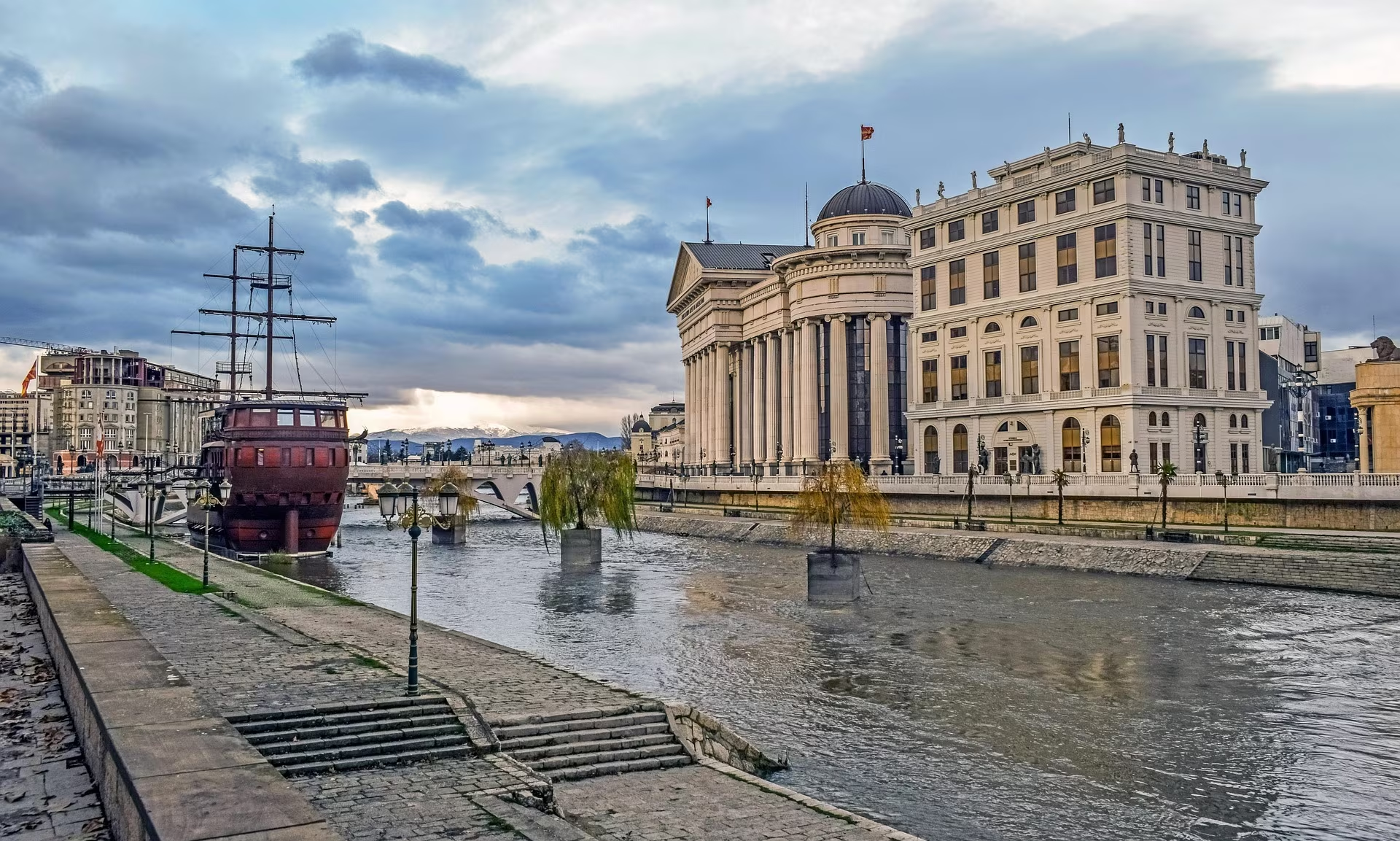
Skopje takes a day to understand. The city centre was rebuilt after being flattened by an earthquake in 1963, then, decades later, remade again by a controversial building programme called Skopje 2014 that dropped dozens of oversized statues and neoclassical facades onto the riverbanks. It's strange, occasionally kitsch, and unlike anywhere else in Europe. Underneath it, the Ottoman old bazaar is genuinely worth your time.
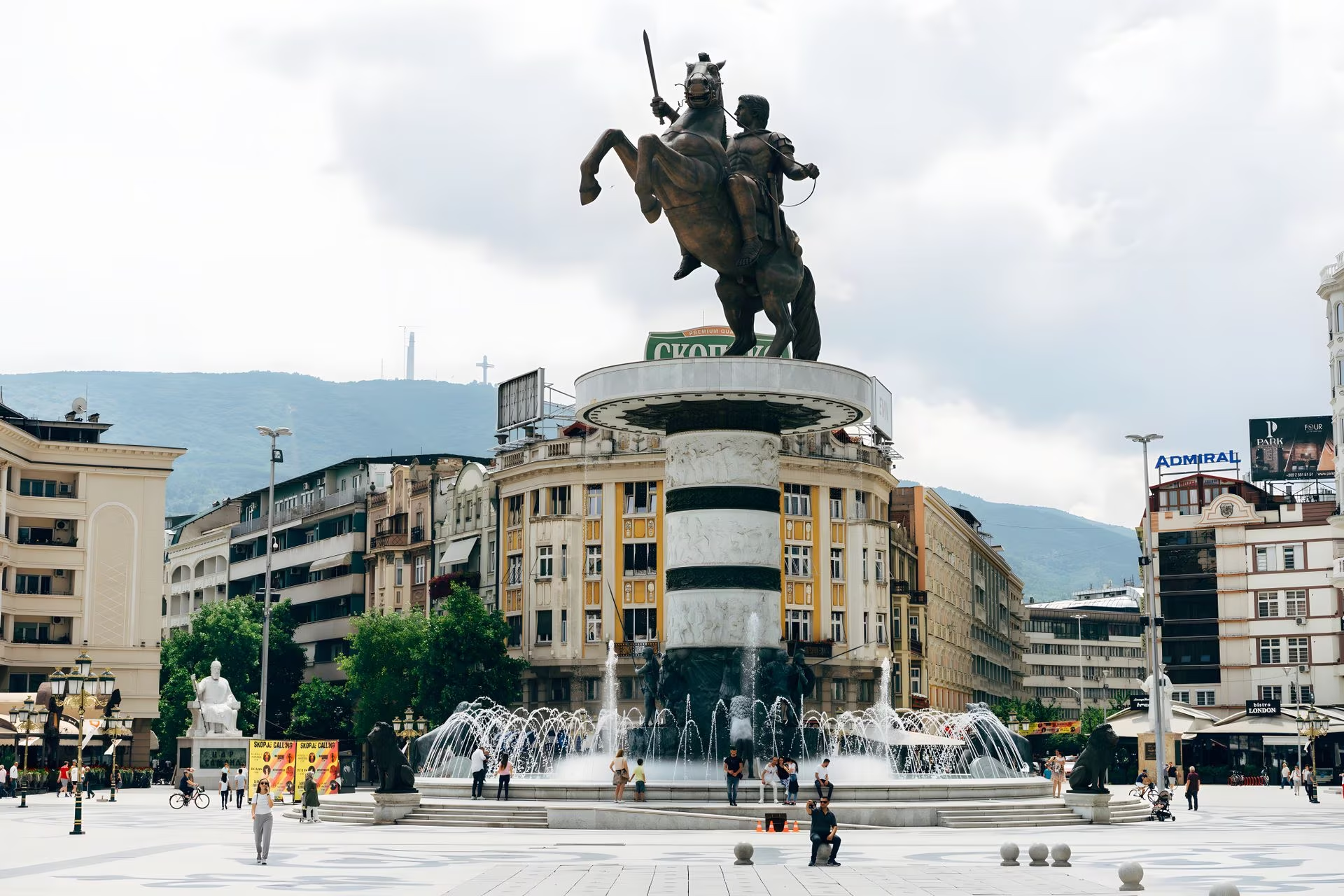
Start at Macedonia Square, dominated by the towering Warrior on a Horse statue (officially unnamed, everyone knows who it's meant to be), then cross the Ottoman-era Stone Bridge over the Vardar river. The riverbanks on both sides are lined with the statues, fountains and museum buildings of the Skopje 2014 project, it's worth a slow wander even if the aesthetics divide opinion.
Climb to Skopje Fortress (Kale) for the view over the whole city, then head into the Old Bazaar on the other side, the largest surviving Ottoman-era market in the Balkans outside Istanbul. Mosques, hans (caravanserais) and workshop streets survive largely intact. Eat here in the evening rather than the touristy square.
Visit the Memorial House of Mother Teresa, built on the site of the church where she was baptised (she was born in Skopje), a quiet, modern counterpoint to the bombast of the main square. Spend the rest of the morning in Bit Pazar, the working produce market a step away from the tourist bazaar, for a more everyday slice of the city.
In the afternoon, take a short taxi or bus out to Matka Canyon, twenty minutes from the centre, a dramatic gorge with a reservoir lake, a kayak or small-boat trip to Vrelo Cave, and a scattering of medieval monasteries on the cliffs above. It's an easy half-day escape and a good breather before the bus to Ohrid tomorrow.
Where to eat in Skopje
Lake Ohrid, Days 3–5
The bus from Skopje to Ohrid takes about three hours and drops you into a different country in tone. Lake Ohrid is one of Europe's oldest and deepest lakes, shared with Albania, and its shoreline old town is a UNESCO World Heritage Site for both its natural and cultural significance, a rare double listing. Three days lets you cover the old town, the monasteries around the lake, and a proper afternoon on the water.
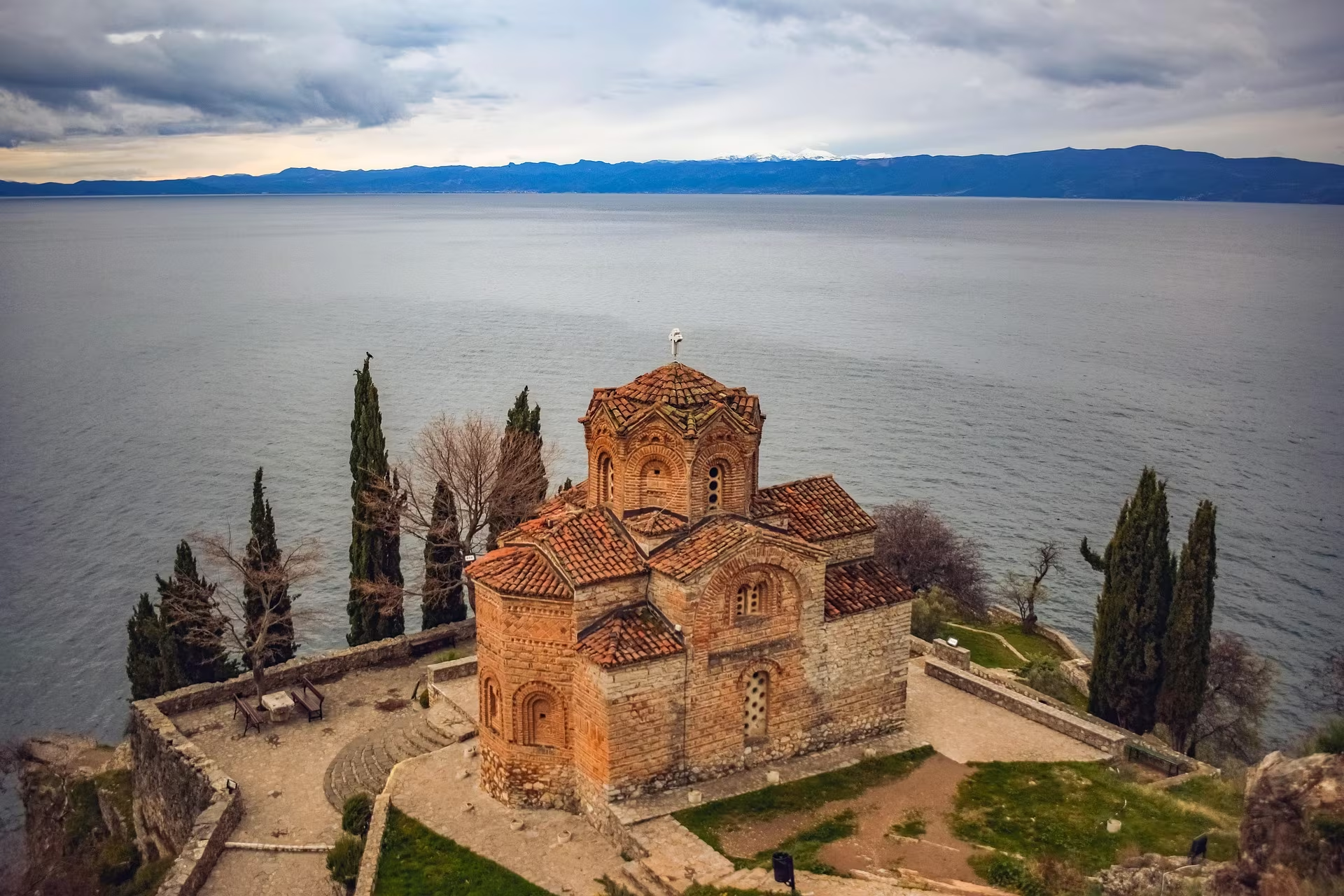
Wander the cobbled lanes of Ohrid's old town, Ottoman-Macedonian houses stacked on the hillside above the lake, and visit Sveti Kliment i Pantelejmon, a reconstructed 9th-century monastery on the site of one of the earliest Slavic universities. Climb to Tsar Samuel's Fortress for the wide view over the old town and the water, then walk down to the tiny, cliff-hung Church of Sveti Jovan at Kaneo, the single most photographed spot on the lake, best at sunset.
In the evening, walk the lakeside promenade as the town's cafés fill up. Ohrid is genuinely walkable, most of what you'll want to see on this first day sits within the old town itself.
Take a boat or a short bus down the lakeshore to Sveti Naum Monastery, right on the Albanian border, a walled 10th-century monastery with peacocks on the lawns and springs so clear you can see the lake bed several metres down. It's the single best day trip from Ohrid and works equally well by boat (with time on the water both ways) or by road if you'd rather move faster.
Back in Ohrid, spend the afternoon on or in the lake, swimming from one of the town beaches if it's warm enough, or a slower boat trip along the shoreline past smaller churches and villages. This is the day built for doing very little, on purpose.
Visit the Bay of Bones (Museum on Water), a reconstructed Bronze Age pile-dwelling settlement built out over the lake on stilts, a short trip south of town. It's a small, well-done museum and one of the more unusual sights on the whole route. If time allows, continue a little further to the quieter village of Trpejca, popular with locals and largely overlooked by visitors.
Spend your last evening in Ohrid slowly, a lakeside dinner, one more walk past Sveti Jovan as the light drops, before the bus to Bitola in the morning.
Where to eat by the lake
Bitola, Days 6–7
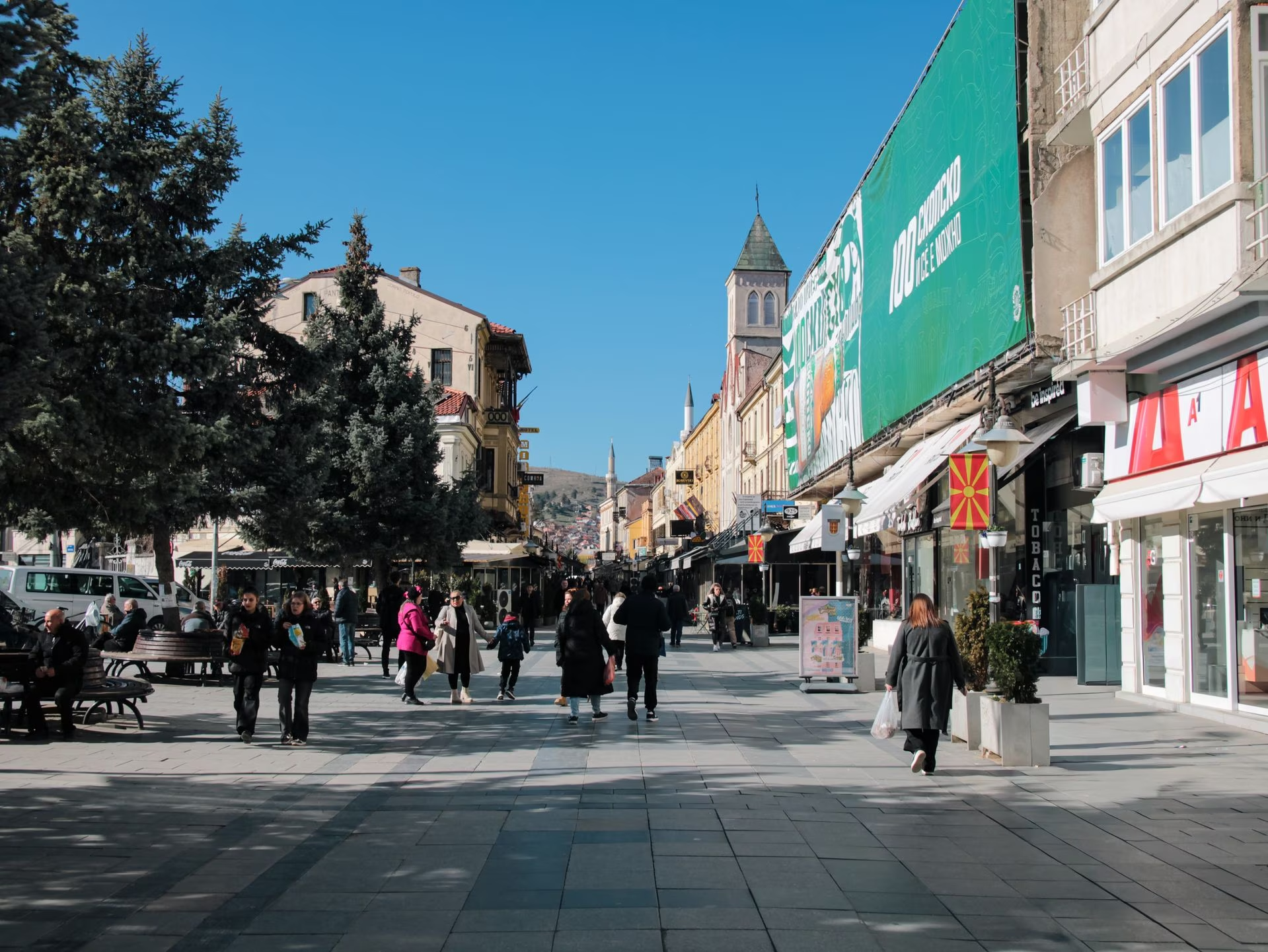
Bitola is about two hours from Ohrid by bus and a complete change of register again, a former Ottoman consular city where a dozen European powers once kept diplomats, hence its old nickname, "the city of consuls". It's quieter and less visited than either Skopje or Ohrid, with a long pedestrian street of Baroque-Ottoman facades and a genuinely excellent Roman site a short ride away.
Walk Shirok Sokak, the wide pedestrian boulevard that is Bitola's centrepiece, lined with 19th-century consular buildings, cafés and Baroque-Ottoman facades. Several of the old consulate buildings survive and are marked, giving the street an air of faded diplomatic grandeur rare anywhere else in North Macedonia. The clocktower and the Ottoman-era mosques nearby are worth a slow look.
Visit the Old Bazaar, smaller and less touristy than Skopje's, and, if you have the stomach for it, climb the minaret-height clock tower or wander into a working hammam still in occasional use. Evenings on Shirok Sokak are properly local, this is a university town and the street fills up after dark.
Spend the morning at Heraclea Lyncestis, a Roman and early-Byzantine city on the edge of Bitola, with an intact amphitheatre, colonnaded streets and some of the finest surviving Byzantine floor mosaics in the country, still open to the sky. It's a fifteen-minute walk from the centre and genuinely underrated for how little-known it is outside the region.
Take the afternoon bus back to Skopje (around two and a half to three hours) to connect with your onward flight from Skopje International Airport (SKP), closing the loop. If your flight is early the next morning instead, an evening back in Skopje's Old Bazaar is a fitting last night.
Where to eat in Bitola
Getting around
This entire loop runs on intercity buses, and it works well. There's no need to rent a car, roads in North Macedonia can be mixed in quality outside the main routes, and driving isn't necessary for this itinerary. Buy tickets at the station counter rather than online, most routes here aren't set up for advance web booking the way Western Europe is.
| Skopje → Ohrid | Intercity bus · around 3 hours · frequent departures from Skopje's main bus station. Buy your ticket a day ahead in high season if you want a specific departure time; otherwise turn up an hour before. |
| Ohrid → Bitola | Intercity bus · around 2 hours · fewer daily departures than the Skopje route, so check the return time before you commit to your last Ohrid activity. |
| Bitola → Skopje | Intercity bus · around 2.5–3 hours · regular departures through the day, including options timed for onward evening flights from Skopje. |
| Airport → Skopje centre | Airport shuttle bus from Skopje International (SKP) to the city centre, cheap and straightforward, or a pre-booked taxi if you land late. Avoid unmetered taxis touting outside arrivals. |
| Within Skopje & Bitola | On foot for the old towns and centres, both are compact. Taxis are cheap and useful for Matka Canyon from Skopje or Heraclea Lyncestis from Bitola if you'd rather not walk. |
| Within Ohrid | On foot in the old town, and small boats or local buses down the lakeshore for Sveti Naum and the Bay of Bones. Boats are a genuinely pleasant way to cover that stretch rather than a pure formality. |
What's worth booking
Top-rated experiences here don't sell out the way Sintra or the Douro do, but the ones below are still worth reserving ahead, either because departures are limited or because they're the clear highlight of that day.
Where to stay
Accommodation across all three towns is inexpensive by European standards, and small guesthouses and family-run apartments generally beat chain hotels for character and value. In Ohrid especially, a lake view is worth chasing even at a modest budget.
How to eat well
Macedonian food sits at the crossroads of Balkan, Mediterranean and Ottoman cooking, grilled meats, slow-cooked bean and vegetable dishes, and excellent produce, at prices that are low even by regional standards. Ajvar, a roasted red pepper relish, appears on nearly every table and is worth buying a jar of to take home. Portions tend to be large and sharing is normal.
North Macedonia also has a genuine, underrated wine industry, mostly around Tikveš in the country's centre, worth trying a glass of even if a full winery visit doesn't fit this route. Rakija, a strong fruit brandy, is the standard toast and often served free after a meal as a gesture rather than an upsell.
Dishes worth knowing
| Tavče gravče | Baked beans slow-cooked in a clay dish with paprika and herbs, often considered the national dish. Simple, hearty and a good cold-weather order, usually served bubbling straight from the oven. |
| Kebapi | Small skinless grilled meat fingers, the Macedonian answer to Balkan-wide ćevapi, served with raw onion, ajvar and soft flatbread (somun). The default cheap, fast lunch everywhere in the country. |
| Ajvar | A relish of roasted red peppers, sometimes with aubergine, cooked down until sweet and smoky. Made at home in huge batches every autumn and served with almost everything. Worth buying a jar to bring home. |
| Ohrid trout | The lake's endemic, protected trout, now farmed rather than wild-caught, grilled simply and eaten lakeside. The signature dish of the Ohrid leg of the trip. |
| Shopska salad | Tomato, cucumber, onion and a generous topping of grated white cheese (sirenje), the Balkan salad found on every menu. A simple, reliable starter or side to almost anything. |
| Rakija | A strong fruit brandy, usually grape-based, drunk as an aperitif or offered free after a meal. Homemade versions vary hugely in strength and flavour; a restaurant's own bottle is often a point of pride. |
Travel essentials
What to pack
North Macedonia's climate is continental, hot summers and cold winters, with the lake at Ohrid softening things a little in its immediate area. Pack for walking and for cash-based transactions more than for any particular dress code; this isn't a place that demands much beyond comfort and practicality.
- Comfortable walking shoes, all three towns have cobbled or uneven old-town streets
- A swimsuit if travelling May to September, for Lake Ohrid's beaches and the boat trip to Sveti Naum
- A light layer for evenings, even in summer the continental climate cools noticeably after dark
- Modest clothing for visiting active monasteries and mosques, shoulders and knees covered
- Sun protection for the open-air Roman mosaics at Heraclea and the lakeside days
- Passport or, for many nationalities, national ID card (North Macedonia is not in the EU or Schengen)
- Travel insurance, downloaded and accessible offline
- Cash in Macedonian denars, cards are unreliable outside Skopje and Ohrid's centre
- A card with low foreign transaction fees for the ATM withdrawals you'll be making regularly
- eSIM, activated before landing
- Universal adapter, North Macedonia uses 230V Type C/F plugs (standard continental Europe)
- A power bank for long bus rides between towns with limited charging
- Offline maps downloaded in advance, connectivity thins out on the rural stretches between stops
- A reusable water bottle, tap water is generally safe in the main towns
- A phrasebook or translation app with Cyrillic support, useful once you're past the main tourist strips
Before you go
| Visa | North Macedonia is not in the EU or Schengen. EU, UK, US, Canadian and Australian passport holders, among many others, can enter visa-free for up to 90 days. Check the current requirement for your nationality before you fly, as rules can change. |
| Currency | Macedonian Denar (MKD). Cards are accepted in Skopje's centre and Ohrid's tourist areas but far from universal, cash is still standard for buses, small restaurants, markets and most of Bitola. Withdraw denars from ATMs as you go. |
| Language | Macedonian, written in Cyrillic script. English is common with younger people and in tourism-facing businesses in Skopje and Ohrid, less so elsewhere. Learning the Cyrillic alphabet, even just enough to sound out bus destinations and menus, helps a lot. |
| Connectivity | Good 4G in Skopje, Ohrid and Bitola; patchier on rural roads and around Matka Canyon. An eSIM or local SIM is cheap and worth activating on arrival. |
| Health | No vaccinations required for most visitors. Tap water is generally safe in the main towns; bottled water is a reasonable precaution in rural areas. Pharmacies are well stocked in all three towns. The general emergency number is 112. |
| Electricity | 230V, Type C/F plugs, standard for continental Europe. EU travellers need nothing extra; UK and US visitors need an adapter. |
What it costs
North Macedonia is one of the cheapest countries left in Europe to travel in, cheaper than its Balkan neighbours that have already picked up more tourism, and this loop is easy to do well without spending much. The main variable is how much of a splurge you make of Ohrid's lakeside guesthouses and boat trips.
What pushes costs up: a lakeside room in Ohrid in July or August, private boat charters instead of shared trips, and taxis instead of buses for every transfer. What keeps costs down: travelling in the shoulder months, eating where locals eat, sticking to intercity buses, and paying cash, which avoids the occasional card surcharge outside the main towns.