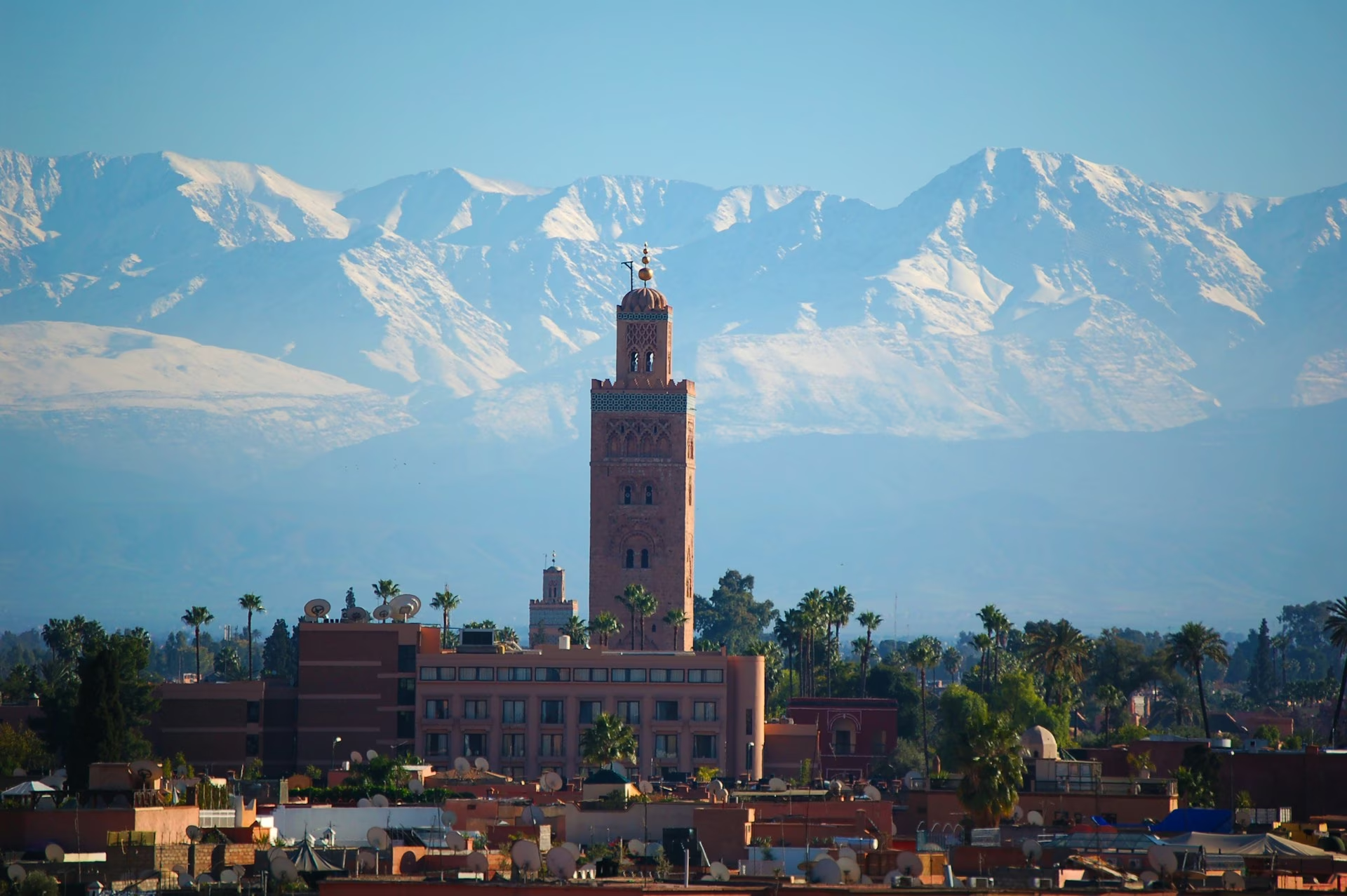
Marrakech → High Atlas → Merzouga (Sahara) → Fez
Morocco – 10 Day Itinerary: Marrakech, Sahara & Fez
Morocco packs more contrast into ten days than almost anywhere: a thousand-year-old medina, a 4,000-metre mountain range, and the edge of the Sahara, all within a week's drive of each other. This itinerary runs one way, from Marrakech across the High Atlas to the dunes at Merzouga, then north to Fez, so you fly into one city, out of the other, and never double back. It's designed to show the country's range without turning the trip into a driving marathon.
Why Morocco
Most people see Marrakech and leave, which is a little like seeing one famous square and claiming you've done the country. Marrakech is a great opening act, but it's an act: the version of Morocco that performs for visitors. The rest of this route is where the country stops performing: a mountain pass that climbs to over 2,000 metres, rammed-earth kasbahs the colour of the earth they're built from, a sea of dunes at the edge of the Sahara, and Fez, the largest living medieval medina in the world.
This route covers ten days across four stages: three days in Marrakech to get oriented, two days crossing the High Atlas past Aït Ben Haddou and the great gorges, two days at Merzouga for the Sahara and the long drive north through the Middle Atlas, then three days in Fez for the medina and what surrounds it. It runs one way, Marrakech in and Fez out, so you never repeat a road. It's a first-timer's route that doesn't feel like one.
The one honest caveat: Morocco has friction. The medinas of Marrakech and Fez come with hustle, such as unofficial "guides", souk pressure, and the occasional pointed misdirection. The driving days between stops are genuinely long. The heat in the wrong season is punishing. And haggling is the default, not the exception. None of this is dangerous and all of it is navigable, but it's worth knowing before you arrive rather than discovering on day one.
Planning
March, April and May are the best months. Marrakech is warm without being oppressive, the High Atlas is green and often still snow-capped, wildflowers cover the valleys, and the desert is hot in the day but not yet dangerous. This is the window most people who've been will tell you to aim for. Late May starts to tip toward summer heat in the far south.
September, October and November are equally good, and October is arguably the single best month on the calendar. The summer heat has broken, the desert nights are pleasant rather than freezing, and the light in the mountains is at its best. November is quieter and still comfortable, though desert nights begin to cool sharply.
December to February works with the right expectations. Marrakech days are mild but nights are cold; the High Atlas gets real snow and the Tizi n'Tichka pass can close briefly after storms; desert nights are genuinely freezing. Crowds are thin and prices drop. Pack properly and it's a rewarding, quiet time to go.
Map
Marrakech, Days 1–3
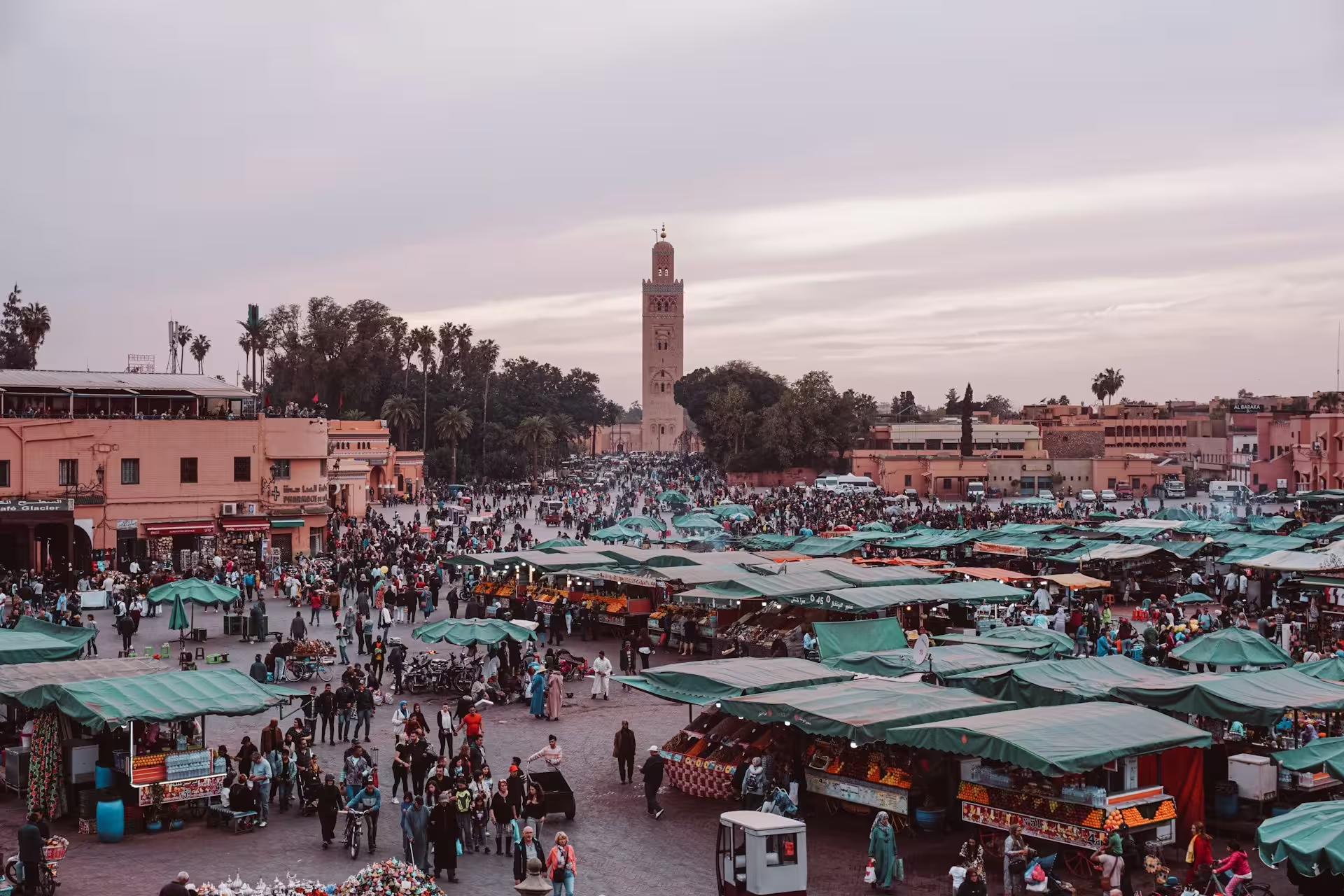
Three days is the right amount of time for Marrakech: enough to get past the initial sensory overload and start to read the city, not so long that the medina hustle wears you down. The old city is a walled maze of souks and alleys with a single great square at its heart; the new city (Guéliz) is where Marrakech goes about its modern business. Base yourself in the medina, walk it slowly, and don't try to see everything.
Start at the Koutoubia Mosque, the 12th-century minaret that anchors the skyline (non-Muslims can't enter, but the gardens around it are the calmest introduction to the city). From there, walk north into the souks, the covered market streets that fan out from the main square. Getting slightly lost is part of it; the main artery, Souk Semmarine, always leads you back out. Visit the Bahia Palace in the afternoon for the finest surviving example of Moroccan stucco and zellij tilework in the city.
In the evening, Jemaa el-Fna transforms. By dusk the square fills with food stalls, musicians, storytellers and crowds; it's touristy and it's also genuinely alive. Eat at one of the busy grill stalls (pick one where locals are eating), or head to Mechoui Alley just off the square for slow-roasted lamb pulled straight from underground pit ovens.
Open the day at the Ben Youssef Madrasa, a beautifully restored 16th-century Quranic school and the single most impressive interior in the medina: go early, before the tour groups. Nearby, Le Jardin Secret is a restored riad garden that makes a quiet mid-morning stop, and the Saadian Tombs and the ruined El Badi Palace are within walking distance to the south.
In the afternoon, cross into Guéliz for the Jardin Majorelle and the adjoining Yves Saint Laurent Museum. The garden is small and extremely popular: book a timed ticket online in advance or you'll queue in the sun. Finish with mint tea on a rooftop as the light drops; the cafés around the Mouassine and Kasbah quarters have some of the best.
Book a traditional hammam in the morning: a steam, a black-soap scrub and a rinse. There's a version for every budget, from neighbourhood public hammams to spa riads, and it's the single best way to reset before the road days ahead. Spend the rest of the morning in the Mellah (the historic Jewish quarter) and the spice and textile souks, where the pressure to buy is lower and the haggling more relaxed.
Keep the afternoon deliberately loose: last shopping in the souks (this is your window to actually buy, since you won't pass this way again), a final rooftop tea, and an early night. If you're itching for a taste of the landscape to come, a half-day trip into the Ourika Valley in the High Atlas foothills is an easy add-on from the city.
Where to eat in Marrakech
High Atlas & Aït Ben Haddou, Days 4–5
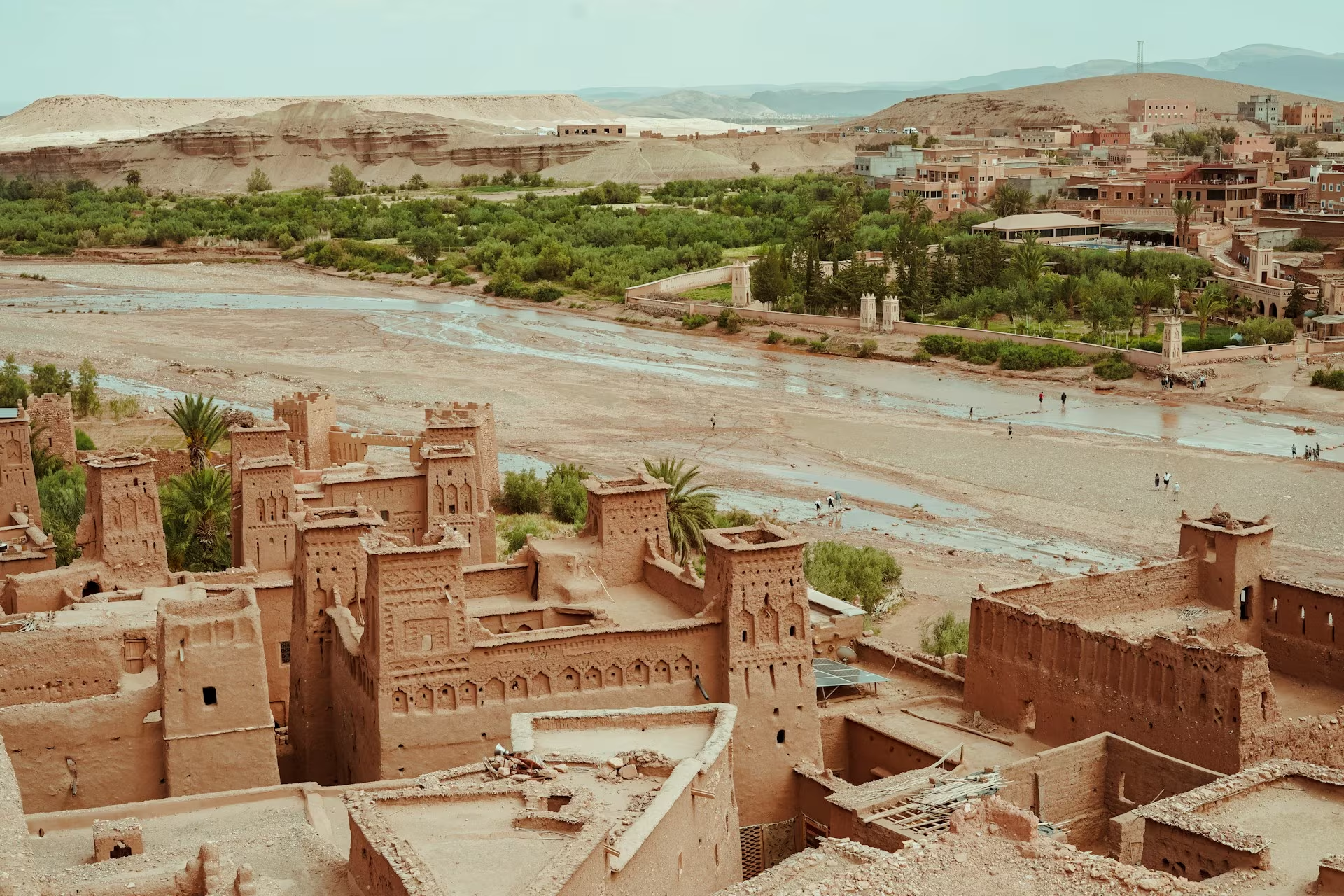
This is where the route earns itself. You leave Marrakech by road and climb the Tizi n'Tichka pass, the highest major road pass in North Africa at over 2,200 metres, and the drive itself is the attraction: switchbacks, Berber villages clinging to the slopes, and the land turning steadily redder and more dramatic as you cross to the far side of the High Atlas. From here the landscape does the work; your job is mostly to look out of the window and stop often.
Cross the Tizi n'Tichka in the morning, then stop at Aït Ben Haddou, a fortified village (ksar) of rammed-earth kasbahs stacked against a hillside, a UNESCO site and one of the most photographed places in Morocco (Gladiator and Game of Thrones both filmed here). Cross the riverbed and climb to the old granary at the top for the view back over the whole ksar. Continue to Ouarzazate, known as "the door of the desert", with its film studios and the Taourirt Kasbah.
Push on into the Dades Valley, past the rose-growing town of Kalaat M'Gouna, to the mouth of the Dades Gorge. Overnight in a kasbah guesthouse (auberge) in the gorge: half-board is standard, and dinner is usually a home-cooked tagine eaten as the walls of the canyon go dark.
Start with the famous switchback road out of the Dades Gorge, then cross to the Todra Gorge, where limestone walls rise up to 300 metres over a canyon floor you can walk along a river. It's cool, dramatic and a complete contrast to the desert ahead. From Tinghir, the road runs east through increasingly arid country until, near the end of the day, the great dunes of Erg Chebbi appear on the horizon, creating a genuine "there it is" moment.
Arrive at Merzouga in the late afternoon, transfer to camels, and ride out into the dunes for sunset. You'll spend the night at a desert camp in the sand: dinner around a fire, Amazigh drumming, and a sky with more stars than most people have ever seen. Even standard camps now have private, comfortable tents.
On the road: where to stop and eat
The Sahara & the road to Fez, Days 6–7
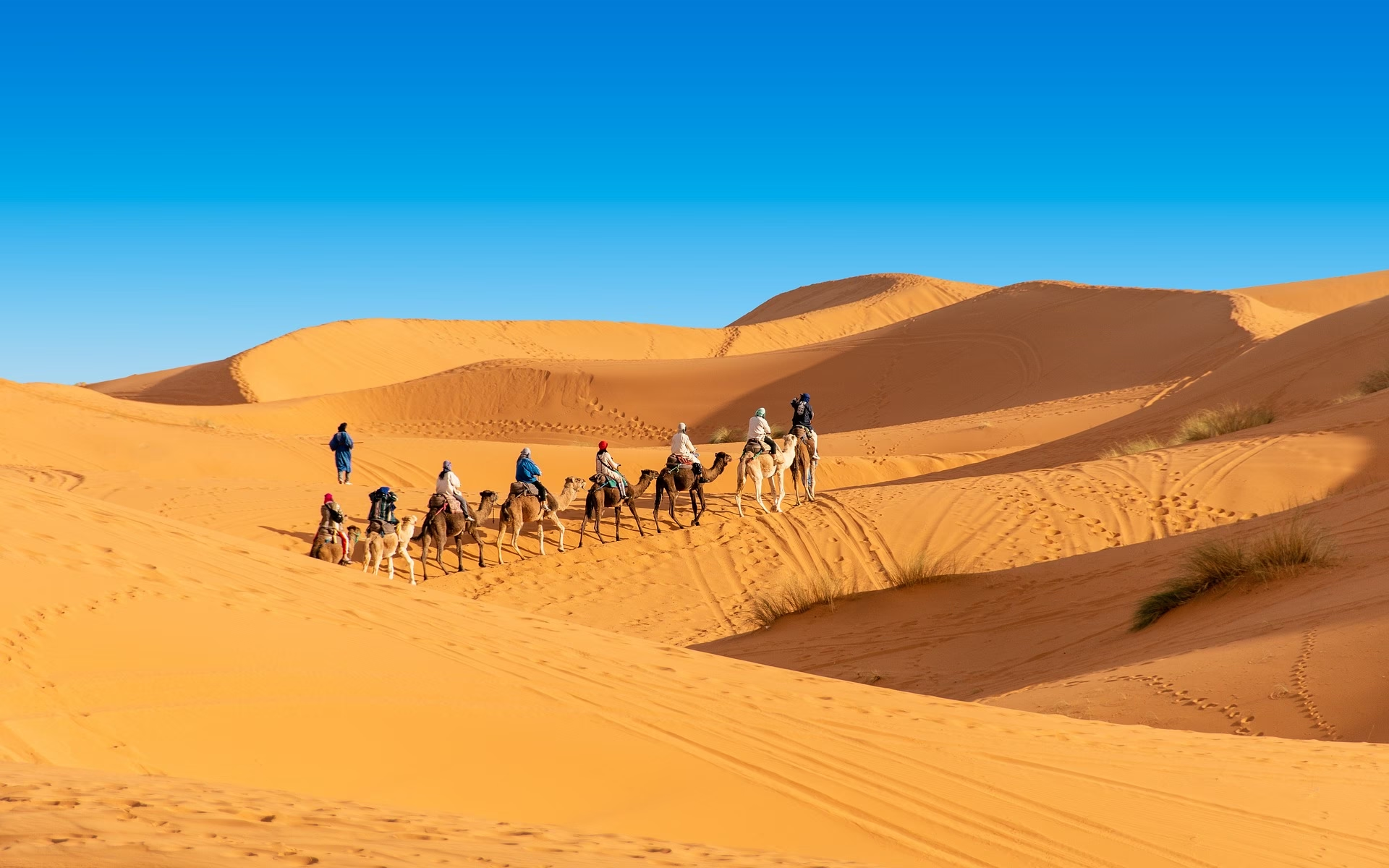
The mistake most rushed tours make is treating Merzouga as a one-night stop: arrive at sunset, leave at dawn. Give the desert a full day and it becomes the highlight of the trip rather than a photo opportunity. Then comes the single longest drive of the route, north through the Middle Atlas to Fez, which is a proper day on the road but a beautiful one.
Wake early for sunrise over Erg Chebbi: the dunes shift colour minute by minute and it's worth the cold start. After breakfast at camp, spend the day around the desert rather than rushing off: a 4×4 loop of the erg, sandboarding, or a visit to Khamlia, a village of descendants of enslaved Saharan peoples known for its Gnaoua music, where you can sit in on a session. You can also meet nomadic families still living in the fringes of the dunes.
Spend a second night here, either back in the sand or, for a softer landing, in a comfortable kasbah on the edge of the dunes with a pool. After two days of driving and a night in a tent, the pool earns its keep.
The drive north is long (budget the whole day), but it's some of the best scenery on the route. You follow the Ziz Valley and its ribbon of palm oases, climb through Midelt, then enter the Middle Atlas. Stop at the cedar forest near Azrou, home to troops of wild Barbary macaques, and pass through Ifrane, an improbably Alpine-looking town built by the French in the 1930s and nicknamed "Little Switzerland".
Arrive in Fez in the evening. Have your riad arrange someone to meet you at the nearest medina gate: the old city is a genuine maze and finding a riad down an unlit alley on your first night, tired from the road, is no fun without a guide. Eat close to where you're staying and save the medina for the morning.
On the road: where to stop and eat
Fez, Days 8–10
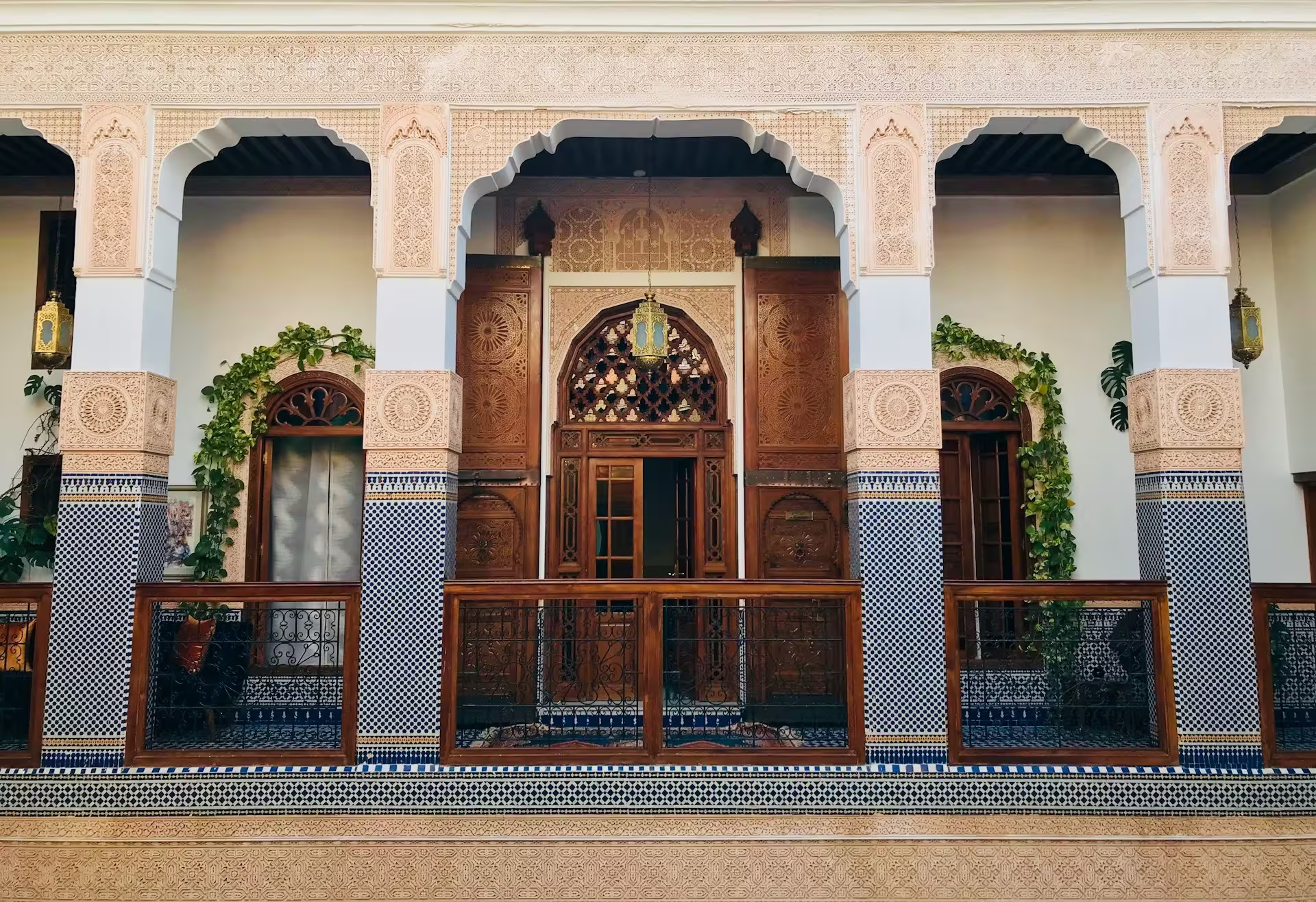
Fez is older, denser and more overwhelming than Marrakech: the intellectual and spiritual capital of Morocco, and home to Fez el-Bali, the largest car-free urban area in the world and the most complete medieval city on the planet. It rewards patience and a good guide. Three days lets you go from disoriented to genuinely enjoying getting lost, with time for what lies just outside the walls.
Hire a licensed guide for the morning: this is the one city on the route where it genuinely pays off, because the medina has thousands of alleys and no logic a visitor can read on day one. Enter through Bab Bou Jeloud (the blue gate), and see the Al-Attarine Madrasa (arguably the finest tilework in the country), the exterior and courtyard glimpses of Al-Qarawiyyin (founded in 859, often called the world's oldest continually operating university), and the Chouara Tanneries from a surrounding leather-shop terrace, where hides are still dyed in stone vats exactly as they were centuries ago.
In the afternoon, let the guide go and wander on your own. Getting lost in Fez el-Bali is the point once you have your bearings; the alleys open onto workshops, food stalls, tiny mosques and courtyards you'd never find on a map.
Take a day trip west to Volubilis, the best-preserved Roman ruins in Morocco, where mosaics sit open to the sky in a hillside of olive groves. Combine it with the whitewashed holy town of Moulay Idriss, spilling down two hilltops nearby, and the imperial city of Meknes with its monumental Bab Mansour gate. It's an easy, rewarding loop and a change of pace from the medina intensity.
Back in Fez, climb to the Marinid Tombs on the hillside above the medina for sunset: the single best view over the old city, with the call to prayer rising from a thousand rooftops as the light goes. It's the kind of moment that stays with people.
Use the final morning for whatever the medina held that you didn't get to: the pottery and zellij cooperatives outside Bab Ftouh, where the famous Fez-blue ceramics are made and where prices are better than in the souks, or simply a last slow walk and a final round of mint tea. Buy now, as this is your last chance on the route.
Allow around 30–40 minutes to Fez-Saïss Airport (FEZ) by petit taxi, and build in a comfortable buffer: agree the fare before you get in. From here you fly home or onward, having crossed the whole country without once retracing your steps.
Where to eat in Fez
What's worth booking in advance
Morocco is relatively easy to navigate on the fly, but for a 10-day one-way route, booking these core elements in advance saves major logistics headaches and ensures you don't waste time in lines.
Getting around
Morocco's transport splits neatly in two. Between the imperial cities of the north and coast, trains are excellent and cheap. But the heart of this route (Marrakech across the Atlas to the Sahara and up to Fez) is not a rail journey, as there's no train through the desert. The standard, and by far the easiest, way to do it is a private or small-group 4×4 tour with a driver. Everything else is short hops and city taxis.
| Marrakech → Fez (via the desert) | Private 4×4 tour · 4 days / 3 nights · the spine of the trip. Includes the Atlas crossing, Aït Ben Haddou, the gorges, Merzouga and the camel trek. Arrange in Marrakech and confirm it ends in Fez, one-way. Sharing a small-group tour brings the per-person cost right down. |
| Airport → Marrakech medina | Petit taxi from Marrakech Menara (RAK) · about 15 minutes · cheap. Insist on the meter ("compteur") or agree a price before you get in. Bus 19 also runs to Jemaa el-Fna. Have your riad send a porter to meet you at the nearest gate, as cars can't reach most riads. |
| Within the medinas | On foot. The old cities of Marrakech and Fez are largely car-free; you walk everywhere inside the walls. For longer hops to Guéliz, the new city or the station, use a petit taxi (metered, cheap, max three passengers). |
| Fez → Fez-Saïss Airport | Petit taxi · around 30–40 minutes · inexpensive. Agree the fare in advance. Build in a buffer for medina-gate pickup and city traffic. |
| Fez → Chefchaouen / Tangier (if extending) | CTM or Supratours bus, or a grand taxi · Chefchaouen ~3–4h, Tangier further on. Comfortable intercity coaches; book CTM online in advance for the popular runs. |
| Trains (the alternative) | ONCF rail connects the northern cities (Marrakech, Casablanca, Rabat, Fez, Tangier) cheaply and comfortably, with the Al Boraq high-speed line on the Tangier–Casablanca stretch. Relevant only if you skip the desert and travel the north instead; book at oncf-voyages.ma. |
Where to stay
Staying inside the ancient medinas of Marrakech and Fez in a traditional Riad (a courtyard house) is an essential part of the Moroccan experience. Book early for top-rated riads as the best small properties sell out months in advance.
How to eat well
Moroccan food is more varied than the tagine-and-couscous cliché suggests, and the gap between eating well and eating badly is mostly about avoiding the tourist-menu traps around the main squares. A busy place doing a handful of dishes, or wherever a riad host sends you, almost always beats a laminated menu with photos. Bread (khobz) comes with everything and does the work of a fork; mint tea (poured from height, very sweet, nicknamed "Berber whisky") follows every meal.
A few rhythms to know: couscous is traditionally a Friday dish, so that's the day to seek it out. Tagines are usually shared from the dish in the middle of the table. And Morocco is a Muslim country: alcohol is limited, available in licensed restaurants, hotels and some riads, but not in most medina eateries, so don't expect wine with every meal.
Street food is good and safe if you choose busy stalls with high turnover. The exception to relax about is fresh juice and salads early in the trip: give your stomach a day or two to adjust, and stick to bottled or purified water throughout.
Dishes worth knowing
| Tagine | The national dish and a method as much as a recipe: meat or vegetables slow-cooked in the conical clay pot that shares its name. Classics: lamb with prunes and almonds, chicken with preserved lemon and olives, or kefta (meatball) with egg. Mop it up with bread. |
| Couscous | Steamed semolina under a mound of slow-cooked vegetables and meat, traditionally eaten on Fridays after prayers. The real thing is light and fluffy, worlds away from the boxed version. Seek it out on a Friday for the best of it. |
| Pastilla (b'stilla) | Fez's signature dish: a warm pie of shredded poultry, eggs, almonds and spices wrapped in flaky warqa pastry and dusted with cinnamon and icing sugar. Sweet-savoury and unexpected, and one of the finest things you'll eat in Morocco. |
| Harira | A hearty tomato, lentil and chickpea soup, often with a little lamb, and the classic dish eaten to break the fast during Ramadan. Cheap, warming and available everywhere, especially good on a cool evening in the mountains or desert. |
| Mechoui | Whole lamb slow-roasted until it falls apart, pulled from pit or clay ovens and eaten simply with bread, cumin and salt. Mechoui Alley off Jemaa el-Fna in Marrakech is the classic place to try it. Order by weight. |
| Msemen & baghrir | Breakfast breads: msemen is a flaky, square, pan-fried flatbread; baghrir is a spongy semolina pancake full of holes ("thousand-hole pancake"). Both are eaten with honey, argan oil and butter, or jam, alongside mint tea or coffee. |
Travel essentials
What to pack
Morocco asks for a bit more packing thought than a straightforward city trip, because this route spans 40°C desert days, cold desert nights, mountain passes and conservative medinas in a single week. Layers and modesty are the two guiding principles; the rest is about sun, dust and the odd unsettled stomach.
- Lightweight layers that cover shoulders and knees, more comfortable and respectful in medinas and villages, especially for women
- A warm layer (fleece or light down) for desert nights and the Atlas, cold even in warm months
- A scarf, for sun, dust in the desert, and covering up at religious sites
- Sturdy closed shoes for the gorges and uneven medina lanes, plus sandals for the heat
- Sunglasses and a brimmed hat, non-negotiable for the desert and open sites like Volubilis
- Passport, valid for at least 6 months beyond travel dates
- Travel insurance, policy downloaded, emergency number saved offline
- Cash matters here, as the dirham is a closed currency: withdraw at an ATM on arrival and carry small notes for taxis, tips and souks
- Wise or Revolut card for ATM withdrawals; cards work in city restaurants and riads but not in most souks
- Airalo eSIM, activated before landing
- Universal adapter, Morocco uses 220V Type C/E plugs (same as continental Europe, so EU travellers need nothing extra)
- Power bank, long road and desert days with little chance to charge
- Headlamp or torch for the desert camp, and a reusable water bottle (tap water is not recommended, so plan to buy or purify)
- High-SPF sunscreen and lip balm, the desert and altitude both burn faster than you expect
- A small first-aid kit with rehydration salts and anti-diarrhoeals, traveller's stomach is common in the first few days
- Navigation: Standard apps like Google Maps often fail inside the covered medinas. Download Maps.me or Organic Maps (with offline Morocco maps) for accurate pedestrian alley paths.
- Communication & Money: Download WhatsApp (essential for contacting drivers and riads), Google Translate (Arabic & French offline packs), and a currency converter like XE.
- Pro Tip: Save your riad’s exact location pin and WhatsApp contact before arriving. If lost in the medina, ask shopkeepers inside their stalls for directions rather than people standing in alleyways.
Before you go
| Visa | EU passport holders (and UK, US, Canada, Australia and many others) get 90 days visa-free entry. No advance registration required. Keep your passport handy, as riads and desert camps register guests with the police as a matter of routine. |
| Currency | Moroccan Dirham (MAD), a closed currency you generally can't buy before you arrive. Withdraw from an ATM at the airport on landing. Cards are fine in city restaurants, riads and larger shops; the souks, taxis, street food and rural stops are cash only. Carry small notes. |
| Language | Moroccan Arabic (Darija) and Amazigh (Berber) are the mother tongues; French is widely spoken and useful; English is common in tourism but less so off the trail. A few words of Arabic go a long way: "salaam" (hello), "shukran" (thank you), "la shukran" (no thank you) for the souks. |
| Connectivity | A local SIM or eSIM is cheap and worth it. 4G is solid in cities and towns, patchy in the gorges and thin to nonexistent in the deep desert: enjoy the disconnection at Erg Chebbi. Wi-Fi is standard in riads and cafés. |
| Health | No vaccinations required for EU travellers. Don't drink the tap water: stick to bottled or purified. Traveller's stomach is common in the first days; bring rehydration salts. Pharmacies are widespread and well-stocked. Emergency numbers: 19 (police, urban), 15 (ambulance), 177 (gendarmerie, rural roads). |
| Electricity | 220V, Type C/E plugs, the same as continental Europe. EU travellers don't need an adaptor; UK and US travellers do. |
- Accommodations & Transfers: Book your Marrakech & Fez riads and arrange airport/porter pickup for day 1.
- Desert Tour: Confirm your Marrakech to Fez desert tour ends in Fez (one-way, not a loop).
- Tickets: Purchase timed-entry tickets online for Jardin Majorelle in advance.
- Connectivity & Apps: Activate an eSIM, download offline maps (Maps.me / Organic Maps) and Google Translate (Arabic/French), and save riad numbers on WhatsApp.
- Money & Flights: Withdraw Dirhams (MAD) at the airport ATM on arrival and double-check your outbound flight leaves from Fez (FEZ), not Marrakech.
- Ramadan: Check Ramadan dates for your travel year to anticipate shifting schedules.
What it costs
Morocco is genuinely affordable, and the single biggest variable on this route is the private desert tour: which is excellent value split between a few people and pricier done solo. Cities are cheap for food and reasonable for accommodation; the desert leg bundles transport, guiding, camel trek and camp into one cost.
What pushes costs up: a private (non-shared) desert tour, boutique riads and desert camps in high season (October, Easter), alcohol, and paying tourist prices in the souks without haggling. What keeps costs down: sharing the desert tour, eating where locals eat and drinking mint tea over café coffee, buying in the calmer Mellah and cooperative shops rather than the main souk drag, and haggling as standard: the first price is never the price.