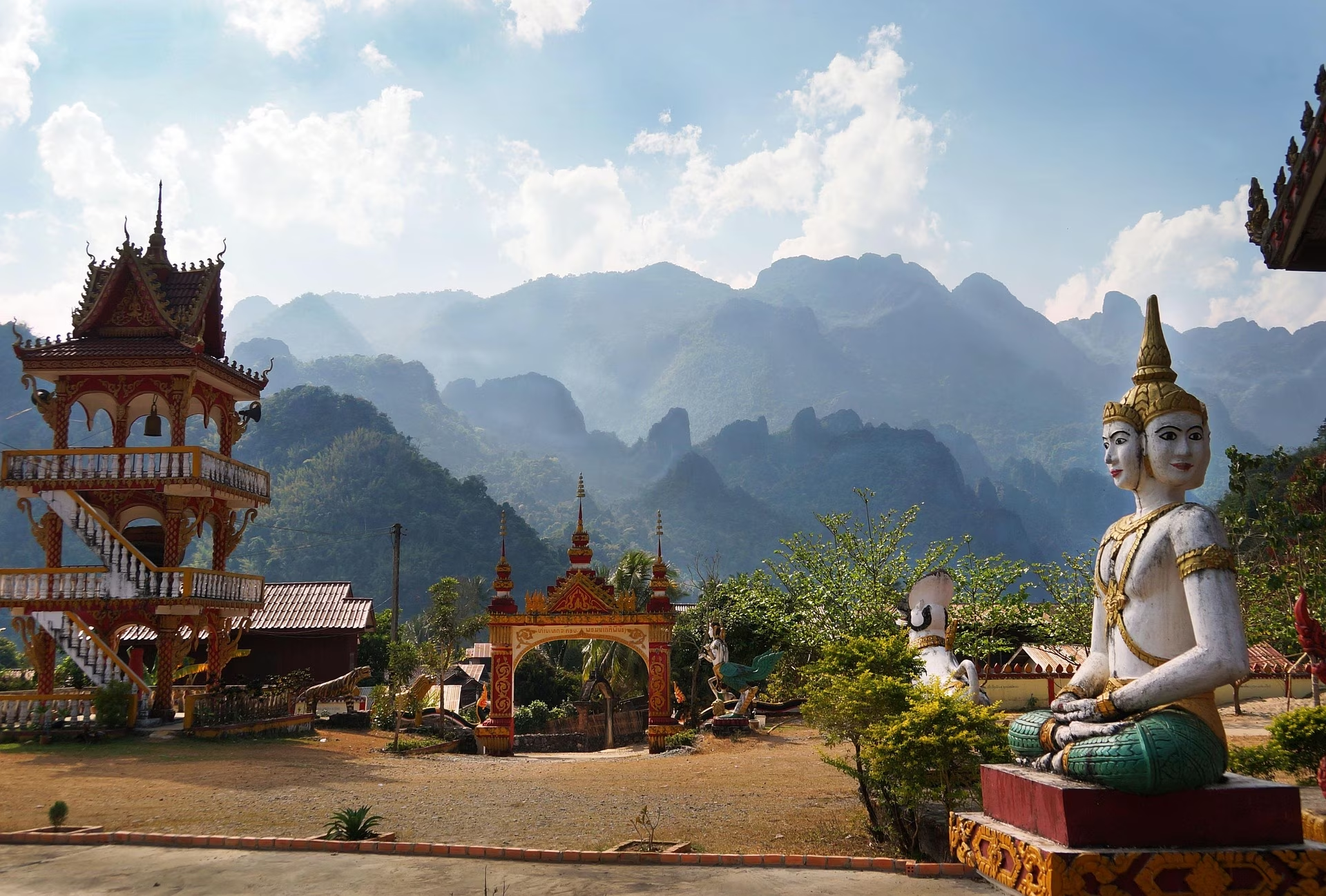
Luang Prabang → Vang Vieng → Vientiane
Laos Itinerary: 8 Days in Luang Prabang, Vang Vieng & Vientiane
While Vietnam and Thailand absorb most of Southeast Asia's current boom, Laos sits quietly next door with the same Mekong, the same limestone karst, the same saffron-robed monks, and a fraction of the visitors. This route runs one way, south from the old royal capital of Luang Prabang through the karst valley of Vang Vieng to Vientiane, the most low-key capital city in the region. It's slow by design, this is a country that rewards not rushing.
Why Laos
Laos is landlocked between Thailand, Vietnam, China, Cambodia and Myanmar, and it has spent the last decade quietly being skipped. While Vietnam's cities and Thailand's islands absorb most of the region's current tourism boom, Laos keeps the same Mekong River, the same limestone karst mountains, and the same French-colonial architecture and Buddhist temple culture, at noticeably lower prices and with noticeably fewer people. It's also, refreshingly, a country that doesn't reward rushing; buses are slow, the pace is unhurried, and that's the point.
This route runs one way, south: three days in Luang Prabang, the former royal capital and a UNESCO World Heritage old town of temples, French villas and a famous dawn alms-giving ceremony, then two days in Vang Vieng, a small town wedged into a valley of dramatic limestone karst along the Nam Song river, and finally three days in Vientiane, the most relaxed and least frenetic capital city in Southeast Asia. You fly into Luang Prabang and out of Vientiane, or take the new high-speed train the whole way, without retracing your steps.
The honest caveat: this is not a fast-paced trip and the infrastructure, while improving quickly, is still genuinely a step behind Thailand or Vietnam. Roads outside the main towns can be rough, journeys take longer than the map suggests, and English drops off outside the tourist centres. None of it is difficult, but it asks for a slower mindset than a typical Southeast Asia itinerary.
Planning
November to February is the cool, dry season and by far the best window: warm days, cool evenings (genuinely cold at night in the hills around Luang Prabang and Vang Vieng), clear skies, and the Mekong and Nam Song rivers at manageable, swimmable levels. This is when most visitors come, though "most" in Laos is still quiet by regional standards.
March to April is the one stretch worth actively avoiding: this is slash-and-burn agricultural season across northern Laos and neighbouring countries, and the resulting haze can blanket Luang Prabang and the north for weeks, dulling views and affecting air quality. May brings the first rains and breaks the haze, though heat and humidity climb.
June to October is the wet season. Rain tends to fall in short, heavy afternoon bursts rather than all day, the countryside turns brilliant green, and rivers run high and fast, sometimes too fast for tubing or kayaking in Vang Vieng. It's cheaper and quieter, but river-based activities are the most affected.
Map
Luang Prabang, Days 1–3
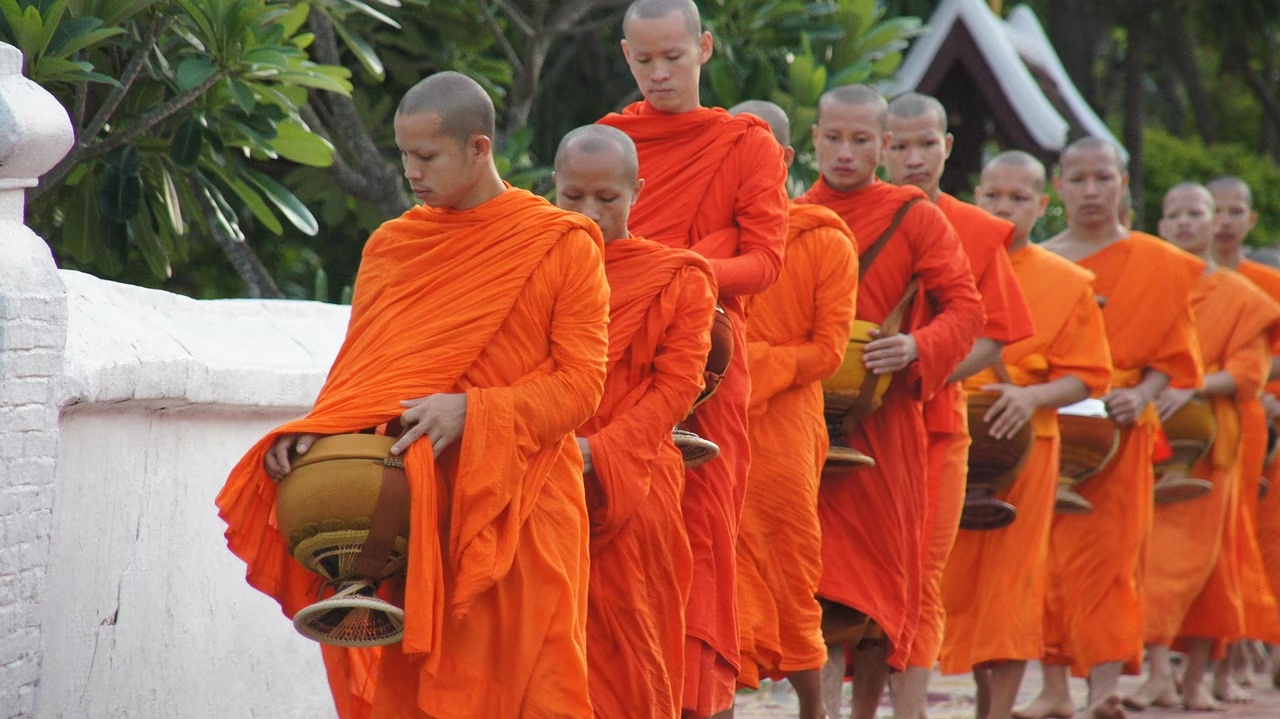
Luang Prabang was the royal capital of Laos until 1975 and is now a UNESCO World Heritage old town where gilded temple roofs sit alongside French colonial shophouses, wedged onto a peninsula between the Mekong and Nam Khan rivers. It's compact enough to walk everywhere and unhurried enough that three days feels right, not indulgent.
Wake before dawn (around 5:30am) to witness tak bat, the daily alms-giving procession, where saffron-robed monks walk the streets collecting rice from kneeling locals. It's a genuine, centuries-old ritual, not a show, so watch quietly from a distance and never use flash photography or hand food directly to monks unless you understand the etiquette. Follow with breakfast at the morning market for fresh baguettes, a French colonial holdover baked fresh every day.
Climb Mount Phousi, the small hill at the centre of town, for sunset over the Mekong, then spend the evening at the night market along the main street, textiles, handicrafts and food stalls run mostly by local families. Visit Wat Xieng Thong, the city's most important temple, during the day, its sweeping roofline and mosaic "tree of life" are the finest in Laos.
Spend the day at Kuang Si Falls, about an hour outside town, a multi-tiered waterfall cascading through a series of turquoise pools ringed by jungle. Swim in the lower pools (the upper ones are usually off-limits), and visit the Free the Bears sanctuary at the base, home to rescued Asiatic moon bears. Go early, by late morning tour buses arrive in force.
Back in town, take a traditional Lao massage, inexpensive and widely available, and use the evening for a slower wander through the old town's side streets, away from the main night market strip, where quiet temple courtyards and riverside cafés are easy to find.
Take a slow boat up the Mekong to the Pak Ou Caves, two limestone caverns packed with thousands of Buddha statues left by pilgrims over centuries. The boat trip itself, past riverside villages and karst cliffs, is as much the draw as the caves. Many boats stop at a rice-whisky distillery village en route, worth a quick, slightly touristy look.
Spend your last afternoon at the UXO Visitor Centre, a sobering, well-run exhibition on Laos's status as the most heavily bombed country per capita in history, a legacy of the Vietnam War-era Secret War that still affects rural Laos today. It's a serious counterpoint to the temples and waterfalls, and worth the hour.
Where to eat in Luang Prabang
Vang Vieng, Days 4–5
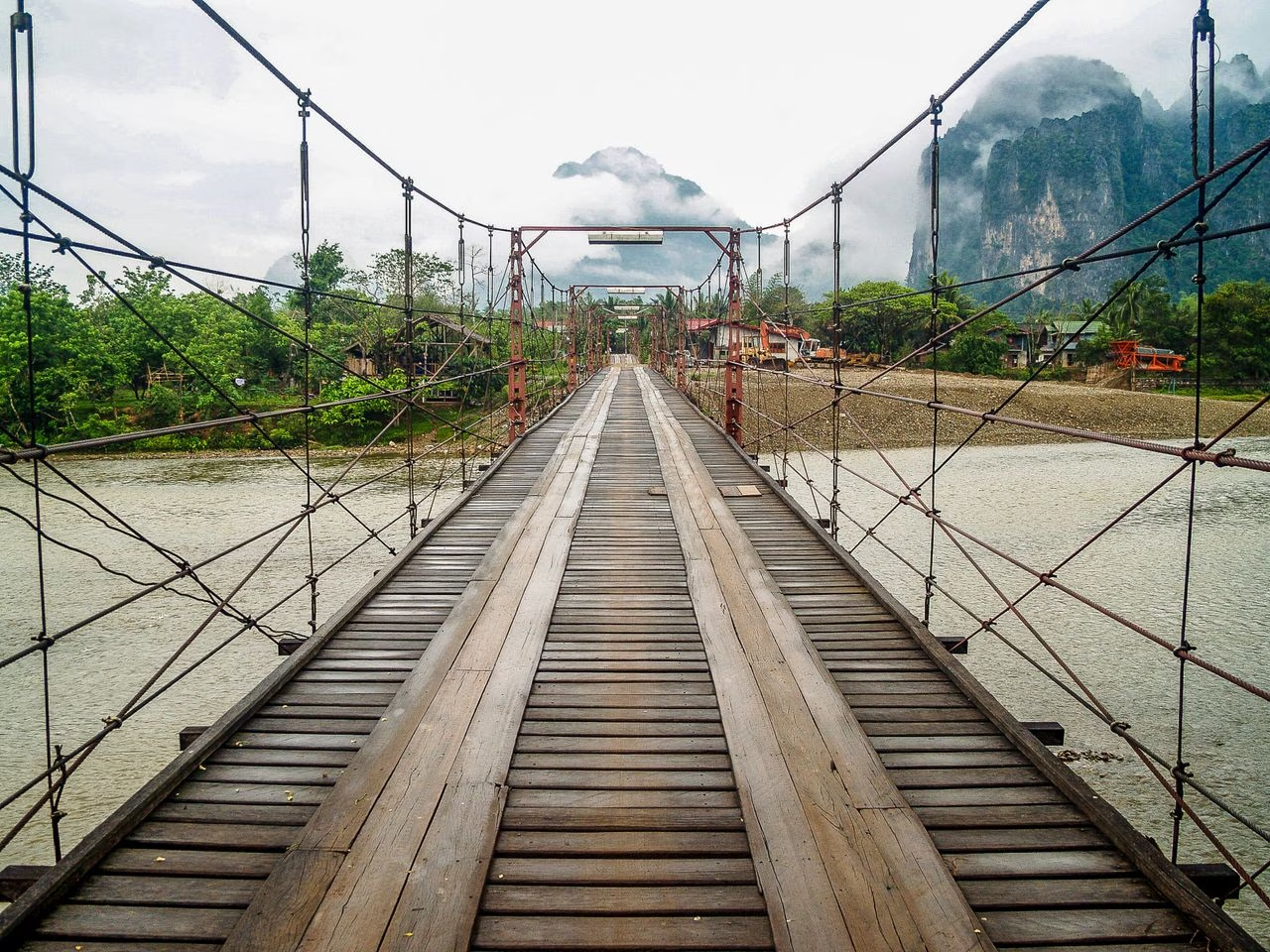
The drive or train ride south from Luang Prabang to Vang Vieng cuts through some of the most dramatic scenery in Laos, and the town itself sits in a valley ringed by limestone karst peaks along the Nam Song river. Vang Vieng had a rowdy backpacker-party reputation a decade ago; that's mostly gone now, replaced by a genuinely beautiful base for caves, kayaking and viewpoints.
Travel south by the high-speed train (around two hours) or by road (longer, but scenic, past mountain villages). Arrive by early afternoon and head straight to the Blue Lagoon area, a cluster of turquoise swimming holes at the base of a limestone cliff, with a rope swing and, for the more adventurous, the Tham Poukham Cave above it, home to a reclining bronze Buddha.
Watch the sunset from one of the riverside bars or restaurants along the Nam Song, with the karst silhouettes turning gold, the single best free view in town.
Choose your pace: a half-day kayaking trip down the Nam Song river, stopping at caves and villages along the way, or a hike up to one of the valley's viewpoints, Nam Xay or Pha Ngern, for a sweeping panorama over the karst peaks (steep, sweaty, and worth every step, best done for sunrise or late afternoon to avoid the midday heat).
Combine it with a visit to another of the area's many caves, Tham Chang is the most accessible, right in town with a viewing platform. If the water level allows, a slower tubing float down the river is still the classic Vang Vieng activity, minus the party-bar excesses of a decade ago.
Where to eat in Vang Vieng
Vientiane, Days 6–8
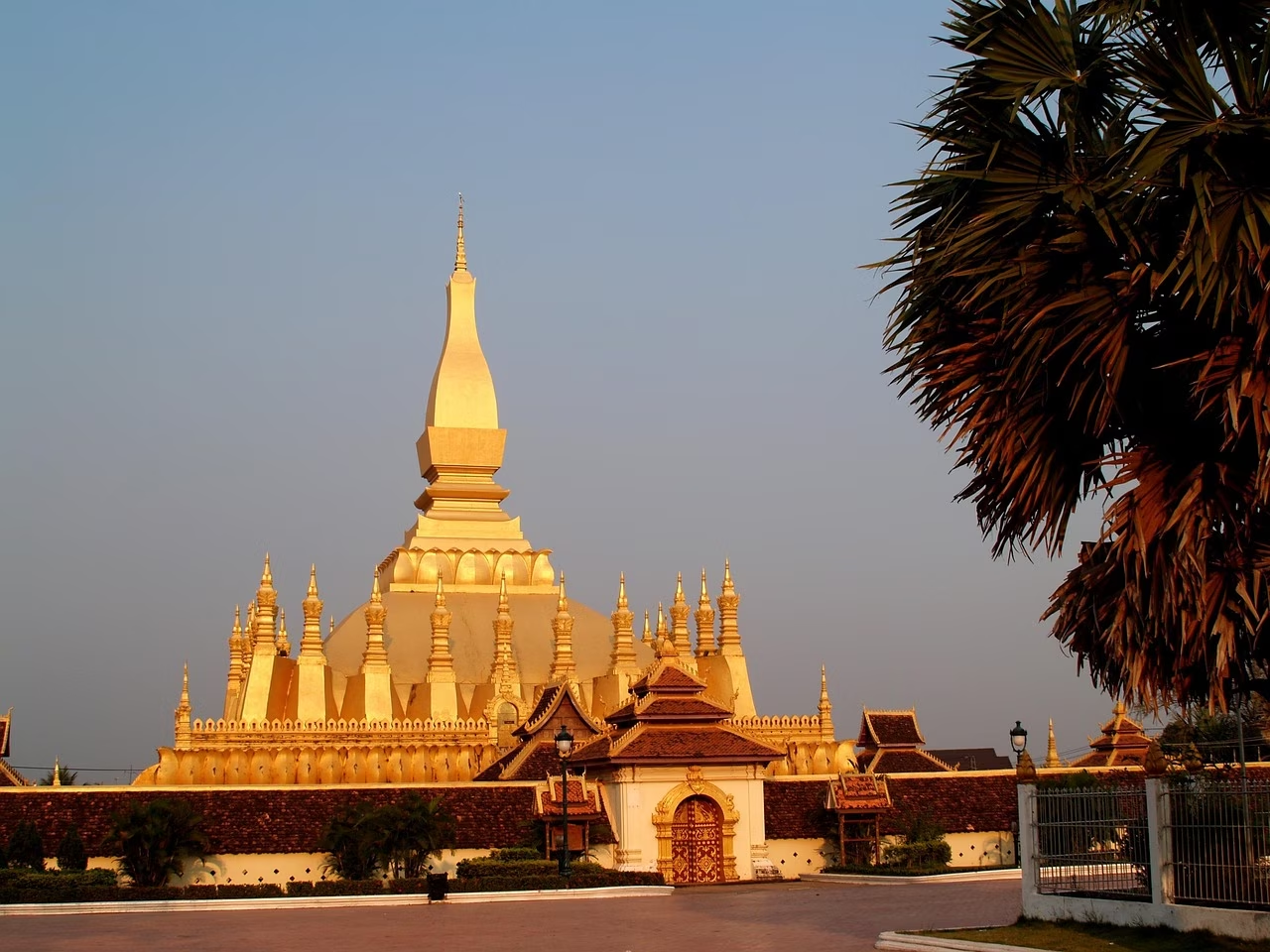
Vientiane is, by some distance, the most low-key capital city in Southeast Asia, a sprawl of low-rise streets, French villas and temple compounds along a bend in the Mekong, with almost none of the frenetic energy of Bangkok or Hanoi. Three days is enough to see the landmarks at an unhurried pace and to close the loop with a proper look at the country's most important religious monument.
Travel south to Vientiane by train (under an hour on the high-speed line) or road. In the afternoon, walk to Patuxai, Vientiane's Arc de Triomphe-inspired war monument, built partly, according to local lore, with cement donated by the US for an airport runway that was never built. Climb to the top for a city view over the tree-lined boulevards below.
Wander Chao Anouvong Park along the Mekong riverfront at sunset, where locals gather for outdoor aerobics classes, street food and views across the river to Thailand on the opposite bank.
Visit Pha That Luang, the gold-covered stupa that is Laos's most important national and religious monument, and appears on the country's official seal. Nearby, Wat Si Saket houses thousands of small Buddha images in niches lining its cloister walls, one of the city's oldest surviving temples. Ho Phra Keo, once home to the Emerald Buddha (now in Bangkok), is now a museum of religious art worth the short visit.
In the evening, explore the night market along the Mekong riverfront for handicrafts and street food, a smaller, more local affair than Luang Prabang's version.
Take a morning trip to Buddha Park (Xieng Khuan), a strange and wonderful sculpture garden of over 200 Buddhist and Hindu concrete statues, built in 1958 by a self-taught monk. It's about 25km from the city, easily reached by tuk-tuk or the local bus, and worth the detour for how genuinely odd and photogenic it is.
Allow around 20–30 minutes to Wattay International Airport (VTE) from the centre. From here you fly home or onward, having crossed the length of Laos's main tourist corridor without once retracing your steps.
Where to eat in Vientiane
Getting around
This route has become considerably easier since the Laos–China high-speed railway opened, cutting what used to be full-day road journeys down to one or two hours. Between the train and minivans, no car is needed anywhere on this route.
| Luang Prabang → Vang Vieng | High-speed train · around 2 hours · book a few days ahead, especially weekends. Minivan is the slower alternative, around 6–7 hours on a winding mountain road, scenic but tiring. |
| Vang Vieng → Vientiane | High-speed train · under 1 hour · the easiest, fastest leg of the whole route. Minivans also run, around 3–4 hours by road. |
| Airport → town centres | Tuk-tuk or hotel transfer from Luang Prabang (LPQ) or Vientiane (VTE) airports, both close to their respective town centres, 10–20 minutes. Agree the fare before you get in. |
| Within each town | On foot for Luang Prabang and Vang Vieng, both are compact. In Vientiane, a mix of walking and tuk-tuk covers the more spread-out sights like Pha That Luang and Buddha Park. |
| Kuang Si Falls, Pak Ou Caves, Blue Lagoon | Shared minivan or tuk-tuk, easily arranged through any guesthouse or tour desk in Luang Prabang and Vang Vieng. Boats to Pak Ou Caves depart from the Luang Prabang riverfront. |
What's worth booking
Most of this trip can be arranged on arrival through guesthouses and local tour desks, but a few things are worth reserving ahead, either because seats or slots are genuinely limited.
Where to stay
Accommodation across all three towns is very affordable, and small guesthouses in restored colonial-era buildings or riverside bungalows offer more character than international chains. Book Luang Prabang a little ahead in the cool season, its charming old-town guesthouses are limited in number.
How to eat well
Lao food is distinct from its Thai and Vietnamese neighbours, built around sticky rice (eaten with the hands, rolled into small balls), fresh herbs, fermented fish sauce, and a fondness for bitter and sour flavours over sweet. It's also, refreshingly, some of the cheapest food left in Southeast Asia. Meals are often shared from a central spread rather than ordered individually.
Tap water isn't safe to drink; stick to bottled or filtered water throughout. Street food is generally safe from busy, high-turnover stalls, and Beerlao, the near-universal national beer, is everywhere and very cheap.
Dishes worth knowing
| Laap | Minced meat or fish (sometimes raw, ask for cooked if unsure) tossed with lime juice, fish sauce, chilli, mint and toasted rice powder. Widely considered the national dish, always eaten with sticky rice. |
| Sticky rice (khao niaw) | Glutinous rice steamed in a woven bamboo basket, eaten with the hands, rolled into a small ball and used to scoop up other dishes. The staple of nearly every Lao meal. |
| Tam mak hoong | Lao green papaya salad, similar to Thailand's som tam but typically funkier, with fermented fish sauce (padaek) and often crab paste. Spicy, sour and an acquired taste worth acquiring. |
| Khao soi (Lao style) | A northern Lao noodle soup with a tomato-based minced pork broth, not to be confused with the Thai curry-noodle dish of the same name. A comforting, inexpensive lunch found across Luang Prabang. |
| Or lam | A hearty Luang Prabang stew of buffalo meat or other meats with eggplant, mushrooms and a distinctive bitter wood chip (sakhaan) that gives it a peppery, numbing edge. A Luang Prabang speciality worth seeking out. |
| Beerlao | The near-ubiquitous national lager, light, crisp and cheap, sold everywhere from riverside bars to roadside stalls. As close to a national symbol as a beer gets. |
Travel essentials
What to pack
Laos is a Buddhist country and, outside the river activities in Vang Vieng, a relatively modest one when it comes to visiting temples. Pack light, breathable clothing for the heat, something warmer for cool-season nights in the hills, and gear suited to getting wet in Vang Vieng.
- Lightweight, breathable clothing that covers shoulders and knees for temple visits
- A warm layer for cool-season (Nov–Feb) mornings and evenings in Luang Prabang and Vang Vieng, genuinely chilly after dark
- Quick-dry clothing and sandals for kayaking, tubing and waterfall days in Vang Vieng
- Comfortable walking shoes for old-town streets and the Nam Xay or Pha Ngern viewpoint climbs
- A light rain jacket if travelling May to October
- Passport valid 6+ months; most nationalities can get a visa on arrival or an e-visa in advance, check current requirements
- Travel insurance, ideally covering adventure activities
- Cash (Lao Kip, US Dollars or Thai Baht all widely usable); ATMs are common in the three main towns but carry cash for rural stretches
- Passport photos for the visa-on-arrival process, worth having a couple spare
- Airalo eSIM, activated before landing
- Universal adapter, Laos uses 230V, a mix of Type A/B/C/E/F sockets depending on the building
- A dry bag for phones and cash on kayaking or tubing days
- Power bank for long train and minivan legs
- Reusable water bottle with a filter, or plan to buy bottled water throughout, tap water isn't safe to drink
- Mosquito repellent, particularly in the wet season
Before you go
| Visa | Most nationalities can get a visa on arrival at Luang Prabang or Vientiane airports (around 30 days, fee varies by nationality, bring passport photos and USD cash), or apply for an e-visa in advance online. Check the current requirement and fee for your passport before you fly. |
| Currency | Lao Kip (LAK), though US Dollars and Thai Baht are widely accepted, especially for larger purchases like tours and accommodation. ATMs are available in all three main towns; carry cash for rural areas and small vendors. |
| Language | Lao is the official language. French has a colonial-era presence in older generations and street signage; English is common in tourism-facing businesses in the three main towns, less so elsewhere. |
| Connectivity | Good 4G in Luang Prabang, Vang Vieng and Vientiane; patchy on rural roads and mountain stretches between towns. A local SIM or eSIM is cheap and worth activating on arrival. |
| Health | Check current vaccination recommendations before you travel (hepatitis A/B and typhoid are commonly advised). Tap water is not safe to drink, stick to bottled or filtered. Malaria risk exists in some rural areas; discuss prophylaxis with a travel clinic if visiting beyond this route. Pharmacies are available in the main towns. Emergency number: 1191 (police). |
| Electricity | 230V, a mix of Type A, B, C, E and F sockets depending on the building. A universal adapter covers all bases. |
What it costs
Laos remains one of the cheapest countries in Southeast Asia to travel in, noticeably less expensive than Thailand or Vietnam for comparable quality. This route is easy to do well on a modest budget, with the high-speed train tickets and any guided activities the main line items.
What pushes costs up: a colonial-style guesthouse in Luang Prabang during peak season, private transfers instead of the train, and adding multiple guided tours per day. What keeps costs down: travelling in the cool season, eating at local noodle stalls and markets, using the high-speed train over private transport, and pacing the trip slowly rather than trying to add extra stops.