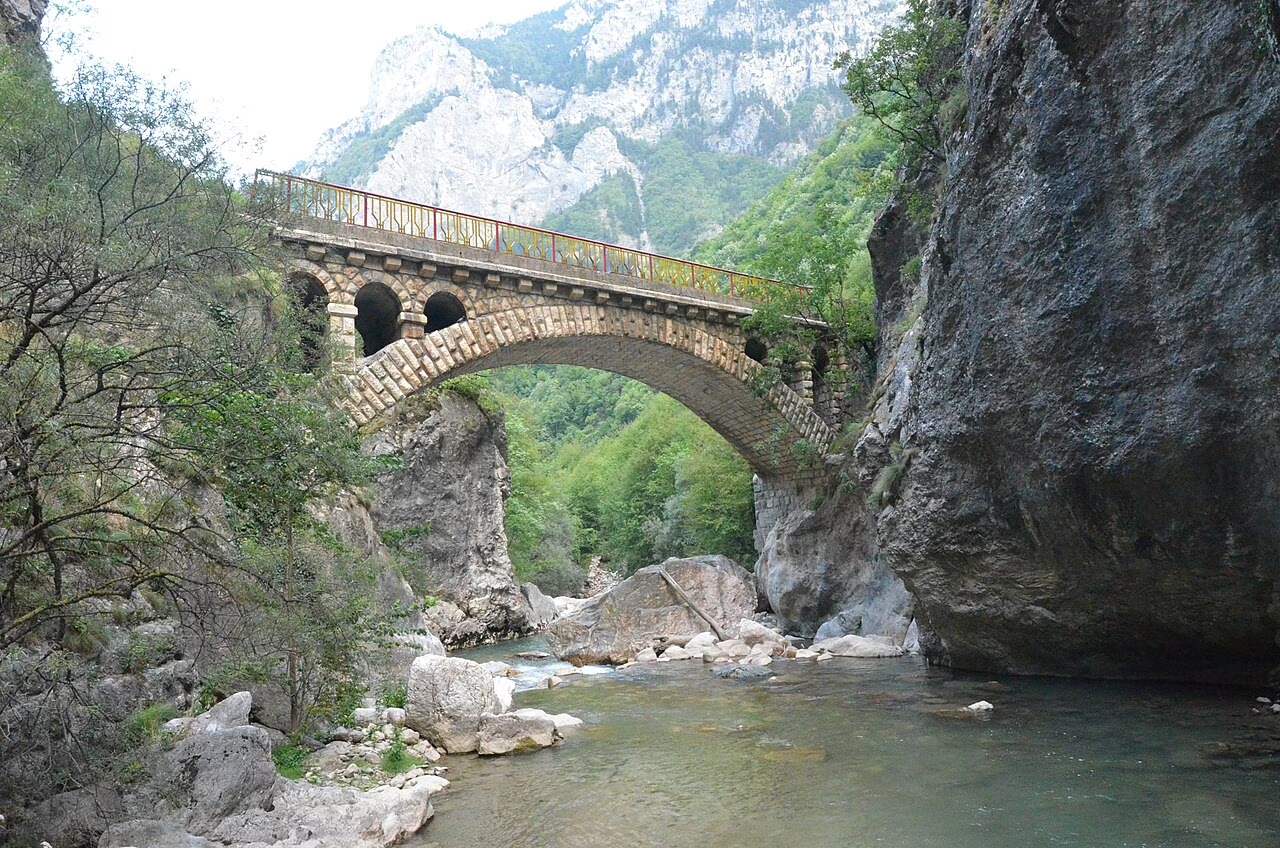
Pristina → Prizren → Peja & Rugova Valley → Pristina
Kosovo Itinerary: The Complete Guide to Pristina, Prizren & the Rugova Valley
Kosovo declared independence in 2008 and is still, in travel terms, close to a blank page. It's cheap, small enough to loop in under a week, and split between three very different registers: Pristina's odd mix of Yugoslav-era monuments and Europe's densest café culture, Prizren's genuinely beautiful Ottoman old town, and the canyons and via ferratas of the Rugova Valley on the edge of the Accursed Mountains. This route runs a simple loop out of Pristina and back, entirely by bus.
Why Kosovo
Kosovo is one of Europe's youngest countries and one of its least visited, and the two facts are related. It declared independence from Serbia in 2008, is still not recognised by every UN member state, and has barely registered on the Balkan travel trail that has already swept through Albania, Montenegro and Croatia. What's here is genuinely worth the detour: Pristina is an odd, likeable capital of Yugoslav monuments and an outsized café scene; Prizren has one of the best-preserved Ottoman old towns in the region, largely without the crowds; and the Rugova Valley, on the edge of the Accursed Mountains, has canyon walls, a via ferrata and Europe's longest zipline.
This route is a simple week-long loop: two days in Pristina to get past its strangeness and into its café culture, two days in Prizren for the old town and the fortress view, and two days in Peja and the Rugova Valley for the canyon and the mountains, before the bus back to Pristina. It's compact, extremely cheap, and different in tone from every other stop on the well-worn Balkan circuit.
The honest caveat: Kosovo's political situation is real and worth understanding before you go, not to worry you, but so you're not caught off guard. The vast majority of the country, including every stop on this route, is calm and welcoming. The one area to actively avoid is the north, around North Mitrovica and the municipalities near the Serbian border, where ethnic tensions occasionally flare. This route never goes near it.
Planning
May, June and September are the best months. Temperatures are warm without being oppressive, the Rugova Canyon and the mountains around Peja are green and walkable, and Pristina's café terraces are at their best. This is also when the via ferrata and hiking routes around Rugova are most reliably open and dry.
July and August bring real heat, often past 35°C in Pristina and Prizren's lower valleys, though the mountains around Peja stay noticeably cooler and are a natural escape if you're travelling in summer. Dokufest, Prizren's well-known documentary film festival, usually runs in early August and fills the old town's guesthouses, book well ahead if your dates overlap.
Spring (March–April) and autumn (October) are mild and quiet. Winter is properly cold and the mountain routes around Rugova close or become unsafe without proper gear; this itinerary is built for the warmer months.
Map
Pristina, Days 1–2
Pristina isn't a conventionally pretty capital, most of it was rebuilt fast and cheaply after Yugoslav-era demolition and the 1999 war, but it's a genuinely likeable one, and it has more character than its reputation suggests. Two days is enough to see the landmarks and, more importantly, to fall into the city's real specialty: sitting in cafés for hours over remarkably good, remarkably cheap coffee.
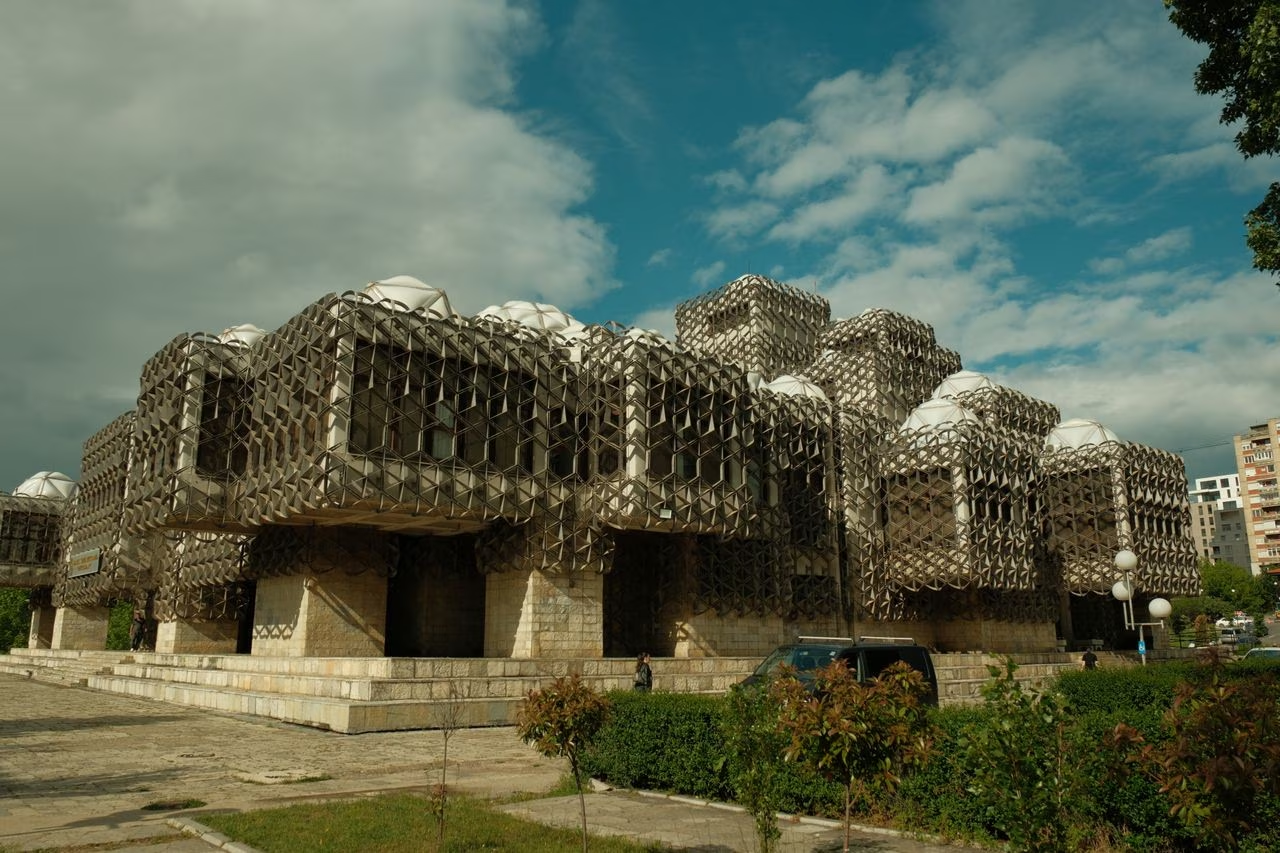
Start at the Newborn Monument, giant yellow letters spelling "NEWBORN" unveiled on independence day in 2008 and repainted each year with a new design or message. Nearby, the National Library of Kosovo is one of the strangest buildings in the Balkans, a lattice of 99 metal-mesh domes that divides opinion but is unmissable regardless. Walk past the unfinished Serbian Orthodox Cathedral of Christ the Saviour, fenced off and half-built since the 1990s, a physical marker of the country's recent history.
See the Mother Teresa Cathedral (she was of Kosovo Albanian descent) and walk down Bill Clinton Boulevard, complete with a statue of the former US president, a reminder of how directly NATO's 1999 intervention shaped how Kosovo sees itself in relation to the West. End the day easing into the city's café culture on one of the pedestrian streets near the centre.
Visit the Kosovo Museum and the small Ethnographic Museum, housed in a restored Ottoman-era complex, for a grounding in the region's history before and after the 1990s. What's left of the old Ottoman bazaar survives in fragments around the centre, smaller and less complete than Prizren's, which is where the real old town is waiting.
In the afternoon, take a short taxi or bus out to Germia Park, a large forested park on the edge of the city with walking trails, a lake and, in summer, an outdoor pool, a good way to see how Pristina actually spends its weekends. Back in the centre, spend the evening doing exactly what locals do, café-hopping along the pedestrian streets before the bus to Prizren tomorrow.
Where to eat in Pristina
Prizren, Days 3–4
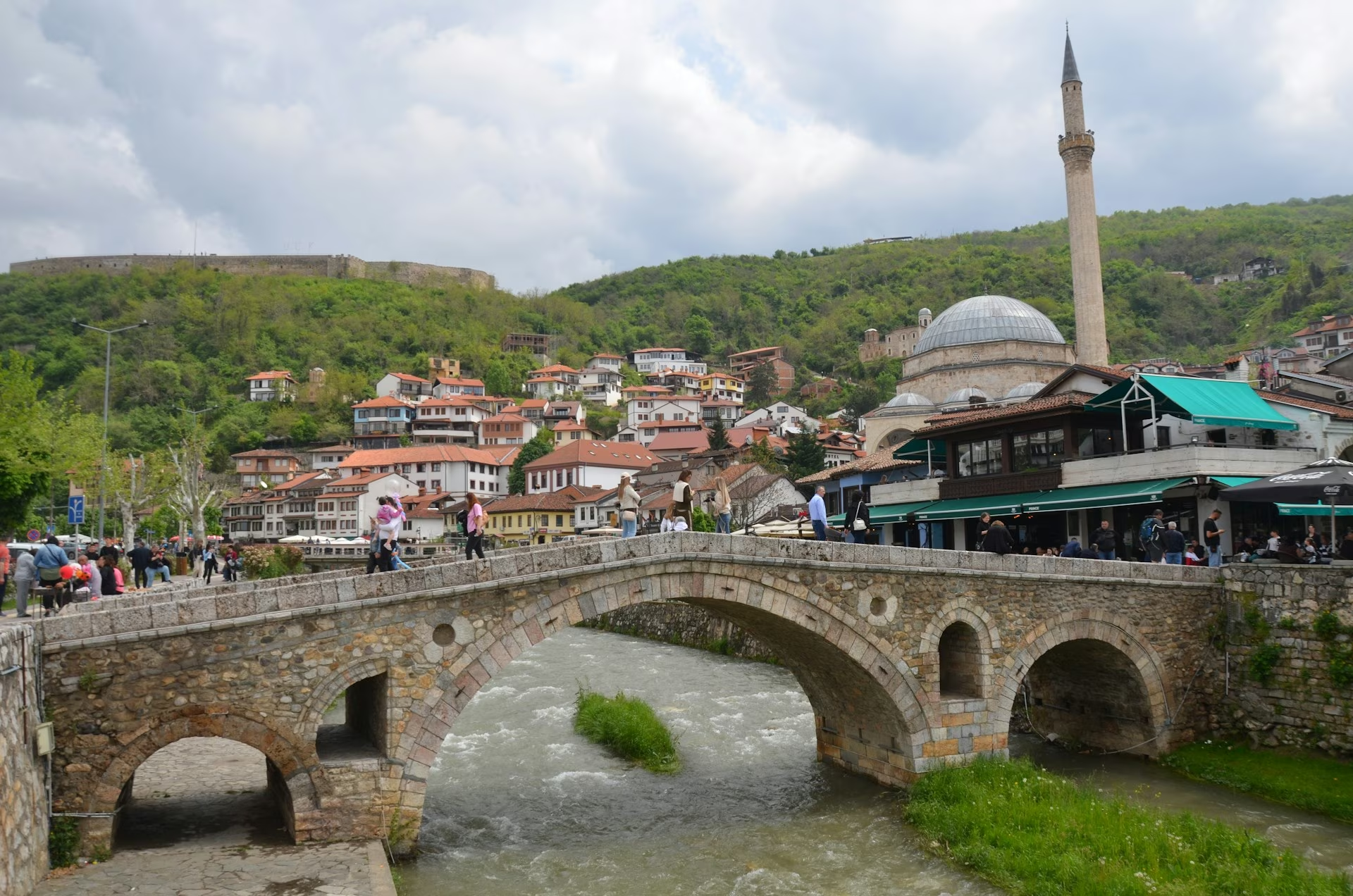
The bus from Pristina to Prizren takes about ninety minutes and drops you somewhere entirely different in feel. Prizren is often called Kosovo's cultural capital, and its Ottoman old town, mosques, a stone bridge, a hilltop fortress and houses stacked along the Bistrica river, is genuinely one of the best-preserved in the Balkans, largely without the crowds a comparable town in Bosnia or North Macedonia would draw.
Walk the old town along the Bistrica river, crossing the Ottoman-era Stone Bridge, and visit the Sinan Pasha Mosque, the city's grandest, right on the river. Nearby, the League of Prizren Museum occupies the building where the League was founded in 1878, a foundational moment in Albanian national history, worth the half hour even with limited English signage.
Spend the afternoon wandering the Marash neighbourhood and the old bazaar streets, small workshops, tailors and coppersmiths still working in places. Prizren rewards slow walking more than any checklist of sights, its atmosphere is the main event.
Climb to Prizren Fortress (Kalaja) above the old town, a steep but short walk rewarded with the best view in the country, the whole old town, the mosques and minarets, and the mountains beyond. Go for sunset if you can, it's the single best moment of the whole route.
Keep the rest of the day loose: the Gazi Mehmed Pasha Hammam, a restored Ottoman bathhouse now used as an exhibition space, a coffee by the river, or, if your dates land in early August, catching a screening from Dokufest, the well-regarded documentary film festival that takes over the old town's courtyards and the fortress each summer.
Where to eat in Prizren
Peja & Rugova, Days 5–6
Peja is about two hours from Prizren by bus and puts you at the foot of the Accursed Mountains (Bjeshkët e Nemuna), the dramatic range shared with Albania and Montenegro. The Rugova Valley just outside town is Kosovo's outdoor adventure hub, a limestone canyon with a via ferrata, one of Europe's longest ziplines, and trailheads for the Peaks of the Balkans long-distance hiking route.
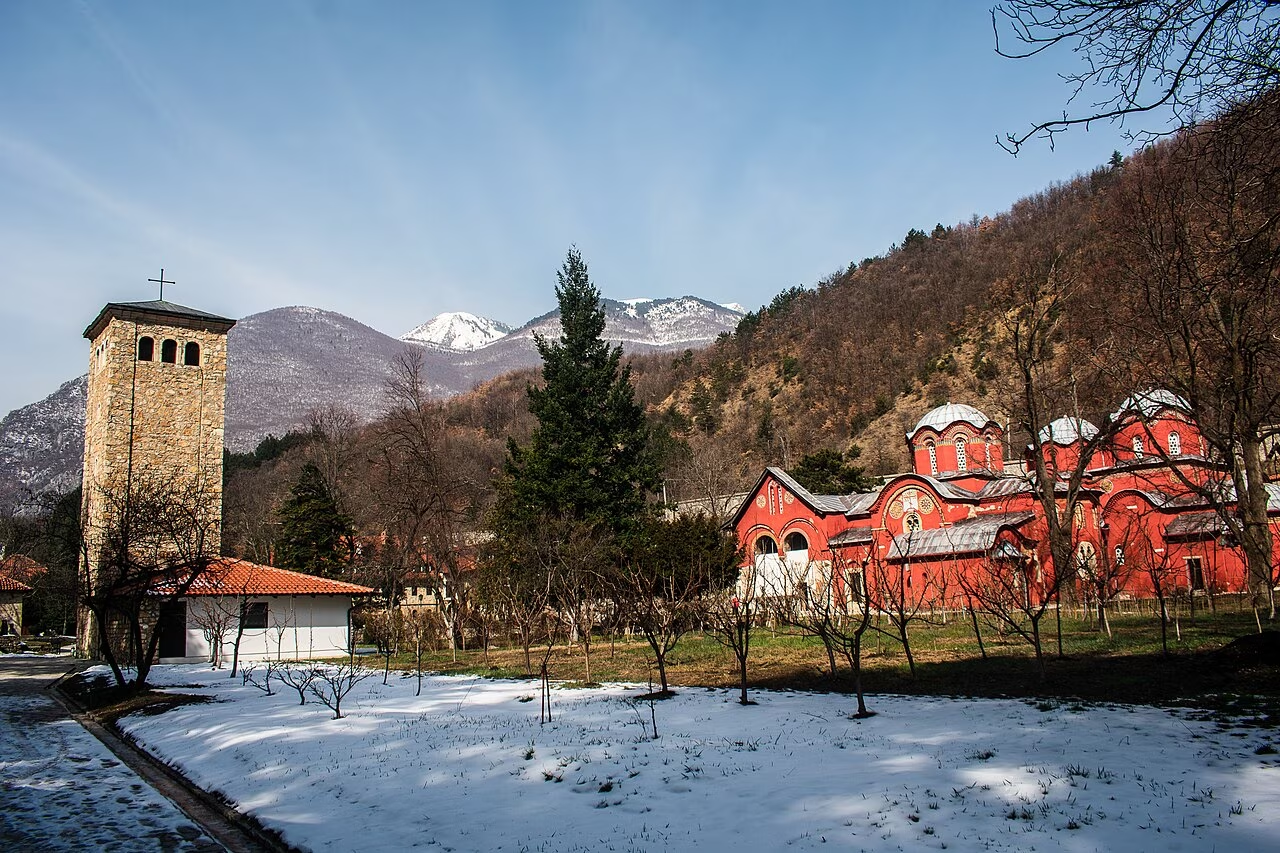
Visit the Patriarchate of Peć, a UNESCO-listed 13th-century Serbian Orthodox monastery just outside town, the historic seat of the Serbian Orthodox Church and one of the most significant religious sites in the Balkans. It sits inside a protected complex; dress modestly and expect a security presence, a reminder of the site's sensitivity.
In the afternoon, head into the Rugova Canyon itself, the road follows the Lumbardhi i Pejës river through steep limestone walls, past small villages and roadside trout restaurants. Stop wherever the view demands it; this drive is as much the point as any single sight along it.
Spend the morning on the canyon's signature activity: the Rugova via ferrata, a protected climbing route along the cliff face suitable for reasonably fit beginners with a guide, or the region's zipline, among the longest in the Balkans, strung across the gorge. Both are best arranged with a local operator out of Peja or Bogë village.
Take the afternoon bus back to Pristina (around two hours) to connect with your onward flight from Pristina International Airport (PRN), closing the loop. If your flight isn't until the next day, a final evening of café-hopping in the capital is a fitting way to end.
Where to eat near Rugova
Getting around
This entire loop runs on intercity buses, and Kosovo's are frequent and inexpensive on the routes this itinerary uses. No car is needed, buy tickets at the station counter, most routes don't need advance online booking the way Western Europe does.
| Pristina → Prizren | Intercity bus · around 1.5 hours · frequent departures from Pristina's main bus station, among the most well-served routes in the country. |
| Prizren → Peja | Intercity bus · around 2 hours, sometimes with a change · fewer daily departures than the Pristina–Prizren route, check timing before committing to your last Prizren activity. |
| Peja → Pristina | Intercity bus · around 2 hours · regular departures through the day, including options timed for onward flights. |
| Airport → Pristina centre | Airport bus or taxi from Pristina International (PRN), around 20 minutes to the centre. Agree a taxi fare before you get in, or use the scheduled airport bus for a fixed, low price. |
| Within Pristina, Prizren & Peja | On foot. All three centres are compact and walkable. Taxis are cheap and useful for Germia Park from Pristina or the Patriarchate of Peć and the Rugova Canyon road from Peja. |
| Into the Rugova Canyon | Taxi, arranged transfer, or a local operator's shuttle from Peja, the canyon road isn't well served by public buses. Most guesthouses and via ferrata operators can arrange transport as part of the activity. |
What's worth booking
Most of this trip doesn't need advance booking, but a handful of things are worth reserving ahead, either because they need proper safety equipment and a guide, or because a local expert genuinely adds to the visit.
Where to stay
Accommodation across all three towns is inexpensive, and small family-run guesthouses generally beat chain hotels for character and value. In Peja, a base close to the canyon road saves time on the adventure days.
How to eat well
Kosovo's food sits close to the wider Balkan and Ottoman repertoire, grilled meats, filled pastries, and strong, cheap coffee, at prices that are low even by regional standards. Café culture is not a side note here, it's close to the national pastime, and a macchiato costs a fraction of what the same cup costs anywhere in Western Europe.
Raki, a strong fruit brandy, is the standard toast, similar to its neighbours across the Balkans. Kosovo also has a young but genuine wine scene worth trying a glass of, particularly around Rahovec, even if a full winery day doesn't fit this route.
Dishes worth knowing
| Flija | A layered, crepe-like dish cooked in thin sheets over an open fire or embers, brushed with cream between layers, traditionally reserved for special occasions but available in restaurants across the country. Rich and unlike anything else on this route. |
| Byrek | Flaky filled pastry, usually with cheese, spinach or minced meat, sold everywhere as a cheap, fast breakfast or lunch. Best eaten warm, straight from the tray. |
| Qebapa | Small grilled minced-meat fingers, the Kosovo take on the wider Balkan ćevapi family, served with raw onion and soft bread. The default cheap grill order in all three towns. |
| Macchiato | Not a dessert but a genuine local institution: a small, strong espresso macchiato, drunk slowly over long café sessions. Pristina in particular is said to have one of Europe's highest café densities per capita. |
| Rugova trout | Fresh trout from the canyon's rivers, grilled simply and served at roadside restaurants through the Rugova Canyon. The signature dish of the Peja leg of the trip. |
| Raki | A strong fruit brandy, usually grape or plum-based, drunk as an aperitif or offered after a meal. Homemade versions vary widely in strength; a restaurant's own bottle is often a point of local pride. |
Travel essentials
What to pack
Kosovo's climate is continental, hot summers and cold winters, with the mountains around Peja noticeably cooler than Pristina and Prizren year-round. Pack for walking, for a swing in temperature between the lowland towns and the canyon, and for the outdoor activity days in Rugova.
- Comfortable walking or light hiking shoes, for the fortress climb in Prizren and the canyon trails around Rugova
- A warm layer for the mountains, Rugova and Bogë stay noticeably cooler than the lowland towns even in summer
- Activewear suitable for the via ferrata or zipline, plus closed-toe shoes for either
- Modest clothing for visiting the Patriarchate of Peć, shoulders and knees covered
- Sun protection for long café afternoons and the open canyon road
- Passport (Kosovo is not in the EU or Schengen); check your visa-free entry allowance before travelling
- Travel insurance, downloaded and accessible offline, ideally covering adventure activities
- Cash in Euros, cards are unreliable outside Pristina and Prizren's centres
- A note of your route order if Serbia is also on your trip, see the entry-stamp note in Planning
- Airalo eSIM, activated before landing
- Universal adapter, Kosovo uses 230V Type C/F plugs (standard continental Europe)
- A power bank for long bus rides between towns with limited charging
- Offline maps downloaded in advance, connectivity thins out in the Rugova Canyon
- A reusable water bottle, tap water is generally safe in the main towns
- A small day pack for the fortress climb and the canyon activity day
Before you go
| Visa | Kosovo is not in the EU or Schengen, though it maintains its own visa-free list. EU, UK, US, Canadian and Australian passport holders, among many others, can typically enter visa-free for up to 90 days. Check the current requirement for your nationality before you fly. |
| Currency | Euro (€), used unofficially without Kosovo being a eurozone member. Cards are accepted in Pristina and Prizren's centres but far from universal; cash is standard for buses, small restaurants and most of Peja and the Rugova villages. |
| Language | Albanian is the majority language; Serbian is also official and spoken in some communities, particularly in the north. English is common with younger people in Pristina and Prizren, less so in rural areas and Rugova. |
| Connectivity | Good 4G in Pristina, Prizren and Peja; patchier in the Rugova Canyon and higher villages like Bogë. An eSIM or local SIM is cheap and worth activating on arrival. |
| Health | No vaccinations required for most visitors. Tap water is generally safe in the main towns. Pharmacies are well stocked in Pristina, Prizren and Peja. The general emergency number is 112. |
| Electricity | 230V, Type C/F plugs, standard for continental Europe. EU travellers need nothing extra; UK and US visitors need an adapter. |
What it costs
Kosovo is one of the cheapest countries in Europe to travel in, and this loop is easy to do well on a tight budget. The main variable is how much you spend on the Rugova adventure activities, which are still inexpensive by Western European standards.
What pushes costs up: a guesthouse in Prizren during Dokufest, private transfers into the Rugova Canyon instead of shared options, and adding a private guide for every stop rather than one or two. What keeps costs down: travelling in the shoulder months, eating where locals eat, sticking to intercity buses, and pacing café stops the way locals do rather than paying for bottled water and snacks on the move.